

In an unprecedented moment, Kemi Badenoch stands as the first Black leader of a major UK political party—a milestone, yes, but not the triumph some might celebrate it as. Instead, it serves as a wake-up call for Black communities and allies in Britain. Is this a victory for true representation, or just a convenient facade to suppress authentic Black voices by promoting someone who won’t challenge the system?
To understand what Badenoch’s rise truly signifies, we must ask: is she here to break down barriers or to quietly fortify them? It’s a question not just of personality but of purpose, strategy, and legacy.
The Empire Has Always Had Black Administrators
Professor Kehinde Andrews, a leading Black radical thinker, warns us of a familiar pattern: “The empire has always relied on Black and Brown administrators to uphold its structures.” What Andrews means is that, historically, the British Empire has often placed Black faces in powerful positions, not to dismantle oppressive systems, but to uphold them. This tactic is as old as colonialism itself.

During Britain’s colonial conquests, Black and Brown figures were strategically positioned in administrative roles, offering the illusion of inclusivity, all the while operating as gatekeepers of the colonial status quo. Whether through collaborators in British-occupied Africa or local administrators in the Caribbean, the empire has consistently used individuals from within the oppressed communities to tighten its grip.
And now, centuries later, here we are: Badenoch’s leadership seemingly reflects this same tactic. Instead of challenging the systems that continue to harm Black communities, she reaffirms them. By ascending to this role, does she carry the mandate to uplift and empower, or merely to pacify and contain? We cannot afford to ignore the real, historical playbook at work here, for her presence in power may, in reality, represent control, not liberation.
Dismissing Colonial Legacy and Denying White Privilege
Kemi Badenoch’s views on Britain’s past paint a troubling picture. She asserts that Britain’s success isn’t tied to its colonial history, dismissing the undeniable roles of exploitation and white privilege in building British wealth.
This stance comforts those who prefer a whitewashed history, where colonial atrocities are minimised or ignored entirely. But for Black communities, this isn’t just uncomfortable; it’s erasure. By sanitising the colonial legacy, Badenoch allows discussions around race, reparations, and historical accountability to fade, thereby protecting those who benefit from this carefully constructed amnesia.
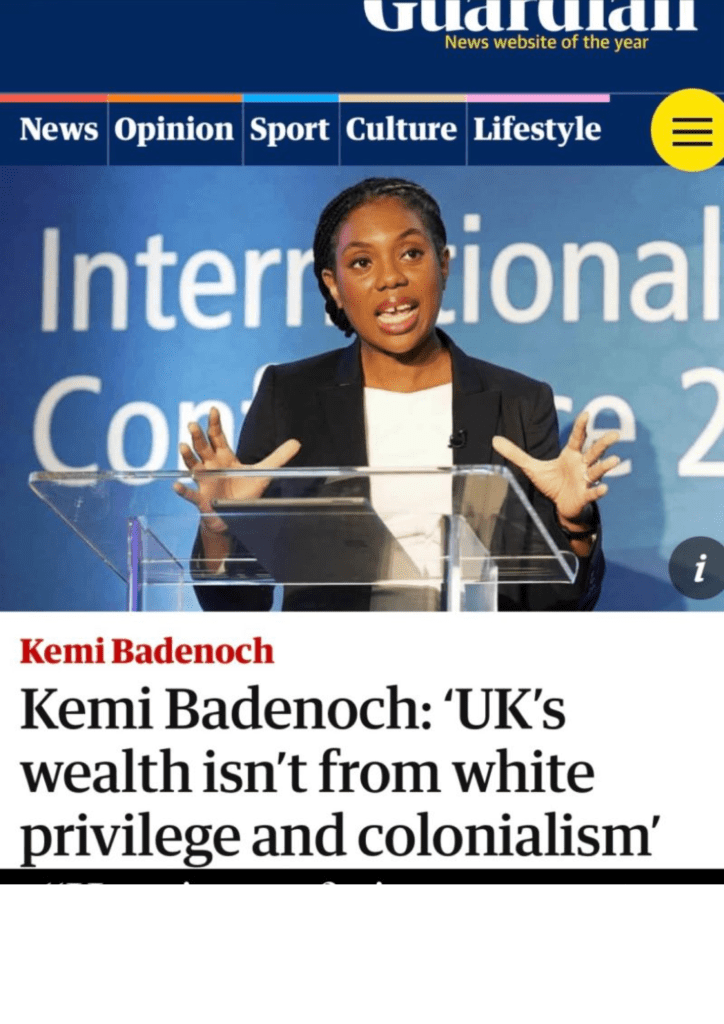
This denial doesn’t serve Black people; it shields the structures and individuals who continue to gain from a legacy of injustice. It is precisely this comfort with silence and omission that allows racial disparities to persist unchecked. For a Black leader to perpetuate this erasure doesn’t represent progress but betrayal. When someone in her position refuses to acknowledge Britain’s bloody path to “greatness,” they signal a loyalty not to Black communities but to those who find solace in a history that absolves them of guilt.
The Comfort of Whitewashed “British Values”
Badenoch’s resistance to acknowledging institutional racism, her vocal opposition to reparations, and her relentless promotion of a selectively whitewashed version of “British values” speak volumes. Her stance has made her a favourite among right-wing figures like Michael Gove, who are keen to sidestep Britain’s colonial legacy. Instead of standing as a reminder of how far we’ve come—or how much further we have to go—her leadership becomes a tool for burying history and insulating Britain from confronting its injustices.
True “British values” should embrace honesty, justice, and accountability. But Badenoch’s approach seems to use those values as a shield against critique, turning them into slogans to dismiss the demands of Black communities rather than principles to advance justice and reconciliation.
Token Representation is Not Progress
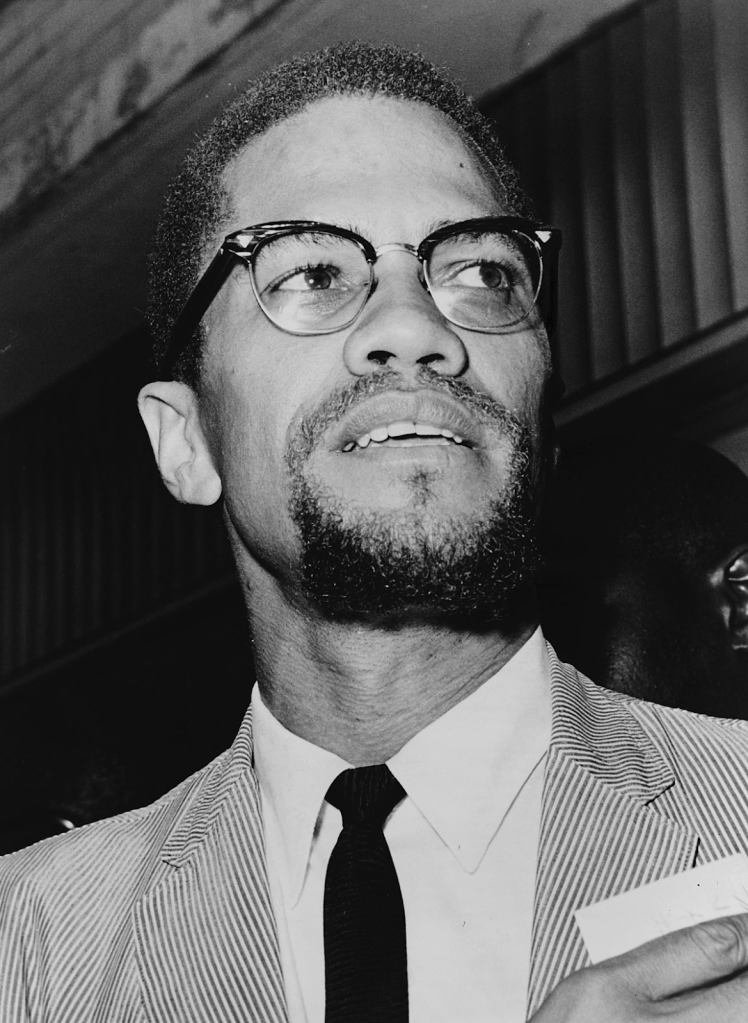
As Malcolm X famously declared, “If you stick a knife in my back nine inches and pull it out six inches, there’s no progress. If you pull it all the way out, that’s not progress. The progress is healing the wound that the blow made.” His words remind us that representation alone, especially when it comes without justice or accountability, does not equate to real change. Badenoch’s leadership doesn’t confront or seek to heal; it offers symbols over substance. The knife is still in.
For real progress, we need leaders who challenge, not uphold, systems of oppression. When Black faces are used to reinforce harmful structures, it’s not liberation; it’s control dressed up as diversity. Such leadership is not designed to change society but to keep it comfortably stagnant, insulated from the demands for real equity.
The Fight for True Leadership
Black communities deserve leaders who champion justice, equity, and truth—not those who silence our history, struggles, and aspirations. Leaders like Kemi Badenoch may represent visibility, but they do not represent the radical, transformative progress our communities need and deserve. A true leader stands with us, understanding that progress is not about easing discomfort but about confronting, healing, and reforming the systems that continue to oppress us.
So, let’s not be lulled by symbolic diversity. Real progress comes from those who fight for lasting change, from those who seek to dismantle and rebuild, not from those who uphold a façade that keeps Black communities subdued. As we look ahead, let us be vocal, vigilant, and unyielding in our demand for more than tokenism—for a leadership that seeks not to suppress, but to liberate.
 BLAM UK CIC