

Storytelling is a bridge between generations, a vessel for history, and a powerful tool of cultural preservation. In Africa, storytelling has long been the foundation of knowledge transfer, shaping identities and reinforcing values through oral traditions. Now, with Iyanu: Child of Wonder, a groundbreaking animated series deeply rooted in Yoruba mythology, African storytelling is reaching new heights.
It is the continuation of a tradition that dates back to the Griots of West Africa, the Izimbongi of Southern Africa, and the praise poets of East Africa. With Disney’s Iwájú also set to redefine Afrofuturism on screen, the world is finally waking up to the richness of African storytelling.
Oral Traditions: Africa’s Living Library
Long before the written word, African societies preserved their histories, beliefs, and wisdom through oral traditions. Griots in West Africa were custodians of memory, passing down the genealogies of kings/Queens and the triumphs of empires through spoken word and song. In Nigeria, Igbo elders used proverbs to teach moral values, embedding lessons in narratives that guided entire communities.
Folktales like Anansi the Spider, a trickster from Ashanti folklore, travelled across the Atlantic with enslaved Africans, shaping the oral traditions of the Caribbean and the Americas. Myths and epic narratives, such as the Epic of Sundiata, preserved the legacies of great African leaders, ensuring that their stories would not be lost to time.
Can you see that African oral traditions are about survival. They protected history in the absence of written records, they strengthened cultural identity, and they ensured that no empire, no colonial force, no oppression could erase the richness of African heritage.
Reclaiming African Stories Through Animation.
For centuries, mainstream media has sidelined or distorted African stories. Black children have grown up without heroes that look like them, their histories either erased or misrepresented. Western animation has long dominated the industry, failing to acknowledge the mythologies, legends, and folklore that have shaped African cultures for millennia.
But now, Iyanu: Child of Wonder is rewriting the narrative.

Set in Yorubaland, it embraces Yoruba mythology, a tradition of gods, orishas, and divine forces that predates many of the world’s mainstream mythologies.
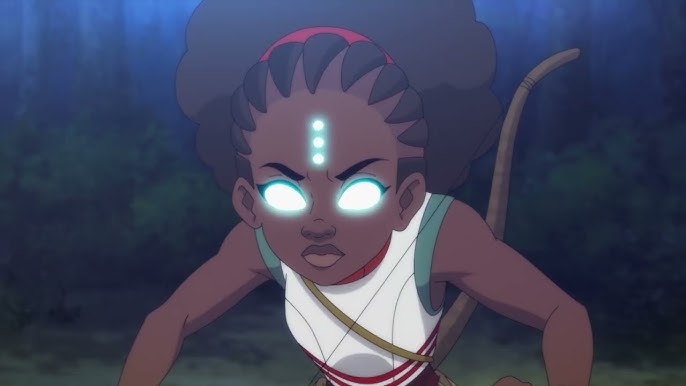
Iyanu’s powers are drawn from African spiritual traditions, not Western fantasy.

The series is created by Africans, for a global audience, ensuring authenticity in its storytelling.
This is representation done right. When Black children see themselves as heroes, when they hear stories inspired by their own cultures, they are empowered. They see that their histories are not forgotten.
The Future of African Storytelling: A Digital Renaissance.
For centuries, African storytelling has thrived, adapting to each new era while remaining deeply rooted in its traditions. The griots who once spoke history into existence under the night sky now share their narratives through books, films, podcasts, and digital platforms. African storytelling has never been static—it evolves, grows, and finds new ways to reach the world.
Now, animation is the next frontier. The rise of African animation is more than just entertainment; it is an act of cultural preservation and reclamation. It is the fusion of ancestral knowledge and cutting-edge technology, ensuring that African stories are not only told but celebrated on a global stage.
Iyanu: Child of Wonder is a turning point, blending Yoruba mythology with modern animation to create a hero that Black children everywhere can look up to.
Iwájú, an Afrofuturist tale set in a technologically advanced Lagos, marks another milestone in mainstream recognition of African narratives.
Afrofuturism, digital storytelling, and animation are carving out a new space for African voices, ensuring our stories reach every corner of the world.
This is a cultural shift. The world is waking up to the richness of African storytelling, and this is just the beginning. No longer confined to the past, no longer silenced—African stories are here, bold, powerful, and unstoppable.
The question is no longer whether the world is ready for African storytelling.
The question is: are you ready to listen?
 BLAM UK CIC