

Across Africa, henna has long been a part of celebration, spirituality, and self-expression. For thousands of years, this natural dye – made from the leaves of the Lawsonia inermis plant – has been painted onto the skin during weddings, religious festivals, and other important life events. But today, henna is more than just a tradition from the past. It’s also a symbol of African pride, creativity, and identity.
In many African countries, henna carries deep meaning. It’s not just about beauty – it’s about community, culture, and history. As a young African, I’ve seen how henna continues to inspire new generations. We’re not only keeping it alive; we’re reinventing it. We’re blending tradition with new ideas and turning ancient designs into something bold, fresh, and powerful.
Ancient Roots Across the Continent

Henna has been part of African life for centuries. In Ancient Egypt, it was used to decorate the nails and hair of pharaohs. It was also an important part of burial rituals – a way of honouring the dead and offering spiritual protection. This shows how henna was more than decoration. It was sacred.
As henna spread across North, East, and West Africa through trade, migration, and spiritual exchange, it took on many different styles and meanings. In Mali, henna is known as diabi. Traditionally, it was worn by older women – a sign of wisdom, strength, and cultural pride. Over time, younger women began to wear it too, especially for weddings and ceremonies like baby namings. Today, Malian henna continues to evolve, yet it remains deeply respected as part of the country’s identity.
In Somalia, henna is a major part of cultural life. During weddings, Eid, and Ramadan, women wear henna on their hands, feet, arms, and even necks.
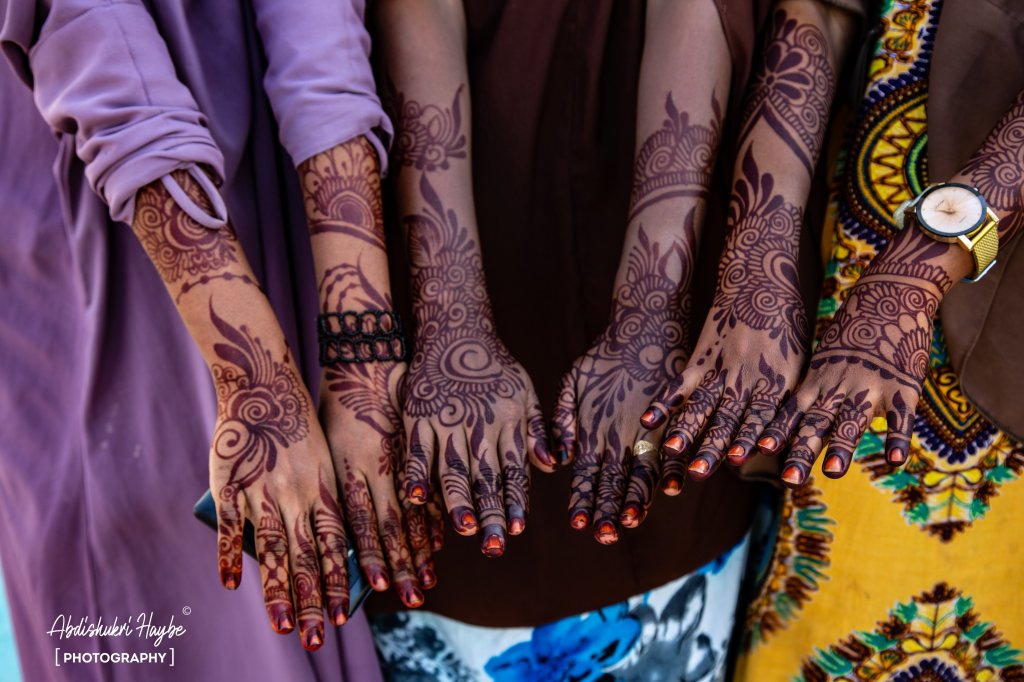
The designs are often floral or triangular, sometimes influenced by styles from the Arabian Peninsula. A small dot in the palm and dyed fingertips are also common.
Somali henna is known for its elegance – and for the beautiful way it brings women together. At pre-wedding henna parties, the bride is surrounded by female friends and relatives. As her hands are painted, the women sing traditional songs and perform the buraanbur, a joyful Somali dance full of rhythm and poetry.
Meaning in Every Line
In West Africa, especially in Mali, the henna application method is unique. Instead of drawing directly on the skin, thin strips are used to block areas where the henna won’t stain. Once the paste is washed off, bold straight-line designs are revealed.


These patterns are striking and symbolic. One common motif is the triangle. When our research team visited Mali, the local women explained that the repeated triangles represent fish scales. Fish are a sign of good fortune and abundance. As the triangles grow larger, they symbolise the hope of catching a bigger fish each time – a beautiful metaphor for growth and prosperity.
There are also new techniques being developed. Artists now arrange straight lines along curved shapes, creating designs that look like leaves or feathers. This innovation was seen at a baby naming ceremony in Bamako, where women wore these delicate, curved patterns as a way of celebrating new life. This is a clear example of how African tradition and creativity go hand in hand.
A New Generation, A New Expression
What inspires me the most is how young Africans are reclaiming and reinventing henna. No longer just something for special occasions, henna is becoming a form of everyday self-expression. It’s appearing in fashion shoots, creative campaigns, and even on social media as a tool for storytelling and identity.
We are not afraid to remix tradition. Some are combining traditional motifs with modern art styles. Others are experimenting with colour, glitter, and temporary tattoo techniques. Yet at its core, it remains a way to stay connected to who we are and where we come from.
In a world that often silences or misunderstands African voices, this is powerful. Wearing henna, and doing so proudly, becomes a quiet form of resistance and a loud form of self-love.
Wearing Culture Loud and Proud
African henna is not stuck in the past – it’s living, breathing, and growing with us. It’s a reminder that our traditions are not just history books – they are living legacies. And we are the storytellers.
So to every young African artist, bride, dancer, or dreamer wearing henna: you are honouring your ancestors and shaping your future. You are proof that tradition and creativity can live side by side. You are showing the world that African culture is bold, beautiful, and here to stay.
Henna is a celebration of identity, heritage, and imagination.
And we are just getting started.
 BLAM UK CIC