
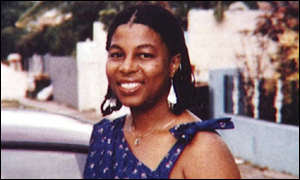
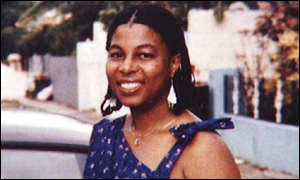
We remember Joy Gardner, a 40 year old Jamaican student in London, who was killed by police during a dawn deportation raid in July 1993. Officers handcuffed her, bound her with leather straps and gagged her with 13 ft of surgical tape until she collapsed. Joy suffered catastrophic brain damage from asphyxia and died in hospital four days later. An official inquest later ruled her death a “misadventure”, and no officer was ever held accountable.
Joy had come to Britain legally in 1987 and was studying media at London Guildhall University. By 1993 she was fighting to stay in the country, but immigration authorities decided to remove her. On 28 July 1993, immigration officials, backed by Metropolitan Police, raided Joy’s north London home. They forced her to the floor and, despite her pleas and five-year-old son in the room, they wrapped her head in tape and straps. She lost consciousness and fell into a coma. Four days later, doctors pronounced her dead from respiratory failure.
Soon after Joy’s death, community protests erupted under banners reading “Murdered by police – No justice, no peace.” But the criminal justice system failed her. In 1995, three officers were tried for manslaughter, and a judge even acquitted one, while a jury cleared the other two. The inquest concluded “misadventure”, treating her death as a tragic accident rather than the result of deliberate cruelty. In the end, no one was punished for Joy’s death.
Has anything changed since Joy’s death?
Officials’ own reports suggest the answer is “no.” In January 2024 the head of Britain’s police chiefs, Gavin Stephens, publicly acknowledged that policing still suffers “institutional racism”. He noted that decades of policies were made without Black people’s voices, yielding “disproportionate outcomes” for Black communities. Independent analyses underline this reality: Black people are just 3% of the UK population, yet they account for 8% of recorded deaths in police custody. One legal expert observed that since 1969 only one UK police officer has ever been convicted for a death in custody. In other words, police can kill with near-total impunity.

State violence is not “just an American problem.” Official data confirms deep bias. An Inquest report (Feb 2023) found Black people were seven times more likely to die after police restraint than whites.
Almost no officer is ever held to account: as one review bluntly notes, “no officer has ever been found to have acted in a racist or discriminatory way” in any fatal police-contact case. In short, British policing still operates within a white supremacist framework, from stop-and-search to use of force, despite repeated promises of reform.
The Hostile Environment and the Windrush Scandal.
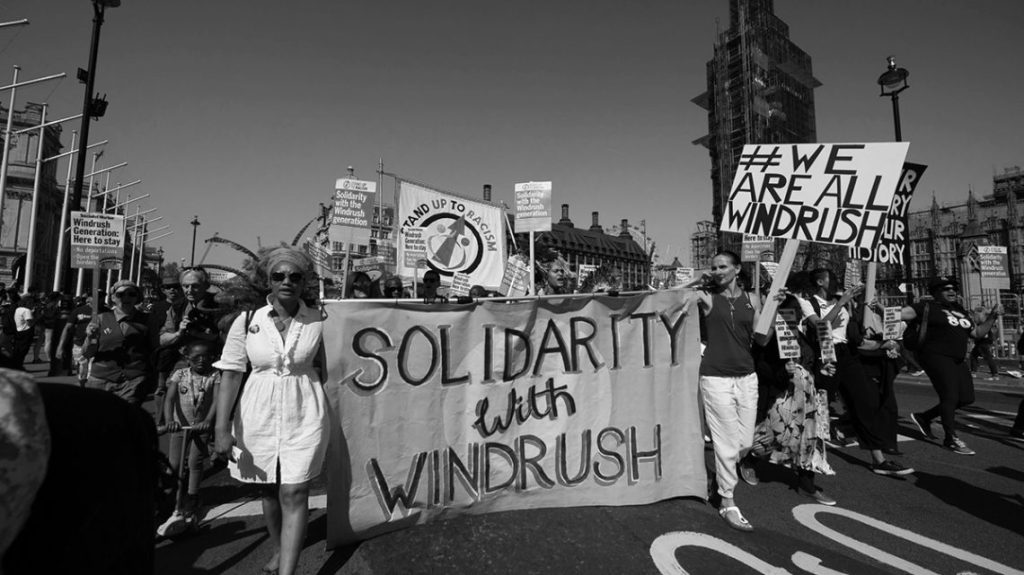
State racism extends beyond policing into immigration policy. The Windrush scandal of the 2010s is a stark example. Thousands of British Caribbean people, many of them long-term legal residents, were suddenly classified as “illegal” by the Home Office. They lost jobs, homes and even freedom under Theresa May’s “hostile environment” rules. A leaked official report later admitted the ugly truth: for thirty years, UK immigration laws were explicitly designed to limit Black (and other non-white) immigration.
Every Act from 1962 to 1981 aimed to reduce the number of people with “black or brown skin” allowed into Britain. That is the racist DNA of today’s system – meaning Caribbean and African families have lived under a constant cloud of suspicion.
32 years after Joy Gardner’s death, Britain still has a racism problem.
Black lives in the UK continue to face the same indifference to injustice that Joy did. Until every officer is accountable, every death in custody is investigated, and every policy is free of racial bias, we will keep saying her name. Joy Gardner.
 BLAM UK CIC