
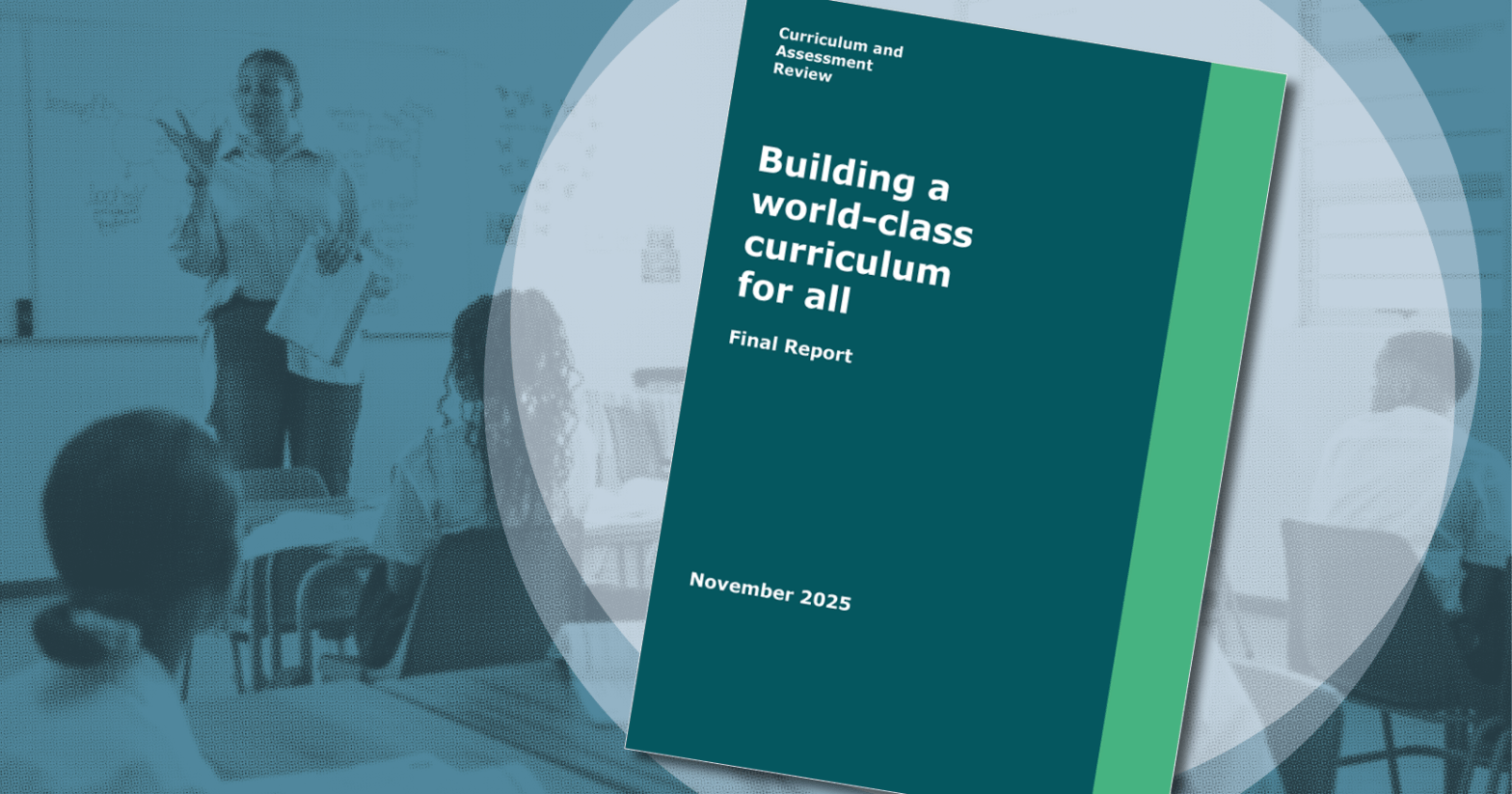

The UK government’s recent Curriculum and Assessment Review claims it will build a “world-class curriculum for all,” yet from a Black radical perspective it’s clear there are gaping holes in this plan. The Review document pays lip service to “diversity” and “equality of opportunity,” but nowhere does it confront the reality of racism in education. This absence is not an oversight. It’s symptomatic of a system that would rather celebrate a shallow notion of diversity than commit to true anti-racist change. In the words of BLAM UK’s own social media post, the government “talks about ‘diversity’ but refuses to commit to anti-racism or any real decolonising of the curriculum.” The tone of this blog is unapologetically confrontational and rooted in Black radical thought: if the curriculum review won’t say anti-racism, we will – loudly and clearly.
No Anti-Racism, No Justice: The Curriculum Review’s Silent War on Black Education.
The Curriculum and Assessment Review reads like a masterclass in deflection. It waxes poetic about Britain’s “diversity” being a great strength and the need for “all young people [to be] represented”. It even acknowledges that students not seeing themselves in the curriculum, or encountering negative portrayals, is “disempowering and demotivating”. Yet, glaringly, the Review never once mentions the words “racism” or “anti-racism.” The government’s own report admits “the curriculum needs to reflect society, support equality of opportunity, and challenge discrimination” but it pointedly avoids naming the very discrimination at play: racism. By failing to explicitly address racial injustice, the Curriculum Review effectively wages a silent war on Black education. It upholds the status quo of Eurocentric content under the guise of neutrality.
This is a classic tactic of what Black radical educators call racial silence. The government’s plan pretends you can achieve “high standards for all” while sidestepping the structural racism that holds Black students back. It speaks of “broadening horizons” and “shared values”, but offers nothing to dismantle the whitewashed narratives in history books or the unconscious biases in classrooms. No anti-racism, no justice – it’s that simple. Ignoring race while talking about diversity is a political choice, one that protects the comfort of those in power at the expense of Black children’s education. The Curriculum Review’s polite silence on racism is not just an omission; it is an insult to Black pupils who every day experience the gaps between the curriculum’s rhetoric and the reality of their lives.
BLAM UK Strikes Back: Exposing Systemic Racism in Schools.
BLAM UK is not remaining silent. As a Black-led education and advocacy group, BLAM has been documenting the very racism the government refuses to name. Our recent report, “Eradicating Anti-Blackness in the UK Education System: Achieving Curriculum and Policy Reform Through Litigation,” uncovers the systemic biases embedded in British schools. The findings are damning, if unsurprising to Black students and parents. Black pupils are over-disciplined, underrepresented, and erased from what they are taught. The curriculum still centres whiteness, with Black history either ignored entirely or confined to trauma and oppression narratives (slavery, colonialism, civil rights) devoid of Black joy or excellence. British schools, as BLAM bluntly states, “continue to centre whiteness while punishing Black identity”. In the absence of anti-racist guidance, many teachers lack racial literacy – they have never been trained to understand how racism operates in the classroom. This leads to biased expectations, harsher discipline for Black children, and unchecked racist incidents. The government’s review panel heard from young people about feeling unrepresented and demotivated, yet offers only vagaries in response. Meanwhile, BLAM’s research provides concrete evidence that without intentional anti-racist measures, schools will continue to fail Black students.
BLAM UK is striking back through activism and even legal action. Our report is part of the first legal challenge against the UK government for the curriculum’s racism. We refuse to accept a curriculum that leaves Black contributions out and Black children behind. The message from BLAM and other Black radical educators is clear: representation isn’t a favor, it’s a right. Tinkering around the edges with token “diversity” is not enough. We demand a decolonised curriculum that fully integrates Black history and perspectives across all subjects; not just a perfunctory Black History Month chapter. We demand mandatory anti-racism and racial literacy training for teachers, so that ignorance is no longer an excuse. And we demand an end to policies that police Black children’s hair, language, and culture in the name of “behavior” or “standards”. BLAM’s stance is uncompromising: as long as the government’s plan has gaps where anti-racism should be, we will shine a light on every one of those gaps and push to fill them with justice.
Wales Sets the Standard: Anti-Racist Education in Action.
It doesn’t have to be this way. Just look to Wales, proof that a different, anti-racist approach to education is possible right now. In 2022, the Welsh Government launched a bold Anti-Racist Wales Action Plan, explicitly aiming for an “Anti-Racist Wales by 2030” with zero tolerance for racism in all its forms. These aren’t empty words. Wales put action behind them. As of the new Curriculum for Wales, Black, Asian and Minority Ethnic histories and experiences are a mandatory part of the curriculum. That’s right: in Wales, learning about the contributions and histories of people of colour is required, not optional. Alongside this, Wales rolled out free anti-racist training for all educators (the DARPL programme) to give teachers the “knowledge, skills, empathy, and confidence to celebrate and value diversity” and actively develop anti-racist practice. The Welsh Education Minister, Jeremy Miles, even urged educators to join this national effort to make schools “truly anti-racist”.
The contrast with England’s approach could not be more stark. While Welsh authorities fast-tracked resources to embed anti-racism into every school, the English Curriculum Review remains timid and evasive. Wales shows that when the political will is there, curricula can be transformed to include all students’ heritage and tackle racism head-on. They are literally doing what anti-racist campaigners have been demanding – from mandating diverse histories to training teachers – without the sky falling. So why is the UK Government (and by extension England’s education system) so far behind? The answer lies in political choice. England’s leaders choose to frame curriculum reform in comfortable terms of “diversity” without the discomfort of confronting racism. Wales chose the opposite: to face racism in education directly and systemically. The result? Welsh students of color will see themselves in lessons and books in a way English students still can’t count on. Welsh teachers are being equipped to recognize and challenge racism, whereas English teachers largely are not. If the Curriculum Review panel in Whitehall needs inspiration on how to fill the gap in their plan, they need only look across the Severn Bridge.
No Justice Without Anti-Racist Education: From Tokenism to Transformation.
The message at the heart of this Black radical breakdown is simple: there can be no educational justice without anti-racist education. Anything less is a betrayal of Black children and a distortion of what a “world-class curriculum” should be. The government’s current review, with its genteel avoidance of the R-word, amounts to tokenism. It’s an attempt to placate calls for inclusivity with pretty words about diversity, all while leaving the foundational power structures of the curriculum intact. But as Audre Lorde taught, “the master’s tools will never dismantle the master’s house.” We cannot fix a curriculum built on colonial narratives and racial bias by sprinkling a few diverse examples here and there. Transformation is required.
BLAM UK and our allies are making it clear that we will accept nothing less than a transformational change. We’re talking about reparative curriculum reform – one that not only includes Black stories but critically examines Britain’s colonial history and legacy of anti-Blackness. We’re talking about empowering Black students in the classroom, not suspending them for wearing their natural hair. We’re talking about training teachers to understand racism as readily as they understand reading levels. Until the UK government’s plan addresses these demands head-on, its so-called commitment to “excellence for all” is a cruel joke. Black students deserve better than gaps in the curriculum and gaps in the plan – they deserve an education that tells the truth and prepares them to thrive in a society that still struggles with racism.
In conclusion, let this blog post serve as a warning and a rallying cry. We see the gaps. We feel their harm. And we will fight to fill them. If the official Curriculum Review won’t center anti-racism, then the communities and activists will do it themselves – but we shouldn’t have to. The government must be pushed from tokenism to transformation. Anything short of an anti-racist curriculum is a continuation of injustice. The call is out: No anti-racism, no justice. And we will not settle for anything less
 BLAM UK CIC