
By Ogechi Obioha.
At the Royal Courts of Justice, before Lord Justice Holgate and Mrs Justice Farbey, a fundamental question about the relationship between technology, privacy, and police power is being tested.
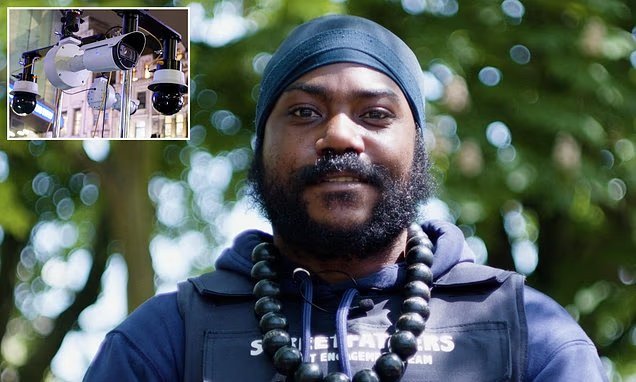
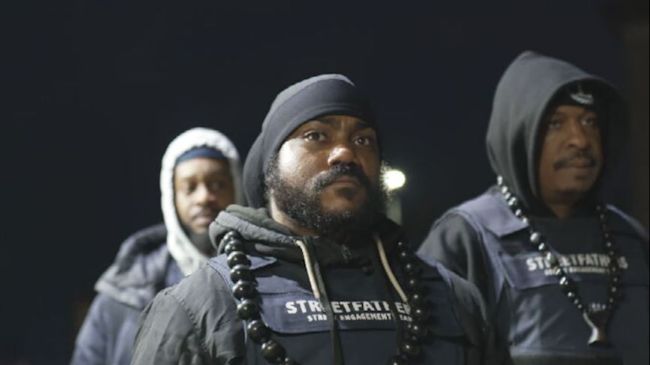
This has been brought about by applicants Shaun Thompson, an anti-knife crime campaigner, and Silkie Carlo, the director of the civil liberties campaign group Big Brother Watch. Mr. Thompson was stopped outside London Bridge where officers asked for his fingerprints. After being wrongly identified by police facial recognition as a suspect, he brings the first case of its kind to review the Metropolitan Police’s use of the AI technology.
The case of Thompson (and another) v Commissioner of Police of the Metropolis asks: how much discretion should police have in deploying Live Facial Recognition (LFR) technology across London’s streets?
Why is this important?
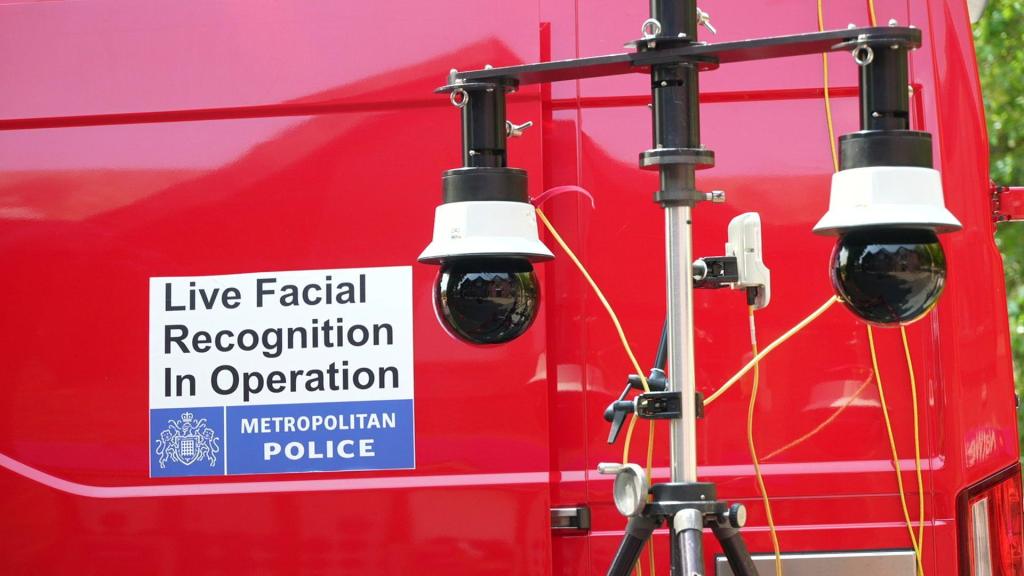
Live Facial Recognition (LFR) is not just another surveillance tool. As the Metropolitan Police themselves describe it during their submissions, LFR is “game-changing” and has “revolutionised crime detection”.
The technology works by converting facial features into numerical codes, then checking those codes against police watchlists in real-time. When someone passes an LFR camera, their biometric data is captured, processed, and compared against databases of wanted individuals.
With that power comes a profound civil liberties concern: should police be able to turn any public space into a biometric checkpoint?
The Core Legal Question.
At the heart of this judicial review is the concept of arbitrariness. In law, a power is considered arbitrary when decision-makers can act without sufficient constraints, rules, or principles guiding their choices. The claimants argue that the Met’s current LFR policy leaves too much to individual officer discretion, particularly regarding where these cameras are deployed.
This isn’t the first time British courts have grappled with LFR. The Court of Appeal’s decision in Ed Bridges v South Wales Police established that while LFR use is not inherently unlawful, there must be sufficient protections against arbitrary deployment. That case focused on South Wales Police’s use of the technology. Now, London’s approach is under scrutiny.
The Claimants’ Case: Too Much, Too Broad.
Dan Squires KC, representing the claimants, painted a picture of unchecked discretion. His central arguments include:
The Geography Problem: According to the claimants’ analysis, approximately 47% of London qualifies as a “crime hotspot” under the Met’s policy. When “access routes” (main roads leading to these areas) are added, the coverage becomes extensive. Squires argues that this gives officers discretion to deploy LFR across a large amount of the capital.
The Public Space Transformation: Perhaps most powerfully, the claimants argue that LFR fundamentally changes the nature of public spaces. Unlike border controls at airports, where people expect to be checked, LFR can turn Paddington Station or any busy street into a place where your biometric data is captured, processed, and checked multiple times a day.
The Parliamentary Question: Squires suggests this is a decision of such magnitude that Parliament, not police operational officers, should determine where and when such intrusive technology is deployed. As society grapples with what level of surveillance it finds acceptable, should that choice rest with elected representatives rather than police policy?
The Reality of “False Alerts”: While the Met Police offers a false alert rate of just 1 in 33,000, Shaun Thompson’s own experience illustrates the human cost of even “accurate” systems. When wrongly flagged, he had his passport and fingerprints taken, an extraordinary intrusion for someone who had committed no crime.
The Defence: Necessary Powers, Sufficient Safeguards.
Anya Proops KC, representing the Metropolitan Police, offered a vigorous defence of LFR deployment. Her arguments included:
Public Safety Imperative: The Met argues that criminals who pose a threat to public safety walk amongst us and are near impossible to find using normal police tactics. LFR provides a crucial capability to identify wanted individuals who would otherwise evade detection. Without this tool, dangerous offenders remain at large.
Policy Constraints Are Sufficient: The defence points to specific safeguards embedded in the Met’s policy that prevent arbitrary deployment. These include a clear definition of “crime hotspots” using quantitative crime data, mandatory proportionality assessments, clear procedures that officers must follow for each deployment, specific watchlist criteria, and compliance with the Surveillance Camera Code of Practice. Proops argues these constraints provide a “clear roadmap” that prevents arbitrary decision-making. Officers are not making capricious choices, but following detailed guidance that embodies legal principles of necessity and proportionality.
Broad Discretion Is Not Necessarily Unlawful: Drawing on case law including In the matter of an application by Lorraine Gallagher for Judicial Review, the Met argues that having broad discretion, even covering large areas, is not inherently problematic. What matters is whether the law governing that discretion is sufficiently clear and precise. The Met contends their policy meets this standard.
The Glukhin Distinction: The defence references Glukhin v Russia, where the European Court of Human Rights found against “unconditioned use” of facial recognition. The Met argues their approach is fundamentally different: it’s targeted, regulated, and proportionate, rather than blanket surveillance.
Looking Ahead
This is a judicial review case. That is a fundamental check on how public bodies exercise their powers over citizens. The court is not deciding whether LFR should exist, but whether the Met’s current framework for deploying it is lawful. That distinction matters enormously for what happens next.
If the claimant succeeds in his application, the implications could be far-reaching. The Met may need to redesign its LFR policy with tighter constraints on where and when the technology can be deployed. Questions that currently seem settled might be reopened: Must police seek explicit consent through prominent signage in areas operating LFR? Should people have a meaningful opportunity to leave an area before their biometric data is captured? Could deployment be restricted to specific intelligence-led operations rather than broad “crime hotspot” sweeps?
If the Met Police succeed in their defence, the consequences flow in the opposite direction. The Met has indicated plans to expand LFR use across London. A judicial blessing of the current policy framework could accelerate that expansion. More cameras, more locations, more Londoners having their biometric data captured and checked, potentially multiple times daily. The number of innocent people experiencing what the claimants term “intrusion of their privacy” could grow substantially.
Whatever the court decides will set the parameters for biometric surveillance across the UK. This judgment will determine not just the legality of current practice, but the boundaries of what is permissible.
This analysis is based on courtroom observations and should not be considered legal advice. The case remains ongoing and judgment is awaited.
 BLAM UK CIC