

Jab Jab (from French diable, devil) is often misrepresented in media as something dark or demonic. In reality, Jab Jab is a proud Grenadian and Caribbean masquerade tradition rooted in resistance and celebration, not evil. It dates back to 1834, when slavery was abolished across the Caribbean. Freed people took to the streets at dawn on J’Ouvert, an early-morning carnival festival, covering themselves in black to celebrate liberation. Far from being servants of Satan, Jab Jabs were celebrating their freedom from devilish oppressors.
The name itself ,“Jab”, meaning devil was deliberately reclaimed by enslaved Africans who were derogatorily called “devils” by colonisers. By playing the devil, they mocked their masters. As Ian Charles of Jambalasee Grenada explains, Jab Jabs would take everything slave-owners said was “wrong” about them, their blackness, their wildness and “amplified it and took to the streets”. This is protest theatre, not devil worship. It’s the ultimate clapback: if you call me a devil, I’ll be the best devil you’ve ever seen, to flip your racist definition on its head.
Symbolism of JAB JAB:
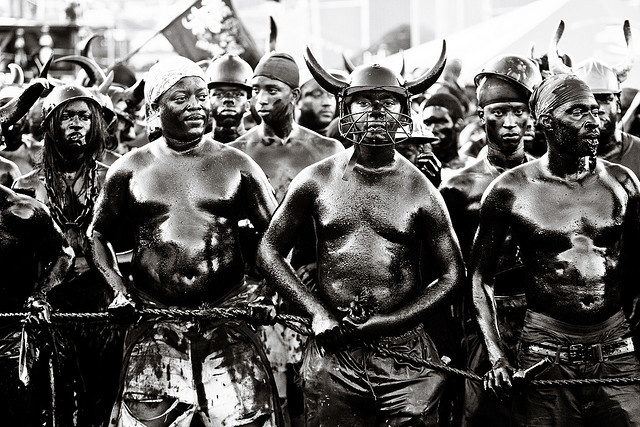
Black Paint/Oil: Blackening the body has deep meaning. It connects participants to their African ancestry and the nightmarish torments of slavery.
On J’Ouvert, people coat themselves in oil, molasses, or paint (in London, washable paint replaces oil for safety). This was literally how freed slaves celebrated in Grenada. The black skin is not “witchcraft”; it’s a bold display of unity and Blackness, pride in the face of a world that once said their black bodies were “substandard”.
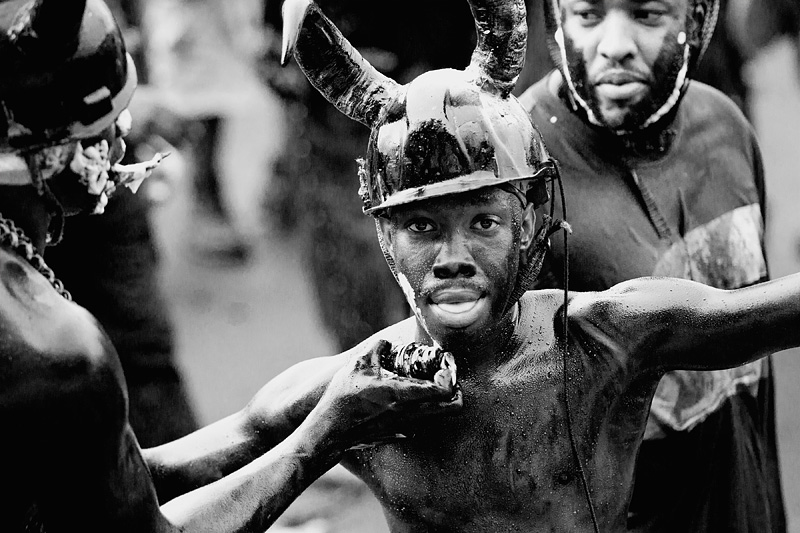
Horns: Shiny horns strapped to helmets aren’t satanic props, they’re a satirical puppet show. Enslaved people used Christian imagery against slave-owners, dressing up as the “devils” that plantation owners accused them of being.
By wearing horns, performers wear the devil’s outfit on purpose, an ancient form of rebellion. As one carnivaller put it, “We are ridiculing what the oppressors told us we are… you call me a devil? Well, I’ll show you a devil”

Chains and Props: You’ll often see chains, shackles, coffins, or even faux snakes. These aren’t tools of oppression here; they symbolize breaking out of oppression. A broken chain on the street is a powerful emblem of emancipation.
Colonial Tropes and Misunderstanding
Why then do some outsiders cry “evil!”? The answer lies in colonial history. European colonisers consistently demonised African and Caribbean traditions, branding them “primitive” or “satanic” to justify oppression. Practices like African Spirtuality or Vodou rituals were maligned as devil-worship by slave owners and missionaries.
Today, the same narrative resurfaces when well-meaning but uninformed critics misread J’Ouvert culture. Some social media users have even labeled Jab Jabs as “witchcraft” or “satanic” language lifted straight from the colonial handbook.
This is racist tropes, repackaged.
At Notting Hill Carnival (a Black British-Caribbean institution co-founded by Windrush pioneers), every year the same misunderstandings resurface. News coverage often highlights a few fearsome Jab costumed revelers as “eerie” or “devilish”, echoing the colonial script. But as Independent columnist Nadine White notes, this kind of sensationalism is exactly what those colonial masters wanted: to scare and discredit Black joy.
Reclaiming the Narrative
It’s more important than ever to reclaim Jab Jab from these tropes. Accusations of “evil” only erase the truth of this culture. Instead of gossiping that it’s satanic, we should highlight that Jab Jabs are honouring the ancestors’ resistance and creativity. As Grenada’s prime minister said, their carnival “is a collective expression of our creativity,” a release valve from centuries of grind and pain. In Britain, acknowledging the real history of Jab Jabs can help us appreciate that Notting Hill Carnival itself sprang from a legacy of racial struggle and resilience.
Cultural heritage isn’t optional or negotiable; it’s a living lineage. We reclaim Jab Jab by celebrating it openly, teaching its story, and calling out the trolls. The next time someone cries “devil!”, we can proudly say: “Yes…the devil masks, and we wear them to honor our history of triumph over slavery.” That’s how we safeguard an authentically African-Caribbean tradition for future generations, free from misunderstanding and prejudice.
 BLAM UK CIC