
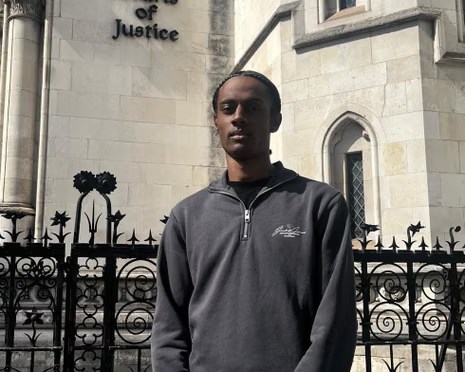
In a landmark case, 20 year old Daryl McLune has won a race discrimination claim against the Metropolitan Police. McLune was only 16 when he returned home after his mother’s suicide attempt in July 2021 and was immediately treated as a suspect rather than a terrified son. A jury concluded the Met had “discriminated against Daryl McLune… because he was black” and that his treatment breached basic rights. This verdict is more than a one-off victory: it spotlights a pattern of anti-Black policing and adultification of Black children in the UK.
What Happened
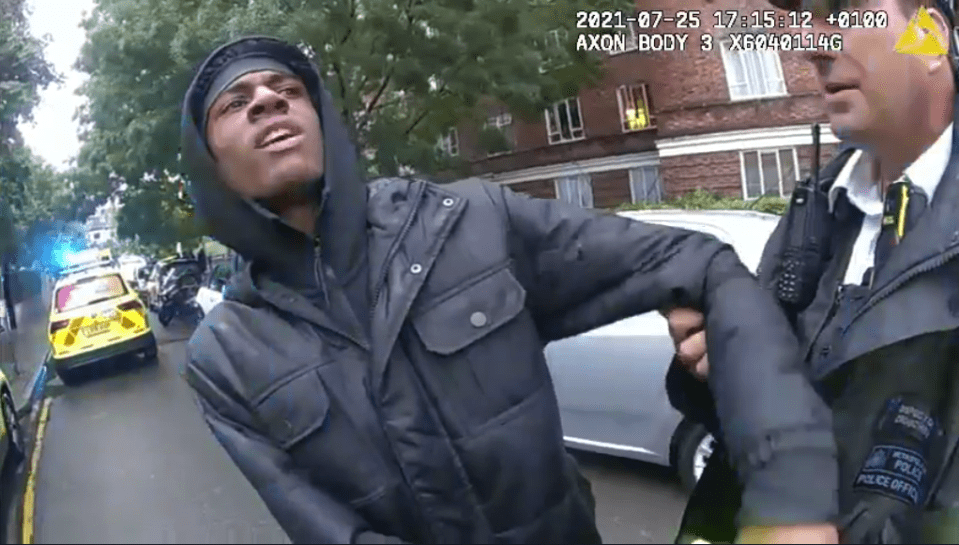
On 25 July 2021, McLune cycled to his south London home to find his mother critically injured from a suicide attempt. Minutes later, officers confronted the 16 year old and despite seeing him arrive on a bicycle – arrested him for her attempted murder. He spent 23 hours in custody at Wandsworth Police Station, remaining handcuffed for five hours while officers took forensic swabs from his hands (samples that were never processed). McLune was never told if his mother had survived while he was detained, and he was questioned without his family present. The Independent highlights harrowing bodycam footage of McLune collapsing in tears, pleading, “I wasn’t even here,” as he was arrested. A previously diligent student, McLune dropped out of school after the trauma of the arrest.
The Jury’s Verdict
After a seven day civil trial, the jury found unequivocally that race had tainted the police’s actions. They ruled McLune was treated “less favourably than a non-black boy” would have been. In plain terms, if McLune had been a white or non-Black teenager, the jury believed he would not have been handcuffed or detained for hours. The court specifically found the officers did not honestly suspect McLune of attempted murder and that keeping him cuffed was neither “reasonable nor necessary”. Crucially, the jury held that the Metropolitan Police conduct amounted to “inhuman and degrading treatment” – a breach of Article 3 of the European Convention on Human Rights. His lawyers also secured findings of false imprisonment. Taken together, this means McLune’s rights under the Human Rights Act and Equality Act were violated. The judge will set the amount of damages, but McLune has claimed up to £130,000 to compensate for the ordeal.
Adultification: Black Children Seen as Adults
Experts call the underlying bias adultification: perceiving Black children as older, less innocent and more threatening than they are. The IOPC, policing’s watchdog, defines adultification bias as seeing “children, especially Black children, as older and more mature than they are, leading to unfair treatment, harsher discipline and diminished support and protection.”. This case is a textbook example. McLune was not treated as a 16 year old in crisis but as a hardened criminal. As his barrister put it: “Daryl was a child in crisis who should have been offered support… Instead, he was wrongly treated as a suspect because of his race.”. Likewise, the Independent reported the defence calling McLune’s arrest a “premature criminalisation of what was, in reality, a child in crisis”. The recent Child Q case and other studies have highlighted exactly this pattern: Black girls and boys are often met with force or discipline, not care, because officers assume they are “more ‘grown up’, less innocent and less vulnerable”.
Wider Context: Policing and Anti-Black Racism
McLune’s experience did not happen in a vacuum. British policing has a long record of racial bias and over-representation of Black youth. Official figures show stark disparities: Black people are many times more likely than white people to be stopped and searched, and similar patterns hold for children. A report by the Children’s Commissioner found Black children are nearly eight times more likely to be strip-searched than white children, and five times more likely to have force (handcuffs, Tasers, etc.) used against them. In the Youth Justice system, Black and mixed heritage children are hugely over-represented: one study noted 59% of youth remanded in custody are from ethnic minorities, with Black children (6% of the population) making up 27% of remand cases. They are 150% more likely to be stopped and searched than their share of the youth population. All this points to institutional racism: Black children are seen as threats rather than kids. As Rachel de Souza, the Children’s Commissioner, warned: too often “Black children [are] treated as adults while they are still children – with Black children most consistently and disproportionately subjected to [intrusive policing].”.
Human Rights and Legal Context
The case also underscores basic rights. The Equality Act 2010 imposes a duty on police (as a public authority) to avoid discrimination. The jury’s findings effectively confirm the Met breached these legal duties by explicitly judging McLune differently because of his race. In Human Rights terms, McLune’s Article 3 right (no torture or inhuman treatment) was violated. Racial discrimination also engages Article 14 of the ECHR (prohibiting discrimination in rights like privacy and liberty). In sum, the verdict formally recognises what activists have long argued: that anti-Black racism in policing can turn basic safeguards on their head.
Why This Case Matters
Daryl McLune’s victory is about more than one wrongful arrest. It raises a painful question: Why are Black children in trauma so often seen as criminals? Rather than being supported during his mother’s suicide attempt, McLune was humiliated and detained. The jury’s words make clear: his race “played a part consciously or unconsciously” in how harshly he was treated. For Black communities, this verdict confirms what many already knew: policing is too often skewed by stereotypes. As the Independent Office for Police Conduct has warned, “Too often Black communities feel overpoliced as suspects and underprotected”.
Daryl’s experience was a double trauma: first his mother’s attempt, then being criminalised for being a grieving son. The jury has now vindicated him, but justice demands action. Protecting Black childhood means challenging adultification and systemic bias in every interaction. It means insisting that Black children deserve care and understanding, not suspicion and force. McLune’s case sets a precedent – but its real legacy will depend on change: in training, in accountability, and in a policing culture that finally treats Black children as what they are.

