
As we celebrate Black History Month, it’s important to remember that history is often written by those in power, leaving many key figures out of the narrative. While we rightly honour icons like Martin Luther King Jr. and Rosa Parks, there are countless Black individuals whose contributions have shaped society but remain largely forgotten. These unsung heroes, often overlooked by mainstream history, have paved the way for the freedoms and rights we cherish today. It’s time to shine a light on some of these remarkable figures and recognise the impact they’ve had on our collective story.
Olive Morris: The Revolutionary Activist

Olive Morris was a force of nature, a woman who refused to accept injustice and dedicated her life to fighting against racial and gender inequalities in Britain. Born in Jamaica in 1952, she migrated to the UK as a young child and grew up in Brixton, where she became a key figure in the Black British liberation movement.
At just 17, Olive confronted police brutality head-on when she attempted to intervene in the unlawful arrest of Nigerian diplomat Clement Gomwalk. Despite being beaten and arrested herself, this incident marked the beginning of her fierce activism. She went on to co-found the Organisation of Women of African and Asian Descent (OWAAD) and the Brixton Black Women’s Group, both of which fought for the rights of Black women in Britain. Olive’s work didn’t just focus on racial justice, but also on housing rights, squatting, and social justice for the most vulnerable.
Though she tragically died at just 27 from cancer, her legacy continues to inspire. Olive’s name might not be in school history books, but her contributions are undeniable. Her story reminds us that courage doesn’t always make headlines, but it can change the world.
Claudia Jones: The Mother of Notting Hill Carnival
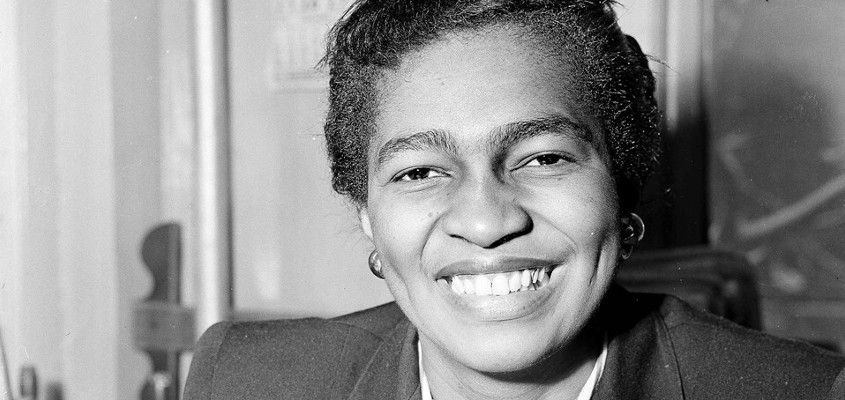
Claudia Jones is often remembered as the “Mother of Notting Hill Carnival,” but her legacy goes far beyond the vibrant celebrations that bring communities together today. Born in Trinidad in 1915, Jones emigrated to the United States, where she became a staunch political activist and communist, fighting for civil rights and against racial segregation. After being deported to the UK in 1955 due to her political activities, she didn’t miss a beat.
Claudia founded the West Indian Gazette, one of the first major Black British newspapers, to provide a voice for the Caribbean community. But perhaps her most lasting contribution was founding the precursor to what we now know as the Notting Hill Carnival. Following the Notting Hill race riots of 1958, a time when racial tensions were at a boiling point, Jones organised an indoor Caribbean carnival as a celebration of West Indian culture and a way to unite people in the face of adversity. Today, Notting Hill Carnival is Europe’s biggest street festival, a vibrant expression of Black joy and culture in the UK.
Jones understood that celebration and resistance often go hand in hand. Through her work, she not only fought against racial oppression but also gave the Black British community a platform to celebrate its culture and contributions to society.
John Blanke: A Royal Trumpeter in Tudor England
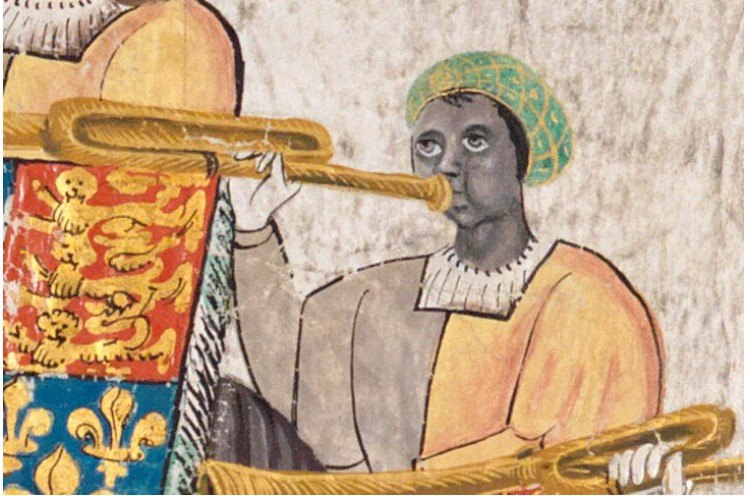
If you think Black presence in Britain is a modern phenomenon, think again. John Blanke, a Black trumpeter at the court of Henry VIII, is one of the earliest recorded Black individuals in British history. While little is known about his early life, what we do know is that Blanke was an extraordinary musician who performed at the heart of English royalty in the early 16th century.
Blanke’s image can be seen in the Westminster Tournament Roll, where he is depicted playing the trumpet at a grand royal event. This is one of the few surviving images of a Black person in Tudor England, and it serves as a powerful reminder that Black people have been integral to British society for centuries.
In 1512, John Blanke even petitioned Henry VIII for a pay rise, which was granted — an act that shows both his significance and his confidence in asserting his worth at a time when Black people were often marginalised or enslaved. His story, though brief in historical records, disrupts the notion that Black people were absent from, or peripheral to, British history. Blanke’s presence at the Tudor court highlights the diversity of British society long before the arrival of the Windrush generation.
Septimius Severus: The African Roman Emperor Who Ruled Britain

When we think of Roman emperors, images of Caesar or Augustus often come to mind, but few people know about Septimius Severus, a man of African descent who rose to become one of Rome’s most powerful leaders. Born in Leptis Magna (modern-day Libya) in AD 145, Severus hailed from a wealthy Punic family. His rise through the ranks of the Roman military was swift, and in AD 193, he was proclaimed emperor, becoming the first Roman ruler of African heritage.
Severus’s connection to Britain is particularly significant. He spent the final years of his reign in the British Isles, where he led military campaigns to strengthen Roman control and repair Hadrian’s Wall. His mission was to subdue the rebellious tribes in what is now Scotland and secure Rome’s northern frontier. During his time in Britain, Severus made York (then Eboracum) his base, making him one of the few Roman emperors to rule directly from British soil.
Despite ruling with an iron fist, Severus is remembered for his reforms and efforts to unify the empire, as well as for advancing the legal status of soldiers and non-Roman citizens. His reign brought stability to Rome after a period of civil unrest, and his military campaigns in Britain were some of the most ambitious efforts by a Roman emperor to extend Rome’s influence in the north.
Though Severus died in York in AD 211, his legacy endures, with his sons continuing his dynasty after his death. His story challenges conventional ideas of Roman history and highlights the rich diversity that existed within the ancient empire. Black presence in Britain, as exemplified by Septimius Severus, stretches back millennia, long before the modern era.
Severus’s reign as a Roman emperor of African descent defies the narrow views often presented in Western history. His presence in Britain shows that Black contributions to British history go back much further than many realise, with figures like Severus playing pivotal roles in shaping the country’s past.
 BLAM UK CIC