

Schools are meant to be places of safety, learning, and opportunity. But for many Black children in the UK, the school exclusion system tells a different story: one of unfair discipline, implicit bias, and institutional neglect. Permanent and fixed-term exclusions are supposed to be last resorts, used only when a pupil’s behaviour seriously breaches school policy but data, legal cases, and lived experiences show Black children are disproportionately subjected to exclusions. They are also less likely to have their complaints about discriminatory behaviour taken seriously.
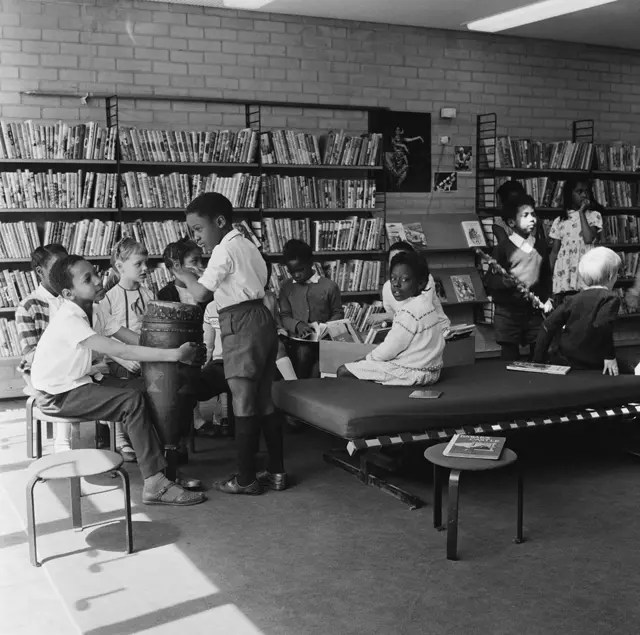
This article explores the legal framework around school exclusions, recent case law, how discriminatory practices affect Black pupils (especially those with special educational needs or disabilities – SEND), and what change needs to happen to ensure fairness and justice in UK schools.
Legal and Statutory Framework.
To understand discrimination in exclusions, here are the key legal tools and duties:
- Equality Act 2010
o Protects “protected characteristics” including race, disability, religion or belief, etc.
o Makes both direct and indirect discrimination unlawful. Schools must avoid treating pupils less favourably because of protected characteristic or because of something connected to it.
o Requires reasonable adjustments for disabled pupils to avoid putting them at substantial disadvantage. - Special Educational Needs & Disability (SEND) Regulations
o Particularly the SEND Code of Practice (statutory guidance) outlines how schools should support children with SEND including behaviour that arises because of their needs. - Public Sector Equality Duty (PSED) under Equality Act:
o Schools (as public bodies) must have due regard to eliminating discrimination, advancing equality of opportunity, and fostering good relations. - Regulations within Equality Act 2010 (Disability) Regulations 2010
o Notably, regulation 4(1)(c) which until recently excluded pupils having a “tendency to physical abuse” from being treated as disabled in certain exclusion decisions, meaning schools could exclude children for behaviours linked to their disability without needing to make reasonable adjustments. - Right to Education
o Under Article 2 of Protocol 1 to the European Convention on Human Rights (ECHR), children have a right to education. Exclusions
must be lawful, proportionate, and should not unfairly remove access to education.
Key Case Law & Recent Developments
Here are some landmark or recent cases and legal developments that illustrate how the law is being tested
Case / Development | Facts | Held / Reasoned Outcome | Relevance to Black Pupils & Discrimination |
| “L” – autistic boy excluded for aggressive behaviour (Upper Tribunal 2018) C & C v The Governing Body of a School, The Secretary of State for Education (First Interested Party) and The National Autistic Society (Second Interested Party) (SEN): [2018] UKUT 269 (AAC) ; [2019] AACR 10 | A 13-year-old boy with autism was excluded for 1½ days after aggressive behaviour. The school argued the behaviour was “anti-social or criminal” under regulation excluding those cases from disability protections. | The Upper Tribunal ruled (backed by EHRC) that excluding children whose challenging behaviour is a manifestation of their disability, without adjustments, is discriminatory and incompatible with human rights. Regulations allowing exclusion under “tendency to physical abuse” were unlawful. | This sets precedent for Black pupils with SEND who are often excluded for behaviour without the support needed. |
| Court of Appeal – Exclusion Case (Black Caribbean pupil, SEND, free school meals) | A Black Caribbean pupil with special needs was permanently excluded for alleged assault. The school governors and then Independent Review Panel upheld the exclusion despite arguments involving equality duty under Equality Act. | The case emphasized that schools must consider their Public Sector Equality Duty when making exclusion decisions. While the specific challenge failed in that case, the judgment stressed the importance of PSED. | Shows how equality law is relevant and must be considered in exclusion decisions, especially for disadvantaged Black pupils. |
| Court of Appeal considers equalities duty in school exclusions (Mar 2025) | Permanent exclusion of Black Caribbean pupil with SEND. Challenge brought on basis of breach of PSED and whether schools responded properly to challenges. | Judgment provided guidance on how schools should approach exclusion decisions in relation to PSED, what role governors and IRP have, and how to treat exclusions involving SEND and race together. | Clarifies legal expectations for fairness and non-discrimination. |
Evidence & Statistics
- According to the School Exclusion Hub, vulnerable pupils (including Black pupils and those with SEND) are protected under the Equality Act: discrimination in exclusions is unlawful. – Vulnerable pupils – School Exclusion Hub
- The Black Child Agenda notes that Black pupils are excluded at disproportionately higher rates; the decision to exclude must be lawful, reasonable, proportionate and fair. – Exclusions – The Black Child Agenda
- A recent study (2025) by Durham and Birmingham universities found that when adjusting for poverty and SEND, ethnicity alone is not a statistically significant predictor of exclusion but campaigners argue this overlooks “off-rolling” (informal exclusion) and the compounding effects of race, class, and SEND. – Ethnicity not key factor in England school exclusions, study finds | Race in education | The Guardian
Discriminatory Behaviour and Complaint
Besides exclusions, Black children often face discriminatory treatment in schools in other ways:
- Rules on hairstyle (cornrows, braids) being banned or treated as non-compliant with uniform policy.
- Indirect discrimination in faith-based admissions policies affecting particular ethnic groups. Example: in Faith school admissions can indirectly discriminate on race a recent High Court judgment recognizing that oversubscription criteria based on religion can disadvantage certain racial groups. – Judge: Faith school admissions can indirectly discriminate on race | National Secular Society
- Complaints mechanisms are often opaque, under-resourced, or adversarial; parents may feel discouraged from making complaints or fear backlash.
Impact: What Happens to the Children
When a child is excluded temporarily or permanently especially Black children or children with SEND, outcomes can be severe:
- Loss of learning, falling behind classmates.
- Increased risk of exclusion from further education, more frequent contact with the criminal justice system.
- Negative effects on mental health, self-esteem.
- Stigmatization and alienation from school community.
- Disparities in disciplinary measures can reflect and reinforce broader societal injustice.
Potential Reforms & What More Needs To Be Done
To level the playing field, here are policy and legal reforms that could reduce unfair exclusions and discriminatory behaviour:
- Strengthen legal enforcement of the Public Sector Equality Duty (PSED): The PSED must be clarified and enforced more strongly in the context of exclusions, with schools and multi-academy trusts (MATs) held legally accountable for breaches.
- Enshrine protections against Regulation 4(1)(c): Enshrine into statutory guidance the 2018 Upper Tribunal decision, which removed the discriminatory effect of Regulation 4(1)(c) of the Equality Act 2010. This would ensure all schools fully comply with their duty to protect and make reasonable adjustments for children with disability-linked challenging behaviour.
- Increase SEND support and implement reforms: Significantly increase support and funding for SEND inside mainstream schools, aligned with the goals of the SEND and Alternative Provision Improvement Plan. This includes mandatory training for teachers on managing behaviour linked to specific conditions, improved resources, behaviour support, and mental health provision.
- Enhance transparent data collection and oversight: Require all schools, local authorities, and multi-academy trusts to publish disaggregated data on exclusions by race, SEND status, and socio-economic status. This data should be used to provide stronger oversight and to monitor and challenge discriminatory practices.
- Strengthen appeals and complaint mechanisms: Overhaul the system to make it easier for parents to challenge exclusions. This must include offering legal aid or free advice for families, particularly those from disadvantaged or minority ethnic backgrounds.
- Implement systemic cultural change: Mandate and fund anti-racism and inclusive training for school leadership, governing boards, and teacher training courses. This will help to embed a culture of inclusion and reduce discriminatory attitudes. Blunkett urges ministers to use ‘incredible sensitivity’ when changing Send system in England | Special educational needs | The Guardian
Hypothetical Scenario
Imagine a 12-year-old Black girl, “Aisha,” with diagnosed ADHD and mild anxiety. She has had several incidents of impulsive behaviour in class. One day, she lashes out verbally at a teacher. The teacher issues a fixed-term exclusion. The school fails to make adjustments (e.g., putting in a behaviour plan, using calming space or specialist support) because they say the behaviour is “deliberate”.
- Under current law, Aisha’s parents could challenge the exclusion under the Equality Act and show that ADHD is a disability requiring adjustments.
- If regulation 4(1)(c) were still applied strictly, the claim might be rejected under “tendency to physical abuse” exclusion, but recent rulings (e.g. the “L” case) suggest this defence is being eroded.
- The school would also need to show that the exclusion was lawful, proportionate, and that Aisha’s race or other protected characteristics weren’t indirectly or directly influencing the decision.
This scenario shows how discrimination can be subtle omission (not doing adjustments), implicit bias, under-resourcing and how legal tools can (or sometimes fail to) protect children.
School exclusions and discriminatory behaviour are not just disciplinary matters: they reflect how society values or devalues certain children. Black pupils, especially those with SEND, often bear the brunt of a system that prioritises compliance over support.
The legal protections are strong on paper; Equality Act 2010, SEND Code of Practice, PSED, case law. But in practice, many Black children are excluded without adequate support or fair process. Legislation is only effective when respected and enforced.
To change the system, awareness is key (among parents, pupils, teachers). Reform is necessary in policy, in school leadership, and in law. True equality means giving every child not just those who fit the “model pupil” mould the chance to succeed in school without fear of being excluded or discriminated against.
Reference list:
- Department for Education (DfE) – Suspension and Permanent Exclusion from maintained schools, academies and pupil referral units in England (Statutory Guidance, 2023)
https://www.gov.uk/government/publications/school-exclusion - Equality Act 2010 (UK) – particularly sections 4–29 (protected characteristics and discrimination in education).
https://www.legislation.gov.uk/ukpga/2010/15/contents - Education Act 2002, Section 52 – procedures for exclusion of pupils.
https://www.legislation.gov.uk/ukpga/2002/32/section/52 - SEND Code of Practice: 0–25 Years (2015) – guidance on support for pupils with special educational needs.
https://www.gov.uk/government/publications/send-code-of-practice-0-to-25 - Runnymede Trust (2020) – Race and Racism in English Secondary Schools (research report highlighting racial disparities).
https://www.runnymedetrust.org/publications/race-and-racism-in-english-secondary-schools - The Black Child Agenda – advocacy group reports and case examples on disproportionate exclusions of Black pupils.
https://www.theblackchildagenda.org/ - Just for Kids Law – School Exclusions: Advice and Advocacy.
https://www.justforkidslaw.org/issues/school-exclusions - IPSEA (Independent Provider of Special Education Advice) – Exclusions and SEND Rights.
https://www.ipsea.org.uk/exclusions - Coram Children’s Legal Centre – School Exclusions Advice Page.
https://childlawadvice.org.uk/information-pages/school-exclusions/ - Equality and Human Rights Commission (EHRC) – Schools Guidance on the Equality Act 2010.
https://www.equalityhumanrights.com/en/advice-and-guidance/education-providers-schools-guidance - ICO (Information Commissioner’s Office) – UK GDPR Guidance and Resources (regarding data use in exclusions/complaints).
https://ico.org.uk/for-organisations/uk-gdpr-guidance-and-resources/ - Left Out and Let Down: Exclusions, Discrimination and Black Children in UK Schools – VOICES & VERDICTS by Niya.
- Case Law Examples:
- Ali v Headteacher and Governors of Lord Grey School [2006] UKHL 14
https://www.bailii.org/uk/cases/UKHL/2006/14.html - R (E) v Governing Body of JFS [2009] UKSC 15
https://www.bailii.org/uk/cases/UKSC/2009/15.html - R (on the application of G) v St Gregory’s Catholic Science College [2011] EWCA Civ 1457
https://www.bailii.org/ew/cases/EWCA/Civ/2011/1457.html
Cases Referenced in the article
- C & C v The Governing Body of a School, The Secretary of State for Education (First Interested Party) and The National Autistic Society (Second Interested Party) (SEN): [2018] UKUT 269 (AAC) ; [2019] AACR 10 – C & C v The Governing Body of a School, The Secretary of State for Education (First Interested Party) and The National Autistic Society (Second Interested Party) (SEN): [2018] UKUT 269 (AAC) ; [2019] AACR 10 – GOV.UK
- Court of Appeal – Exclusion Case (Black Caribbean pupil, SEND, free school meals) Read full judgement here: Court of Appeal considers equalities duty in school exclusions | 11KBW
- Court of Appeal considers equalities duty in school exclusions (Mar 2025) Read Full Judgement here: Court of Appeal considers equalities duty in school exclusions | 11KBW
 BLAM UK CIC