6th November 2026
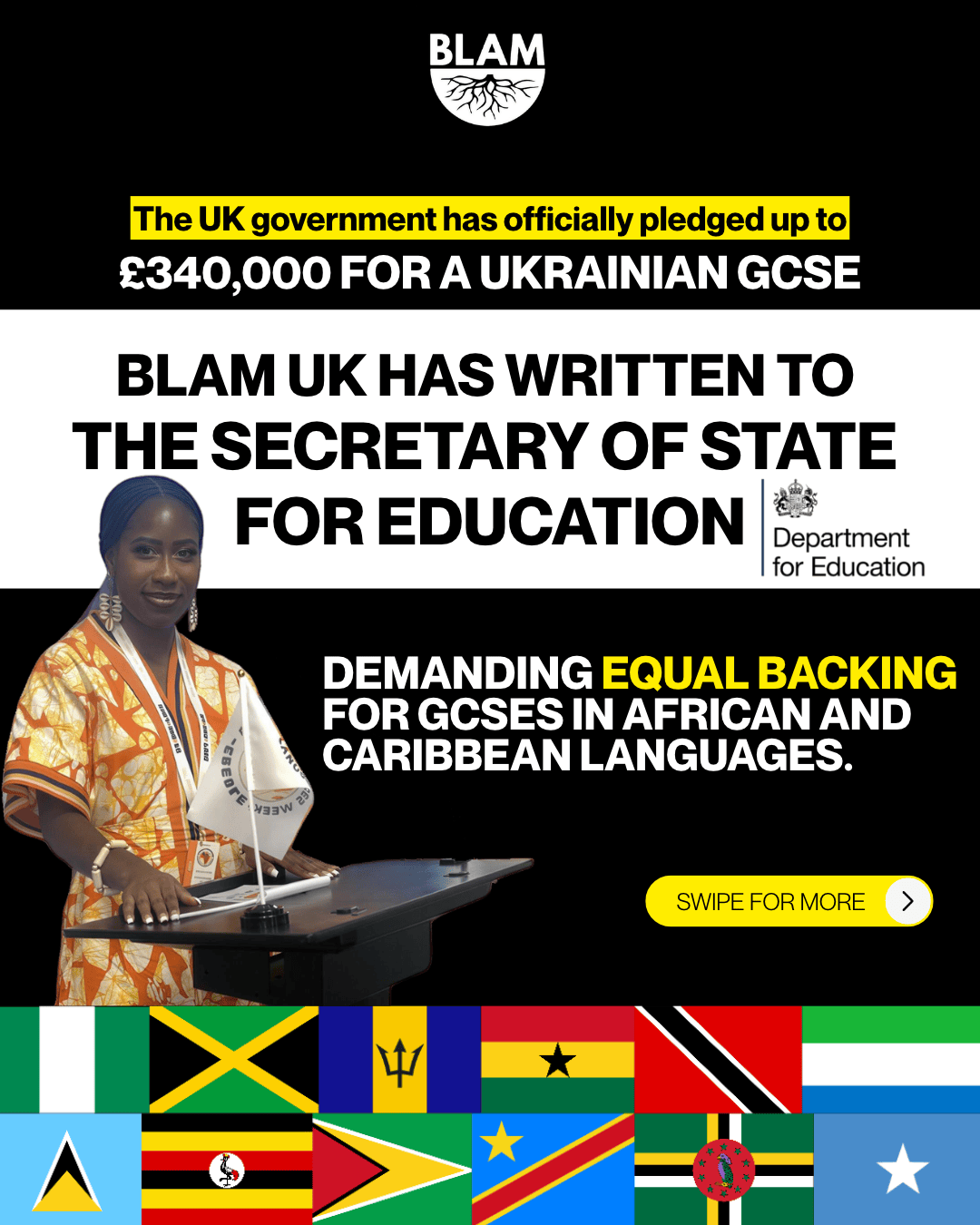
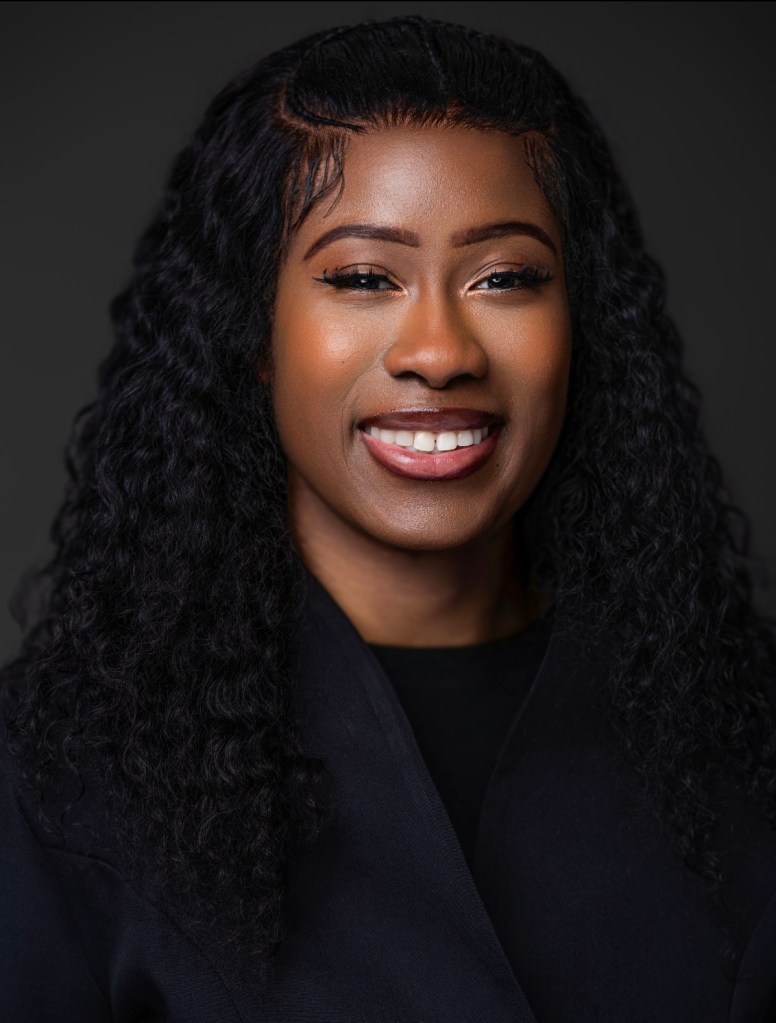
Following the announcement of a Ukrainian GCSE, BLAM UK Founder and CEO Ife Thompson is asking the Secretary of State for Education a question: “Where is the equivalent recognition for Britain’s African and Caribbean communities?”
Read her letter in full below.
Dear Secretary of State,
I am writing on behalf of Black Learning Achievement and Mental Health (BLAM UK) to formally raise concerns about the continued exclusion of African language families and Afro-descendant Creoles and Pidgins from the GCSE Modern Foreign Languages curriculum in England.
BLAM UK (Black Learning Achievement and mental health) is an organisation committed to challenging educational inequalities, advancing Black educational achievement and promoting greater recognition of Black histories, languages, identities, cultures and intellectual contributions within the British education system. Our work recognises that language is not simply a means of communication; it is fundamental to cultural identity, intergenerational knowledge, belonging and educational recognition.
We are increasingly concerned that the UK’s education system continues to overlook the linguistic heritage of African and Caribbean communities, despite their longstanding contribution to British society.
Our campaign and growing public advocacy
On 16 September 2026, BLAM UK via its founder Ife Thompson initiated its campaign calling for the recognition and inclusion of African and Afro-descendant languages within the GCSE examination framework; it sent a number of direct emails to various exam boards such as AQA, Pearson, and Wdjec.
The campaign went public on 18th October 2026 on social media, bringing the issue into wider public discussion and attracting media attention, including coverage by The Voice newspaper on 29th October 2026, Britain’s leading newspaper serving Black communities. Please see here – https://www.voice-online.co.uk/news/uk-news/2026/10/29/community-campaign-calls-for-gcses-in-african-and-caribbean-languages/
Our campaign has since highlighted the structural exclusion of African language families and Afro-descendant Creoles and Pidgins from the current GCSE offering. This campaign has been supported with parents, educators, linguists and community members who are all equally concerned that Black children uniquely out of all the racial groups are not able to learn a language from their region like all other racial counterparts.
This is not simply a campaign for additional language options. It is a campaign for educational equity, cultural recognition and an examination system that reflects the linguistic diversity of the children it serves.
The Ukrainian GCSE announcement and the question of parity
The recent announcement that Ukrainian will be introduced as a GCSE qualification, with development supported by government funding, raises important questions about whose linguistic heritage receives institutional recognition and investment.
We welcome the recognition of Ukrainian children’s right to maintain their language, culture and heritage. We equally recognise the importance of the Government’s acknowledgement that Ukrainian pupils should not have been placed in the position of studying Russian when their own language was unavailable as a GCSE option.
The Education Minister, Georgia Gould, publicly apologised to Ukrainian pupils who had been encouraged to study Russian, acknowledging the importance of providing access to a qualification in their own language.
The campaign for Ukrainian GCSE provision represents the interests of a community of more than 30,000 Ukrainian children who have arrived in the UK since Russia’s full-scale invasion.
However, this raises an important question: where is the equivalent recognition for Britain’s African and Caribbean communities?
There are approximately 700,000 Black and Black mixed-heritage pupils represented in UK education statistics. Yet African language families and Afro-descendant Creoles and Pidgins remain absent from the GCSE language qualification landscape, and Black children are only able to learn the languages of their former colonisers, who did much work to intentionally eradicate and dismiss African languages. The current exclusion via UK GCSE curricula mirrors this history.
If the Government recognises that being unable to study one’s own language can undermine cultural identity, belonging and educational opportunity, those principles must apply consistently.
The legacy of colonial languages and linguistic inequality
English, French and Spanish are European languages with significant colonial histories across Africa and the Caribbean. Their dominance in many of our communities is inseparable from histories of colonisation, enslavement, displacement and cultural suppression.
Many African and Caribbean families have inherited these colonial languages through generations of historical circumstances. Yet the languages, linguistic systems and cultural knowledge that existed before and alongside colonial rule remain largely unrecognised within formal British language qualifications.
We should not have to accept that the only languages through which our children can gain formal recognition are those historically imposed upon us.

