Black British authors are severely underrepresented within UK publishing. This lack of representation is felt amongst publishing in general, but also within the reception of prestigious British literary prizes, such as the Booker prize, the Walter Scott prize, and more.
An analysis by The Guardian of the racial diversity of nominees for the 8 leading literary prizes between 1996 and 2020 showed interesting findings. The prizes examined were: the Booker prize, Women’s prize for fiction, Folio prize, Orwell book prize, Baillie Gifford, International Dylan Thomas prize, Carnegie medal and Costa book awards (which include the Costa first novel award, Costa novel award, Costa biography award, Costa poetry award and Costa children’s award).
This analysis showed that Black authors made up 6% of shortlisted authors for the UK’s top literary prizes in the past 25 years. Over the same 25-year period, Black Britons made up 3.1% of shortlisted nominees. Between 1996 and 2020, there were 1,357 entries, of which 82 were Black authors (7.1%). In the years 1996, 2001, 2002, and 2009 there were no Black authors shortlisted across any of the prizes. This shows that disparities remain between prizes, with some awards announcing more diverse shortlists than others.
Even Black British authors who are celebrated have received less recognition within the industry. Between 1996 and 2017, Malorie Blackman, author of the young adult novel series ‘Noughts & Crosses’, was the only Black author shortlisted for the Canergie medal out of 150 authors. Between 2018 and 2021, having made an effort to increase racial diversity, Black authors made up 37.5% of shortlisted nominees for top literary prizes. Yet, the Carnegie medal to this day, 85 years down the line, has still not managed to be awarded to a Black British writer.
It can be observed that there has been a gradual increase in the racial diversity of nominees, and this is as a result of pressures for literary prizes to diversify their nominees and address their racial inequalities. The Black Lives Matter protests of the summer of 2020 also drew attention to the lack of diversity and representation of Black British authors within the publishing industry. After the protests in June 2020, Bernardine Evaristo and Reni Eddo-Lodge became the first Black British women to top the UK’s fiction and nonfiction paperback charts.
When Bernardine Evaristo became aware that she was the first and only Black British woman to top Britain’s non-fiction book bestseller chart she tweeted that she could not help but be dismayed at the tragic circumstances in which this achievement came about – the killing of Goerge Floyd,. She went on to state in her tweet that this was ultimately a horrible indictment of the publishing industry. That same year of 2020 saw the Booker Prize announce its most racially diverse shortlist to date. Bernadine Evaristo became the first black British writer to win the award, which she shared with Margaret Atwood.
The Black Writers’ Guild (BWG), a then newly formed association of Black authors within the UK, comprising over 200 published writers, including literary figures and bestselling authors, wrote an open letter expressing concerns that British publishers were “raising awareness of racial inequality without significantly addressing their own”. The letter was published on 15th June 2020, and was addressed to leading publishing companies in the UK, urging them to tackle the industry’s systemic inequalities and the ‘chronic’ under-representation of Black authors, commissioners, and senior decision-makers. The letter can be found here.
The children’s publishing industry is no better, with only a handful of Black British authors being published between 2007 and 2017. Benjamin Zephaniah, a Black British author assigned to students and member of the Black Writers’ Guild, shared some sentiments surrounding his work when he was at the beginning of his career: “I had publishers saying, ‘We don’t publish [B]lack and Rastafarian poetry. We don’t know what to do with it’”. This reveals that publishing companies are unaware not only of the importance of Black poetry, they may also deem it to be ‘unprofitable’ and may even be unsure how to market it and give it the exposure that other non-Black publications receive. These sentiments that Benjamin Zephaniah revealed that he heard are not uncommon.
In delving into the racist and exclusionary UK publishing and literary prize industry we are aiming to highlight and emphasise that superficial engagement with Black British authorship is not simply enough. The reality is that there are numerous Black British writers who have not been or will never be published because the UK publishing industry is biassed, and discriminatory against Black authors. Black British authors are not represented, their work is not engaged with, and they do not receive the same amount of campaigning and recognition for their work.
It is not enough for the UK publishing industry to be superficially more representative of Black British and non-white writers, it also must address its systemic barriers that result in racial inequalities. It must see racial diversity at all levels, from published writers, to nominees, to senior decision makers, as expressed in the BWG’s open letter. Black British literary talent is rich and plentiful, and their stories must be heard.
School teaches us many subjects, but did anyone ever teach you how to deal with racism? It’s a strange concept; how do you teach a child about racism? Most adults don’t know how much about racism, let alone know how to teach a very serious, mature topic to a Year 4 child! But if our children are experiencing racism from primary school ages, how can we measure and support their mental health? Acknowledging racism and its harmful effects is the first step.
Racism may be an ‘adult’ topic, but the reality is, that discrimination starts early. Children can recognise racial differences from 6 months old, and can start internalising racial bias as early as two. Racism is a learned behaviour, taken up through observation of how adults interact with each other (and what they say behind closed doors). Despite laws and regulations in place, many Black British children still face racial discrimination, both in and out of the classroom. And as is the nature of children, they are very impressionable, learning how to think, speak, and act, based on what the people around them think, say, and act. This tool for children’s development is a double-edged sword; racial bias and other forms of discrimination are quickly absorbed, and can be internalised, or even replicated. This makes unhappy, underdeveloped, and traumatised children, who may go on to distribute the same trauma to their peers, and later, maybe their own children.
At BLAM UK, we aim to support, improve and raise the racial esteem and racial identity of Black children by teaching racially affirming narratives about themselves and people that look like them. Racial trauma has only recently been acknowledged as a global threat to health, and through our Racial Wellbeing Initiative, we have been able to support and safeguard the mental well-being of children around the United Kingdom. Our Racial Wellbeing Workshops give Black children an open space for group discussion to connect and support one another by processing their reactions, experiences, and feelings about Black Joy, and also any forms of racial stress and trauma. Co-delivered by Humanistic Integrative Counsellor and BACP accredited mental health practitioner, Bankole Jaiyeoba, the workshops were delivered to Primary and Secondary Schools around London, covering themes of Black joy, racial trauma and its effects, and how to process negative racial bias to help prevent internalised racism, following BLAM UK’s stance on utilising transformative, healing justice to combat racial bias.
We found that school children often understand the concept of racism, and that it is wrong and hurtful, but do not understand what race, or heritage, ethnicity, or nationality is, nor understand how our brains and bodies react to racism. If we don’t fully understand how racial identity shapes our behaviours and interactions with other people, how can we ever change them for the better? Clearly defining definitions of identity, race, and discrimination builds the structure for navigating racial bias; we introduced this to our pupils through word association games. These help our brains to engage with the content by offloading information from our schema, or working brain, by writing down our immediate thoughts, and also can reveal our subconscious thoughts as well. It also got the pupils comfortable with sharing their thoughts, no matter how random they might be! I also found that most of the participants’ understanding of mental health was limited only to bad mental health; the idea that you only need to take care of your mental health when it’s bad, which is when you go and see a doctor. We wanted to challenge this idea; just like your physical health, your mental health will naturally fluctuate, and you must take preventative, ongoing care of your mental health, the same way you take ongoing care of your body through exercise, healthy eating, cleanliness etc. Mental health should be spoken about all the time, not just when it’s gotten bad, to help break the stigma around mental illness, and promote mindfulness and other forms of transformative self-care.
Racism can be overt, such as slur-calling, open discrimination, or covert, such as micro-agressions, implicit biases, and subtle commentary. It can be very uncomfortable to challenge racial bias, and it can be hard for a child to be able to articulate to another person why the interaction was racially biassed, or to articulate the impact that has had on their feelings. Our workshops were a safe space for Black children to talk about their racial experiences, and despite articulating your feelings being a challenge, the conversation would not stop flowing. Black British children from ages 7-18 all had an experience, opinion, or answer to share, with the most common theme being they felt that school didn’t care about tackling racism. Some children even found that whilst they felt uncomfortable, they didn’t realise what happened was racist until they had reflected on the situation, highlighting the difficulties of addressing racial bias, particularly in school with white elders in positions of power. In our workshops, we covered understanding what race, racial trauma, and wellbeing all are to ensure everyone has the same level of understanding. We also covered similar lived experiences, practising how to recognise and articulate emotions and racial bias and its traumatic effects, as well as techniques, skills and advice we can use to protect our mental health and safeguard our racial wellbeing.
Stress, in all its various forms affects us individually, but regardless of our emotional reaction to stress, it affects our brains chemically the exact same way. The amygdala in the brain controls hormones, specifically hormones that trigger our ‘flight, fight, or freeze reaction’. When exposed to stress, such as conflict, or public speaking, or roller coasters, or first dates, the amygdala in our brains fires, causing a waterfall cascade of different hormones, such as adrenaline, that make butterflies in our stomachs, sweaty palms, nausea, trouble thinking etc. Some people may become angry and upset, raise their voice, or withdraw, hide, and cry, or maybe completely shut down, and become unreactive. Even if the stress isn’t direct (for example, if you see a racist social media comment, if you read something tragic in the news, etc.) our brains can still have that chemical reaction, which affects our bodies and minds. Often, we are unaware that our brains produce these chemicals, and it’s only when we see the emotional reaction to the stress that we even acknowledge the stressor to begin with. For school-children, the brain is still developing and learning how to cope with stressors and build resilience. For myself, I found it important to explain the why behind our brains chemical reactions and its effects on our behaviour to help foster an understanding of why we feel or react in certain ways. A solid understanding of our identities, bodies, and wellbeing is the first step to implementing change and supporting our good mental health.. When the body is in the flight, fight, or freeze response, the primary way to cease the amygdala producing stress hormones is to regulate your breathing, allowing blood (carrying oxygen, stress hormones, lactic acid) to regulate back to normal levels. As discussions around race and trauma can be triggering for some people, we utilised the 4-2-6 breathing technique to regulate our autonomous functions before leaving the classroom.
Some of our Year 6 participants already had an advanced understanding of emotional management, and had their own stress management strategies, such as counting to 10, fidget tools, slow breathing, and even a quick game of football, to trick the brain into thinking the threat has passed. For the students that had difficulty identifying their emotions and stressors, we practised a grounding technique to help increase mindfulness and bodily awareness; the Body Scan exercise calls attention to each part of the body, bringing awareness to tension held within the muscles and joints, as well as grounding one into the present moment, helping prevent escalating feelings and calming the mind. This also helped some students become aware of their fight-flight-or-freeze response and its effects on their bodies, calling attention to when stress is building without their realisation.
Testimonial from Mr King, Henry Fawcett Primary School-
“I feel the workshop went really well and that the students benefited from the knowledge they gained! The mental health [sections] of the workshop were very useful and helped the student[s] to understand the science behind controlling your emotions and what can happen if you let your emotions get the better of you. It gave the children a platform to express any concerns they may have about race or mental health in an appropriate non judgemental environment. ”
Just like other subjects, tackling racial conflict and trauma, and maintaining positive mental wellbeing requires practice. Self-care may sound easy- take a bubble bath, exercise, treat yourself! But actually, controlling your emotional output and safeguarding your esteem is incredibly difficult; the institutionalisation of racism can make one feel isolated, othered, and is incredibly straining on your brain, increasing your cognitive load and contributing to burnout. This is even harder for children and young adults, whose prefrontal cortex (the part of the brain that controls decision making) isn’t fully developed. Practising talking about difficult topics sets our children up for navigating these conversations in their future, as well as gets them to reflect on their past interactions with racial bias.
Trauma affects us all in different ways, often in ways we don’t notice, and the practice of mindfulness, particularly acknowledging your mental and physical reactions to stress, helps us develop resilience, as well as establish boundaries to safeguard our mental health. Many of our participants said that they relied on talking to a friend or family member to help them destress, and that ranting or sharing their experiences with someone made them feel better about the situation, and helped them to move on. I found that the atmosphere of the workshops fostered a safe space to allow sharing to happen between the participants, and once one person shared their experience, they encouraged another person to share theirs. I found the workshops ending with a few still-interested pupils lingering to continue speaking their truth, excited to have a community ready to listen and empathise with them, and happy to have their feelings and experiences validated. Nearly every workshop had each pupil in agreement; that their schools did not take racism seriously.
In addition to learning how to identify our racial identities and biases, we also need to learn how to practise safeguarding our racial identities and mental health. A strong understanding of racial identity and mental health, leads to a strong sense of self and a strong sense of self leads to confidence and high racial esteem. Sense of self is a combination of images and words we associate with ourselves, and if the words we think about ourselves are negative, they will in turn negatively affect the image we have of ourselves. Likewise, feeding ourselves positive words and images will positively impact our self-image.Good mental health means being confident, safe, and secure, as well as being resilient to the stressors of life. Building a strong sense of self gives a firm foundation for building up confidence, which in turn, will improve mental health. Joyful self-expression of your identity can be done internally, or externally. Internal joy comes from the mental principles that enable good mental health, such as world-view, imagination/ambition, and inner conflicts/fear. External joy comes from the physical principles, or situations, that can impact mental health, such as instant gratification, exercise, physiological needs, career, and relationships. The external joys are often focused upon more heavily, as these things teach us how to problem-solve, to recognise and fulfil our needs and desires, and how to take action. However, external expressions of joy only indirectly impact your wellbeing, whereas, internal expressions of joy directly influences your wellbeing through teaching us how to recognise and process emotion. Emotions are a way for our subconscious to communicate with our conscious mind, and being present and in tune with all our emotions allows us to directly impact our wellbeing. expresses our internal joy. In addition, there is also Black Joy, or cultural and ethnic expressions of Joy, that strengthens our self-image and redefines our relationship with our race, as well as other people’s.
In the context of discrimination, the simple act of authenticity and cultural expression is radical self-care. Our workshops also highlighted that experimenting, testing, and trying different ways of joy expression and self-care is going to have the greatest impact; as you grow and your situation changes, so will your coping mechanisms, so we must continue to practise being self-aware and strengthening our self-image in order to maintain our good mental health. The Body-Scan and 4-2-6 breathing techniques were a huge hit, with one student commenting “it was easy to do and made me feel better, but it’s hard to remember to stay mindful”. This idea was echoed by a few other participants; that mindfulness is a simple, easy thing to do, but it is hard to get our brains to turn off and to remain mindful.
The acts required to take care of one’s wellness is an ongoing, developing process that evolves with our personalities. Childhood is a fundamental developmental period to begin this process of emotional regulation, building self-esteem and creating resilient individuals well-equipped to not only successfully navigate stressors such as racism, but also for social progression and transformative justice. In addition to being able to navigate through racism when it’s happening to us, we also need to be able to navigate through the trauma racism leaves behind. The exploration and expression of Black Joy that inspires, celebrates, and uplifts Black culture, is a form of Radical Self-care. Racial wellbeing is a conscious effort to promote cultural expression and self acceptance to equip us with the tools we need to tackle racism. By reinforcing the positive associations and joys of Black culture, we also promote positive self-image and self-affirming cultural expression of identity, as well as actively reject white supremacist ideology.
Finally, we spent the last part of the workshops focusing on the BLAM UK values of Transformative Justice (TJ), a framework approach for responding to violence, harm, and abuse (i.e. racism) without creating more violence and/or reducing the violence. TJ is achieved without reliance on the state interventions such as school exclusions or the foster care system, not dissimilar to the ethos of the Black Panther Party. TJ also promotes preventative measures against violence, such as accountability, resilience, self-identity, healing, and community. The students came up with their own examples of TJ with the prompt “An eye for an eye makes the whole world go blind”, which was a fantastic opportunity for healing by allowing the students to reflect and verbalise the resolution they desired in their own life experiences, as well as recognise how to address conflict without inflicting more harm. As an accompaniment to the Racial Wellness Workshops, we distributed our Racial Wellness Creative Booklets, designed to promote Black joy and positive Black representations of art, language, and practical resources to help build racial esteem. These workbooks help facilitate the continuation of learning after the workshops, such as affirmations of Black Joy, exploring the origins and validity of Black British English (BBE), journaling techniques, ‘Pod Mapping’ to identify your community and support system, and more.
One of our partner schools, Charter East Dulwich, engaged in the programme multiple times, and have left testimonials to their experience:
“ [In] This workshop I learnt a lot, it was packed full with info. I learnt how to accept who I am for who I am, accept my race, my feelings and my emotions. If I had an opportunity to do it again I would.” “I think this boosts a lot of people’s confidence” “It was great and should happen more” “It was very good, I’ve never experienced a workshop like this, thank you”
Case Study 1
“Tyler” is a self-confessed introvert, and usually keeps to himself and his small circle of friends. In the Racial Wellbeing Workshop, Tyler started to speak up and share his experiences and thoughts. He had never spoken up about his racial experiences, or really, any emotional experience, preferring to express himself through his writing, but in the safe space of the workshop, Tyler saw that the younger children weren’t sure what to say. He spoke about how teachers would call him and his other dark-skinned friends ‘gangs’ or ‘criminals’ when they were gathered together, and how the school tried to stop more than 5 Black children travelling together. He spoke about his low confidence, and how no one ever called dark-skinned, quiet, slender built men ‘handsome’, or ‘pretty’, instead of just ‘dark’, and how all these experiences made him feel. The others in his group all nodded and agreed with him; he verbalised the shared feelings of the group, and he also spoke about how he built his confidence back up again. Tyler was a big champion of mental health, particularly Black men’s health, and urged the whole room to keep talking.
Venting, sharing, talking, all help us process and verbalise our feelings, offloading the brain and clearing the mind, as well as helps us regain perspective. Tyler spoke very fondly of his friends (the aforementioned ‘gang’) and how sharing experiences with other Black men helped prevent him internalising the racially-biased opinions of others. Most notably, Tyler said that he would have loved to have a Racial Wellbeing session earlier in his schooling, and whilst the school has made great changes to tackling racism since he began KS3, more can still be done.”
Case Study 2
“Jackson” was roped into his Sixth Form duties, asked by his teacher to attend and support BLAM UK’s Racial Wellbeing Workshop. Jackson said he had never been to therapy, and the only people he has really spoken to about mental health or racial wellbeing, was his friends and one Black teacher. Jackson told us about an incident at school where a teacher made a remark about his racial group and intelligence, which made him feel uncomfortable. Not wanting to escalate the situation, or get in trouble by ‘talking back’ to a teacher, Jackson had left the situation . It wasn’t until Jackson had spoken about the situation to a Black teacher that he realised the other teacher had said something racist. Jackson then went on to point out that often, Black children aren’t able to properly articulate and address racial bias and confront it, either because they are too young to be able to process the confrontation and verbalise their pain, or because they are scared of making the situation worse, and being labelled ‘angry’, ‘aggressive’, or ‘over-emotional’.
Understanding how the brain reacts to environmental stressors, producing adrenaline and other stress hormones automatically without our control, helped Jackson understand his reaction to his previous racially traumatic situation, and he reflected on how he would deal with it now that he is older. He said he would do a very similar thing, and go to talk to a trusted person about it, as he recognised that processing trauma requires us to talk about our experiences, or write them down. He said he felt like he could hold his own in that situation now, and to question the teacher about what their comment really means. Most importantly, he said he feels more resilient, and that even if the teacher didn’t recognise their own racial biases, he could confidently disregard their ignorance, and safeguard his racial wellbeing to avoid internalising racism.
If you are interested in learning more about the project or would like to order the wellness booklets, please email youthracialwellness@blamuk.org
What could justice look like for those deeply affected by enslavement and colonisation? The answer to this question would vary depending on who it is asked to. Barbados is one country which has begun to ask, and answer, this question. The legacy of enslavement has been at the forefront of several Caribbean countries, and Barbados is no different.
Barbados is an island nation in the Caribbean with unique geological origins. Early inhabitants of the island were agricultural people who cultivated all manner of crops, from cotton and cassava to guava. In 2021, Barbados removed Queen Elizabeth II as its head of state to officially become a republic. It has been a fully independent and sovereign nation as of November 2021, though it still remains in the Commonwealth.
The arrival of European colonists such as the British and Portuguese in the 1600s coincided with the creation of a market for enslaved people, cash-crops such as cotton and sugar and colonial motivations. Barbados was an island that housed enslaved Africans who through forced labour brought wealth to its slave owners and their operations.
After the abolition of slavery in 1834, compensation was paid to slave-owners and slave-owning operations. No compensation was given to those previously enslaved, or their descendants. Many countries deserve reparations and justice, but have not been given it. Barbados is continuing to pursue justice.
Today, in the topic of justice, compensation and reparations, Barbados is in the process of considering calling for reparations from the estates and descendants of slave owners and plantation owners. The families of slave owners and other slave-owning operations received compensation from the British government after abolition, which was only paid off in 2015.
Tory MP Richard Drax is being urged by campaigners in Barbados to give back the sugar plantation that he inherited, or face a claim for compensation. The sugar plantation that Richard Drax MP inherited was established in the 1620s by enslaved labour. The Drax estate comprises hundreds of acres of real estate in Barbados – all of which is being urged to be returned to the island. The plantation in particular is at the forefront of this claim, with desire for it to be turned into a memorial for those previously enslaved.
The family of Oscar-nominated actor Benedict Cumberbatch is the latest (at the time of writing) to face the prospect of legal action for their links to enslavement in Barbados. Joshua Cumberbatch, the seventh great-grandfather of Benedict Cumberbatch, bought the Cleland Plantation in Barbados in 1728, where it kept 250 enslaved people until the abolition of slavery in Britain 1834.
Benedict Cumberbatch had revealed that he was aware of his family’s slave-owning past, and it is reported that his mother, actress Wanda Ventham, advised him to abandon his last name when he began pursuing an acting career so that he would not be a target for reparations or be associated with the family history. Benedict Cumberbatch’s family was compensated with a sum worth £1m today.
These reparations could greatly contribute to the nation’s development as it could be used to support the expansion and creation of key infrastructure such as schools and hospitals, and address socio-economic concerns such as housing.
Justice may look different to each country, and it is crucial that Barbados receives support for seeking justice from those who harmed it. Barbados’ desire for justice for its previously enslaved inhabitants will hopefully serve as a green light for other countries affected by colonialism and enslavement, and may even lead to a coordinated effort for reparations.
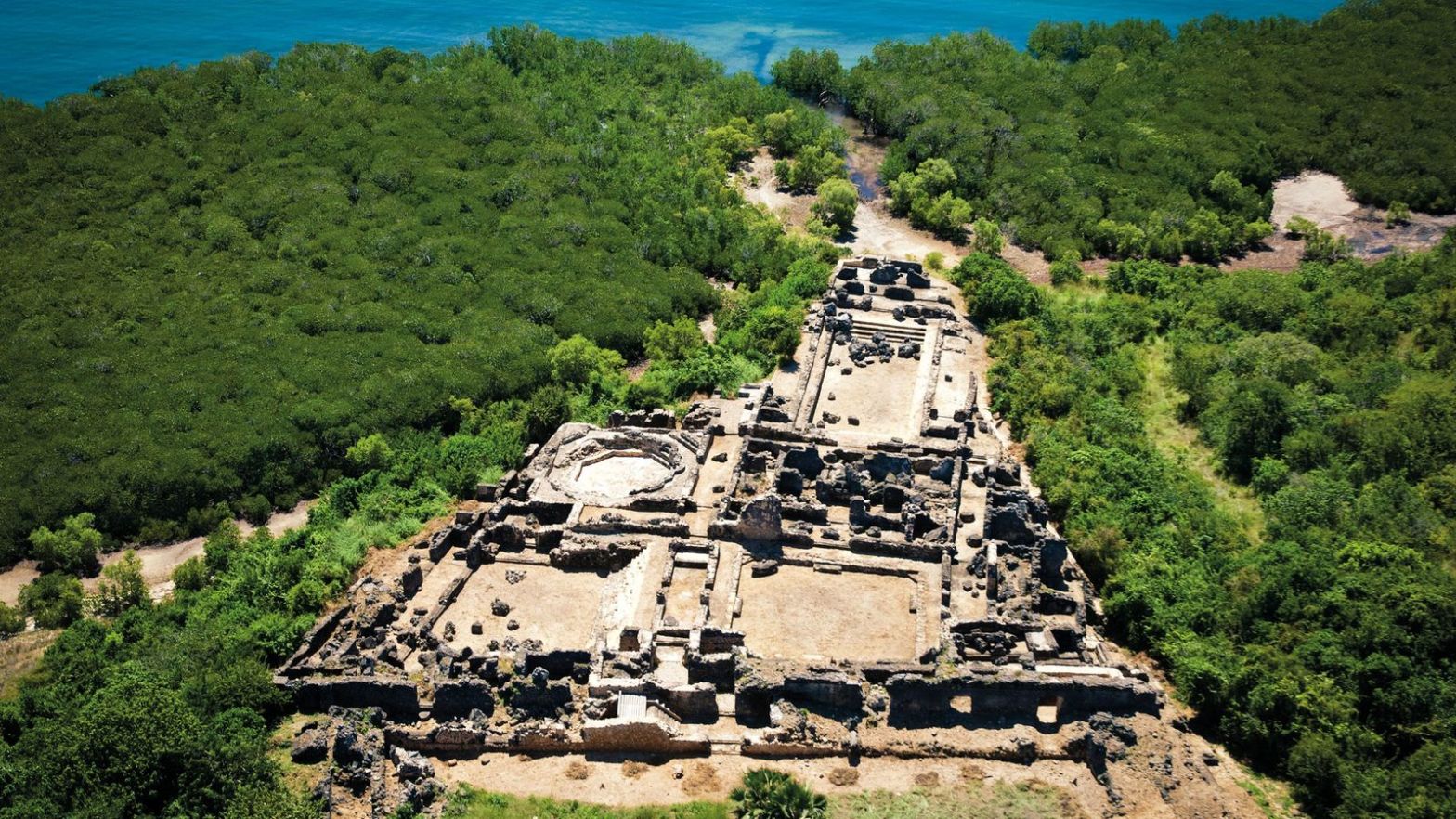
Off the coast of the East African country of Tanzania is an island you may have never heard of. In the Kilwa District of southern Tanzania lies the ruins of Kilwa Kisiwani, an island that we now refer to as an economic powerhouse on the Swahili Coast. In this blog, we will explore the uniqueness of the Kingdom of Kilwa Kisiwani.
Kilwa Kisiwani is believed by historians to have been a settlement as early as the 4th century. In its prime, it was an extremely important location. It was a principal port amongst coastal trading cities along the Swahili Coast, which was the coastal strip of land which stretched from Somalia in the North to Mozambique in the South. It was made up of East African cities such as Kilwa (Tanzania), Mombasa (Kenya), and Sofala (Mozambique). Because Kilwa Kisiwani was a principal port, it became a hub of trade and commerce.
The Kingdom of Kilwa Kisiwani’s uniqueness is from the general agreement that it was the product of a mixture of African, Arabian, and Persian cultures. It is even sometimes referred to as an Afro-Arabian dynasty! Locals of the island even began incorporating Arabic and Person words into their language of Swahili, and Arabian and Persian customs and influences are reflected in the art, architecture, and religion (Islam) of wider Swahili culture.
In the 8th century, the expansion of Swahili culture on the African coast meant increased economic activity, particularly within trade. Small-time Swahili traders saw possibilities for larger trading operations which would have the potential to bring them wealth and fortune. Over time, goods such as ivory, tortoise shell, clay, and timber were traded with other communities and foreign traders, while Kilwa Kisiwani imported cotton, ceramics, silk, and even Chinese porcelain, hinted by the discovery of Chinese ceramics on the island.
The expansion of Swahili culture on the African coast also meant that ideas were exchanged, developed and considered with others of different backgrounds and cultures within the kingdom. Kilwa Kisiwani, and the Swahili Coast in general, had great links with the Islamic world. Muslim traders flowing in and out of the region interacting with Kilwa traders allowed the Kingdom of Kilwa to adopt Islam as one of its religions.
Islam became a major religion on the island, commemorated by the construction of the Great Mosque of Kilwa. Construction likely began around the 10th century, and coral stone was incorporated into its construction. The Great Mosque of Kilwa was referenced by Ibn Battuta (sometimes spelt Battouta), the renowned traveller, in his recounting of his travels to the kingdom in 1331. Today, the mosque is regarded as the earliest remaining mosque on the East African coast. Another testament to the Islamic influence, the kingdom also adopted a sultanate and had sultans, Muslim sovereign leaders. Kilwa Kisiwani, despite having this ruling system, was still multi-religious like many African kingdoms.
Coral was used, uniquely, to build a lot of the island’s structures and architecture. This allowed the island kingdom to have unique and defining coral stone architecture. Kilwa Kisiwani even minted its own currency in the 11th to 14th centuries, evidence of its economic prosperity. Portuguese occupation on the island in the 16th century signalled the start of the kingdom’s decline.
Kilwa Kisiwani was abandoned by the mid-19th century, and the ruins are available to visit and explore today. A short boat ride away from mainland Tanzania, the ruins are a UNESCO protected World Heritage site and have been since 1981. Kilwa Kisiwani, like many African kingdoms, has not received the attention that it deserves. A mixture of African, Arabian and Persian cultures, a once-thriving sultanate, and a trade and commerce hub all on the East African coast make it a unique and interesting kingdom to look at.
Today, Many parts of the island are still unexcavated, and we look forward to what future excavations will reveal about this once illustrious, prosperous African kingdom.
It is widely understood that Black communities and Black people in the UK are overpoliced and underprotected by the criminal justice system (CJS) as we are more than ten times more likely to be stopped and searched than our white counterparts. Statistics also indicate the Black people are likely to get harsher sentences than their white counterparts, for the same crime. Unfortunately, we have seen the extension of this over policing in the education system as UK police forces deploy 683 officers in schools, with poorer areas targeted (Guardian, 2021). Whilst the police force, and some schools, argue that safer schools officers (SSO) are an important part in ensuring the safety of children, BLAM argues that SSOs pose a great risk to the safety of Black and minoritised children, who are already more likely to come into contact with CJS and Child services because of the anti-Blackness and anti-Black racism which is already inherent in both the education and criminal justice system.
Education continues to be a microcosm for wider society as it perpetuates racial discourses and racial discrimination through the policies, practices and systems which exist. The criminalisation of Black children in education is part of the wider criminalisation of Black children, and Black people, in the media and by the criminal justice system. And this criminalisation can be seen in the way in which Black children are often penalised or sanctioned by teachers much more harshly than other children. Through our work in youth advocacy, BLAM have seen children receiving the harshest punishments on a school’s behaviour policy for “kissing their teeth” or not following the uniform/language policy. These sanctions for such “behaviours” are too harsh and inherently anti-Black as they criminalise and punish culture. Education and school behaviour policies leave every opportunity for Black children to be at risk of being criminalised and sanctioned for being themselves as opposed to deterring any real “bad behaviour”. And we can see by looking at the statistics on exclusion rates in England indicate that exclusion is higher amongst Black children as a whole, in comparison to their white English counterparts. Specifically, in parts of England the exclusion rate is five times higher for Black Caribbean pupils than their white counterparts reinforcing the false narrative that Black Caribbean children are badly behaved (Guardian, 2021).
Kieran, 38, a father, from Hackney has raised concerns about the unfair punishments his son has faced in Mossbourne School and the numerous times the school have called him in about his son’s behaviour. For example, Kieran’s son was given a detention for “fist-spudding” his friends in the playground. Here, school policies and practices play an important role in criminalising Black children constructing the narrative of Black children as “trouble” by punishing them for the way in which they choose to greet their friends. Moreover, Danica Sharpe said her son Josiah was sent home from school for having hair that was “too short” as the school stated that hairstyles/cuts should not fall below grade 2 (ITV,com, 2019). However, as Danica explained, a grade 2 cut on a white child and a Black child may look considerably different because of hair textures, curl patterns etc. Again, this is another example of school policies which fail to take into consideration cultural and racial differences thus making it almost inevitable that Black children are punished as a part of their school experience. The case of Child Q in 2022 was a harsh reminder that Black children are not afforded the same grace, or any grace, in the way in which they are viewed by others. Far from trying to de-escalate, the Child Q case illustrated the ways in which sanctions for Black children are often escalated in an unreasonable way. The police were called, and Child Q was subsequently strip searched for “smelling like cannabis”. State sanctioned violence and sexual assault are further punishments Black children receive in a society which continues to criminalise and adultify them.
Anti-Blackness and anti-Black racism are prevalent in British society and within its institutions. Education has, and continues, to be a microcosm for wider society through its perpetuation of racial discourse and racial discrimination. Specifically, the anti-Blackness and anti-Black racism in education has facilitated the criminalisation of the Black child and has been a long going issue for Black communities in Britain. In the youth advocacy work BLAM does, it has been clear that many Black children who have been excluded from school either have SEN or have underlying/undiagnosed SEN and are awaiting a CAMHS referral. Thus, many Black children with additional needs are being excluded from school and labelled as “bad” as opposed to a child in need of support. Statistically, Black children on Free School Meals and/or with Special Educational Needs (SEN) are more likely to be excluded from school, arguably the most severe form of punishment within education. Research conducted by 4in10: London’s Child Poverty Network and Just for Kids found that children on free school meals (FSM) and Black Caribbean children are likely to be excluded from school at a much higher rate than their peers on average across London’ (Just for Kids, 2020). This figure is heightened when SEN are factored in as ‘children on free school meals are twice as likely to have SEN and Black children face a higher chance of living in poverty’ (Just for Kids, 2020).
Such disparities within educational have a long history More than ten years ago, the Independent wrote:
“If you are black, disabled (SEN), male and on free school meals (poor), you are 168 times more likely to be excluded than if you are white, female, have no SEN and are not on free school meals.” (The Independent, 2012)
More than ten years later, issues of race, class and (dis)ability still are major contributing factors to educational disparities in England and across the UK.
The criminalisation of Black children, coupled with adultification and behaviour policies which problematise Black culture, results in poor educational experiences and poor attainment for some Black children. Because such disparities and discrimination are inherent in the system and the system’s institutions, there is a greater need to tackle the issues that have plagued Black people in British education for generations.
For parents and families in need of advocacy for a child going through a suspension or exclusion, BLAM offers a free youth advocacy service for Black children of African and Caribbean descent. You can also contact Just For Kids Law who offer legal guidance for young people in education and other areas of society – i.e. immigration. As a community we must endeavour to be vocal, to speak up and speak out for our young Black people who face immense victimisation and discrimination by the system
Get in touch with BLAM for Youth Advocacy and support for Black children in education. Email us at info@blamuk.org
Throughout shifts in history, Black hair has been twisted and muted in a variety of ways. Yet it still represents one of the strongest connections to our traditions. And the modern styling of our hair is often the closest many will get to being able to practise their heritage since so much of Black history has been stripped from general history. Historically early African cultures used hairstyles as a form of identification. Allowing hair to communicate information such as family relations, tribe and social status without a word ever being spoken (BBC). During slavery, while being taken from their countries, enslaved Africans were also forced to have their heads shaved as a method of humiliation and ‘sanitation’ by white slave traders. This practice not only had roots in humiliation as European colonisers understood the significance of the intricate hairstyles often worn by African people but also a method of cultural eradication as sales would no longer have the ability to be identified through their hair as they had previously done. For slaves who were able to keep their hair, the lack of tools and time often left them unable to properly care for their hair. The intricate hairstyles they had previously worn with pride became a thing of the past and changed to simple styles and headwraps for convenience. As time moved on the policing of Black hair did not stop and conformity became the goal to fit into a world not made for them. During the civil rights movement Black hair took back its ability to communicate as Black people began wearing their hair out openly as a sign of pride during Black powers ‘Black is beautiful’ campaign as natural Black hair being worn out became a symbol of pride, solidarity and love for the Black community.
Modern Significance of Black hair + Self-expression
In addition to the Historical significance of Black hair, it also holds a modern significance as the meaning and presentation of Black hair. On the coattails of slavery and freedom movements, conformity became the norm with the introduction of products such as relaxers and the integration of Hot Combs Black women in particular took to straightening their hair to distance themselves from their Blackness to become more palatable to white people. This conformity was to survive in a world that still saw Black people as lesser which grew the stereotype that natural Black hair was not beautiful nor was it professional. This perspective on Black hair style exists today as within society Black hair is often seen as messy leading many to try and alter their natural curls to adhere to white beauty standards. And in the professional world whether it be through dress codes in offices or rulebooks in sports that have penalised Black people for wearing their natural hair (CBC). Black hair has also become a form of reconnection for many as more people start to accept and embraced Black hair Black people have started to find beauty in their Blackness and their natural curls
Why this ban is a violation
With the embrace of natural hair styling among the Black community many schools have taken the approach to further penalise Black pupils by banning certain hairstyles from school. These bans target hairstyles such as Afros, cornrows and braids worn by Black students through uniform and appearance policies (the guardian). These bans not only limit the types of styling that Black students can also further criminalise Black students as through these policies Black hairstyles are subconsciously categorised as bad, unprofessional and not acceptable for school further putting Black students at a disadvantage. Schools have been warned that such bans would violate EHRC guidance which states that such bans would “Discriminating against pupils about or because of their hair may hurt pupils’ mental health and wellbeing.”(The Guardian). In addition, the Equality and Human Rights Commission (EHRC) said policies which ban certain hairstyles without making exceptions on racial grounds “are likely to be unlawful” due to their discriminatory nature. The Equality Act of 2010 also protects race and for a school to ban certain hair or hairstyles that are connected to their race and/or ethnicity would be discrimination under the act further making the action of these schools to ban these hairstyles illegal (EHRC).
Effect of the ban and harm it can cause
This ban on certain Black hairstyles also has a more individual impact as both the self-esteem and physical and mental health of Black pupils could be affected. The EHRC mentioned in their report that such bans could have a direct effect on the mental health and well-being of students as can be imagined when an inherent piece of your body is criminalised or banned from being in its natural state the mental ramifications especially on young pupils could be detrimental as they could find themselves struggling with accepting their natural beauty as their school’s policies force them to view their hair in a negative light. Furthermore, the banning of Black hairstyles would leave students to conform to white hair standards which would be viewed as acceptable under school policy. This could lead to students being forced to use methods of hair straightening or other styling that could cause irreversible damage to their natural hair. These treatments and the effort to find acceptable hairstyles that fall within these policy parameters can also place a financial burden upon Black families as by removing options such as afros or box braids parents and students may be faced with the financial burden of going outside of accessible hairstyles too and pay the price for more expensive treatment to fit the policy. In all, as stated in an article written by Remi Joseph-Salisbury and Laura Connelly, control over Black hair is a social control over the Black body which disadvantages Black students and which perpetuates the narrative that Black hair is messy and antithetical (Salisbury& Connelly).
Resource: How the ban continues white supremacy:‘If Your Hair Is Relaxed, White People Are Relaxed. If Your Hair Is Nappy, They’re Not Happy’: Black Hair as a Site of ‘Post-Racial’ Social Control in English Schools
There are several reasons why we, as people of African descent, must engage with, be aware of, and perhaps even internalise our history. Our narratives, the histories of those before who looked like us, and the histories of our respective ethnic groups (if applicable) are all key components of the building blocks of our cultural identities. It’s important to recognise that as Black people it can be hard to avoid what is paraded as the only relevant part of our history by white spaces – the Transatlantic Slave Trade.
Recently, there have been conscious efforts to establish that though enslavement of Africans is a part of our shared history, it is not the only entry or relevant event. Black history goes further than the immense tragedy of centuries enslavement and colonisation. Black history is diverse, Black history is rich, and Black history is extremely underrepresented. Black history is more. To me, history is not just dates and timelines or analysing sources. History does not always have to be an extensive account dating back several centuries. The beauty of Black history is that it is often an oral history – stories passed down over dinner tables, conversations during car rides home after a family function, even people doing #StoryTime on social media.
To me, the beauty of history is that it is dressed in many forms. History can be your mother recounting her experiences growing up. Something as seemingly simple and nostalgic as her route to school. History can also be your grandmother showing you pictures of her in her early adulthood. Something as amusing as seeing what constituted the latest fashion in the 1940s, on someone who looks a bit (or a lot) like you. History at times can also be that book you see in the library which was checked out on the 31st of August, 1988. Who was the person that had it before? What was their story?
For me, history is everything. For Black people, history is everything. Big events, like the Maroon Wars of 1728-1740 in colonial Jamaica, where Jamaican Maroons fought British colonial authorities endlessly and tirelessly in guerrilla warfare to resist enslavement. History also includes relatively small events, like listening to my mother talk about her childhood and growing up the youngest daughter in a family of six brothers. Although we can argue that wider Black history is not as easily accessible, we can also engage with those around us in our communities. Parents, guardians, older relatives, friends. History was made with them and history includes them.
It’s no secret that history that is recorded has been known to exclude certain groups, leaving them in the cold shadow of more populous, powerful groups. Creating hollow accounts full of gaps and lacking balance. However, the honest truth about history is that history is for everyone. History has been made by each and every soul that has been on Earth, and history will continue to be made.
History objectively does not have a master, but history can be manipulated. History can be doctored, and history can be skewed. History can place road-blocks in perfectly working paths. We have seen clear examples of all of these, such as when it was reported after an official review that Britain destroyed evidence of the extent of their colonial crimes and atrocities (The Guardian, 12/04/12). History is a tool that can reveal the unwelcoming corners of humanity. However, these are revelations we have to embrace, because the alternative is confusion and manipulation.
History can be moulded to suit many purposes. From extremes, such as propaganda, to more societal and institutional uses, such as nation-building. History can be great for affirming your identity or sense of belonging. Examine why people love learning about Black history beyond enslavement. Hearing about past thriving African kingdoms and civilisations, for example. The importance as Black people of knowing the history of those who looked like us and walked before us can shape our cultural identities. Our history is expansive and shows us how we have progressed and persisted despite institutional factors which exist to subdue us. It also helps us to shape our futures.
I enjoy engaging with history of every kind because I enjoy seeing progression and regression in society. I appreciate the categorisation, and I appreciate the attempts history makes to create a coherent timeline event despite the confusion that could come from dealing with the past. I believe that history can be cathartic and enlightening, despite the gaps we may see at times. It is extremely important to engage with our history as Black people, because we are the ones who are continuing to create it. We will document our wins, our losses, our stagnation and our progression, because we are the only ones who will tell the story accurately.
On Tuesday 17 January, our Director Ife Thompson and a member of the Justice for Chris Kaba Campaign supported the family of Chris Kaba while they met with the UN. During this meeting the family discussed their campaign for justice for the police killing of their son. It had previously been mentioned by Ife that the killing was a violation of various Human Rights laws and so this meeting was of great importance. She notes that this meeting was an important step in the campaign in that it highlighted these violations to the international community, in hopes of gaining support in calling out the British state and its institutional racism and globalising our fight for justice. We have seen many cases of Black people being subject to inhumane and degrading treatment and/or dying in police custody and there being no accountability or justice for those incidents. We acknowledge the work the UN is doing to recognise and rectify this issue on a global scale; Michelle Bachelet, High Commissioner for Human Rights, said impunity for crimes that may have been committed by agents of the State was profoundly damaging to the core values and social cohesion of every nation.1
BLAM UK stand firm in our belief in the necessity of the abolition of the police force. We will continue to fight for justice for Chris Kaba and his family, and will not stop until police murders like this cease.
Measuring at 500 million acres, the Congo Basin is larger than France and is the world’s second largest tropical rainforest- it is often known as the world’s second lung. The Congo Basin surrounds the equator, which alongside the massive water supply, makes opportune conditions for the rainforest to grow abundantly. It is made up of the Congo River, rich tropical rainforests and swamps.The Congo Basin is extremely important for regulating climate, as it has a huge carbon sink which traps carbon that would otherwise be C02 emissions. Located in Central Africa, the six countries that contain extensive forest cover are: Cameroon, the Central African Republic, the Democratic Republic of the Congo, the Republic of the Congo, Equatorial Guinea and Gabon. Countries that have part of their territory in the Congo Basin include Angola, Burundi, Rwanda, Tanzania and Zambia
The rainforest is home to an array of species, including gorillas, buffalo, elephants, chimpanzees, bonobos, okapi, and the Congo peafowl. The Congo Basin is the only place to shelter all three subspecies of gorilla: the lowland gorilla, the Eastern lowland gorilla and the mountain gorilla. The Basin has been occupied by human existence for more than 50,000 years and supplies more than 75 million people food, shelter and more. An ancient hunter-gatherer lifestyle is still lived by the Ba’Aka people, whose wellbeing relies on that of the rainforest. Eight natural sites in the Congo Basin are recorded on the World Heritage In Danger list and 14% of the humid area of forest is designated as protected. The Congo Basin has a history of military neutrality forced upon them by colonists that was decided on in The General Act of the Berlin Conference which tied its signatories to impartiality (this was ignored during the First World War).
Despite the widely held knowledge that the Congo Rainforest is essentially the Earth’s second lung, there is still major exploitation that goes on there. ‘Land grabbing’, which is the act of renting or buying large areas of African territory for exporting resources, is something that is on the rise and there is no consideration for the ecosystems, food security and economic developments that ‘land grabbing’ is harming. For local communities Illegal logging of timber is also an issue within the Congo Rainforest that destroys wildlife, negatively affects climate change and harms local communities such as that of the Ba’aka people, for example climate change linked to deforestation massively affects seasons, causing droughts and floods which prevent adequate foraging. Timber that has been illegally cut is currently banned in both the United States and EU. However, as long as the product is still shipped into China (China has not created restrictions concerning illegal timber), the problems will persist.
Due to the dangers being posed to the forest, the Dzanga- Sangha special reserve was created in 1990 to protect certain areas of Central Africa including the Congo Basin. There are also the issues of conservation and National Park building which are life threatening to the Ba’aka since it cuts them off from the forest. Conservation-related malnutrition among tribal peoples in the Congo is already a well-documented problem. In 2017, concerns were raised that conservation had contributed to the deaths of several dozen Ba’aka children during an epidemic in 2016. The deaths were attributed by a medical expert to malaria, pneumonia and dysentery, aggravated by severe malnutrition.
Ba’aka people
The Ba’aka people are a hunter-gatherer society of people living in southeastern Cameroon, Northwestern Congo and North Eastern Gabon.. With a population estimation of 25,000 Their hunter-gatherer society is also one that is acephalous, meaning that there are no hierarchies or political leaders, which makes it difficult to assimilate with other surrounding hierarchical countries. Politically, the Ba’aka people make decisions through consensus. Their nomadic tendencies as well as their stunted height (they have an average height of five feet) means they are often marginalised from society.
Both men and women hunt everyday and their hunting adheres to laws created to protect the forest which state that only traditional nets and spears can be used. Men hunt in a way which uses non- toxic chemicals which starve the fish of oxygen and make them float to the top for simple gathering, whereas the women carry out a type of hunting called ‘dam fishing’, where water is drained from a certain area and the fish are collected. The extensive knowledge that the Ba’aka people have of the forest is often heavily exploited by ivory traffickers, who use Ba’aka poverty to provide incentives for killing elephants for their tusks.The Ba’aka traditionally only hunted elephants for celebratory occasions such as weddings. There are some Ba’aka people taking a stand against these kinds of deals, being employed by the Cameroonian government as eco guards against poaching.
The Ba’aka people have managed to preserve their language (Baka). However, this is becoming more and more lost as they are forced to move from their traditional lands (due to illegal deforestation and logging). This means that they lose their knowledge that is directly associated with the land.
In terms of religious beliefs, the Ba’aka people are animist and believe in a forest spirit named Jengi, who they see as a guardian and mediator to the sovereignty, Komba. Some religious rituals include:
A post hunting ritual called Luma, in which the Ba’aka people sing songs of thanksgiving and praise to Jengi for what they have collected
A ceremony called Jengi where young boys volunteer themselves to be initiated by Jengi. After this initiation, they are free to walk in the sacred forest.
Traditional medicine is very important to the Ba’aka people and mainly involves herbal treatments taken from the forest, pureed into a pulp to treat things such as infertility. Their medicines are effective enough to attract non- Baka people who have taken ill.
Ba’aka people and COVID-19
Since the COVID pandemic was announced in Mid-March, the Ba’aka people have been isolating, grouping themselves by family or village. They returned to their camps in the forest, emulating their age-old tradition coined ‘molongo’ in which they go deep into the forest for extended periods of time to hunt and gather. However the low densities of the Congo Rainforest means that adequate protection from the spread of disease is difficult to meet.
Finally, at the age of twenty-one, I feel I can say truthfully that I love my natural hair. All of it. All its coils, kinks, curls and knots. I am happy with my hair but this journey has been far from simple.
When I was young, all I wanted was dead straight hair. I would stare at the white girls in envy, watching their ponytails swaying side to side as they walked the school halls, their long tresses cascading down their backs. I watched how effortlessly they scooped their hair up into a messy bun and came into class with fringes and an array of hairstyles my natural hair would never conform to. One morning before going to primary school, I grabbed a pair of scissors and cut the ends of my plaits in an attempt to make my hair ‘stay down’. I was left with a botched haircut, plaits that stuck up even more and tear-stained cheeks. Global definitions of beauty have been determined by Western Eurocentrism, so all I saw in the media were white women with flowy hair. I would wander the beauty aisles, gazing at the women with shiny straight hair on the box of hair products, yearning to have the same hair texture. Growing up, shops like Tesco, Asda, Superdrug, Boots etc did not even sell Black hair products. My mum had to go to the Black hair shops in East and South London to pick up a tub of Blue Magic and a bottle of Luster’s Pink.
As I got to secondary school, my relationship with my hair worsened. I no longer wanted my childish plaits so my mum let me take charge of my hair. With European textured hair, throwing it up into a ‘messy’ bun is acceptable. With Black hair this is not the case, our buns are seen as unruly, unkept and unprofessional. I’d come into school with what I thought was a stylish messy bun, only to be asked by my classmates why my hair was so untidy. I eventually began attempting ‘wash and go’s’ to lengthen my curls, but this was short-lived as an hour later my hair would shrink back to its natural state and we were back at square one. One day an interaction I’ll never forget took place. I queued up to go into my art class and a boy came up behind me. He yanked my hair and recoiled in horror. “Your hair is so oily, it’s disgusting” and he wiped his hand on his blazer.
So the argan oil Ecostyler gel became my best friend and I slicked my hair up daily, leaving my edges (and me) in tears. I would visit an African hairdresser now and again to get braids. As the blow dryer pick ripped through my knotted hair, I could feel their frustration and in the end, they would charge me extra because my hair was “too thick”. Even today when I sit in a salon chair I find myself automatically apologising for my thick hair; something I should not feel I have to do.
Having natural hair felt exhausting. Constantly seeing European beauty standards on TV and in magazines made me frustrated I did not have the same hair texture. Black hair is not even thought about when it comes to the beauty industry. I once remember my sister walking into a hair salon in Harrod’s to ask whether they cater to Black hair- to which they said no. If you don’t have Afro-textured hair you would not even realise how everyday things are not Afro-hair friendly. I worked in a kitchen previously and the uniform required me to wear a hat- it did not fit. I spent weeks repeatedly telling the managers how the hat will not fit over my hair until eventually, they let me wear two hairnets. Even recently for my graduation, I walked the stage without the hat because again- it did not fit my natural hair. These are covert forms of hair discrimination and are as insidious as overt forms. Anti-Black hair sentiments have been present for centuries. From the slave trade, where Afro hair was seen as a sign of uncivilization and used as reasoning for the dehumanisation and enslavement of Black people. To the present day, where stories of individuals being sent home from schools and workplaces for wearing their natural hair are unfortunately a common occurrence. Openly embracing your Afro-textured hair in a society that has continuously told you not to is a revolutionary move.
Arguably now there is much more representation when it comes to natural hair. Today there are millions of natural hair videos on YouTube, Instagram and TikTok filled with tips and tricks on how to treat Black hair. At the end of secondary school, I was over constantly slicking back my hair and decided to begin looking after it. By the time I started university, I had watched an uncountable amount of videos on natural hair journeys, big chops, LOC methods and more. My friends and I in sixth form would grab a cup of water, drop a strand of our hair into it and watch to see what our hair porosity was. I spent my weekends walking the aisles of Queens Cosmetics intently reading the ingredients of hair products. After years of despising hair care, I now have a routine that works best for me and my hair. Instead of natural hair being a mundane chore for me, I now find it therapeutic and comforting to spend time finger combing and moisturising. My insecurities do occasionally surface and these have a lot to do with the beauty standards on social media favouring type 3 curly hair, but I continue to work on this. I love my natural hair and have come a long way from the deep-rooted hate I used to have towards it. Rather than wishing for my hair to be something it is not, I feel liberated having natural coils and that is something I wish the younger me had the opportunity to feel.