If you were asked to name ten Black-owned brands would you be able to do it? As a challenge, can you name five Black-British brands? If you could then that’s fantastic! If not, don’t stress yourself too much, there’s still time to change that.
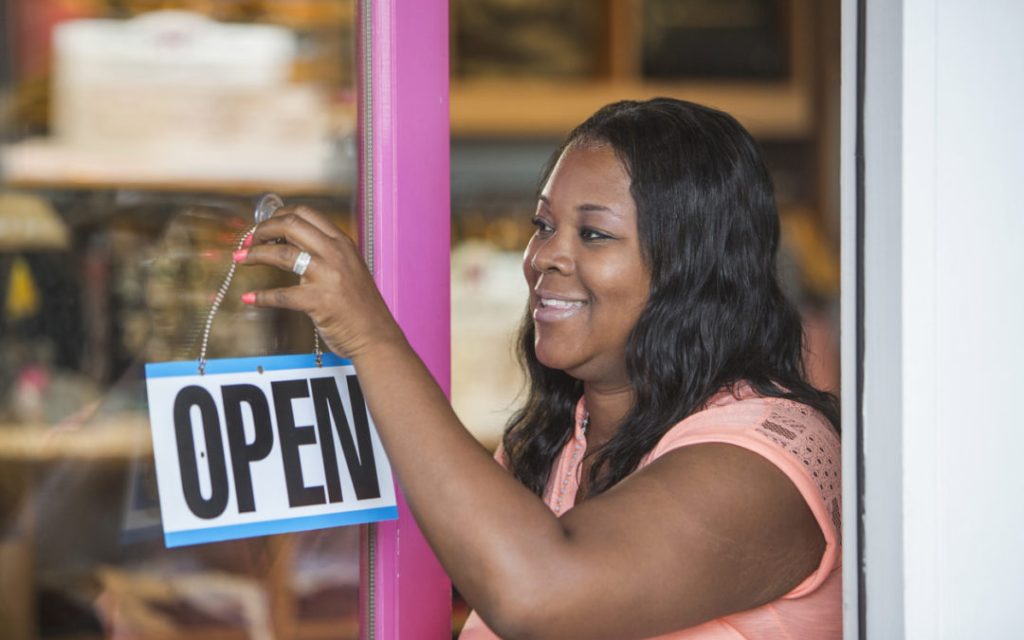
The answer is in the name. Quite simply, it’s a business founded by and run by a Black person. They may create a whole new product or experience, or they just slide into an already existing market, but bring a new level of creativity and disrupt the fixed norm. Whatever their business vision is, the important thing is the level of support they need.
How can we support Black businesses?
Well, the most obvious answer is, of course, to spend your money with them. There are plenty of websites, TikTok, and Instagram accounts that are dedicated to showcasing and championing Black businesses. The next time you need to buy someone a gift or want to go out for a meal, look for a Black-owned business to patronise, Jamii UK will help you do this. Jamii provides a platform for independent Black businesses to sell their goods. It helps consumers to find brands they may not have been aware of. In 2020, we saw the launch of Black Pound Day. The idea of Black Pound Day is that at least once a month you buy Black. Of course in an ideal world, you’d buy from Black businesses EVERY DAY, but it is not fully possible to do this in the UK…for now! But at the very least, every first Saturday of the month try to support a Black business!
But it’s not just financial support that these businesses need. The best way to grow a brand is through word of mouth, so when you buy from a Black business or visit a Black-owned restaurant, leave a positive review! Have you ever gone to buy an item of clothing but you’re unsure of whether it would suit you or how well it will fit; then you scroll further down the page and some lovely person has kindly written a review letting you know that it would be best to buy a size up as it fits a little tight. And if they’re extra lovely they might have even included a picture of them wearing the item. You could be that lovely person! Even just a quick review on social media would be good, never underestimate the power of word of mouth.
Farai London was founded in Summer 2020 by London born MaryAnn Msengi. It’s highly likely you’ve seen her famous Gaia dress before, Kylie Jenner posed in it on her Instagram and the brand skyrocketed to fame. MaryAnn’s designs have been worn by many other celebrities such as Jordyn Woods, Megan Thee Stallion, Jourdan Dunn, Summer Walker, and the ladies of Love Island. She has also featured in British Vogue, other fashion publications, and currently has a collection in Selfridges. Despite the fact that she has only been in business for less than two years our good sis is KILLING the game. Remember we mentioned how important word of mouth is? Of course, with her beautiful designs, Farai London most likely would have always been a success, but it really was people posting pictures in, and raving about how fly their dresses were that really helped the brand achieve the success it has. We cannot wait to see where this Black-owned business soars to in the future!
If you are interested in supporting Black businesses in the London area here are a few suggestions to get you started:
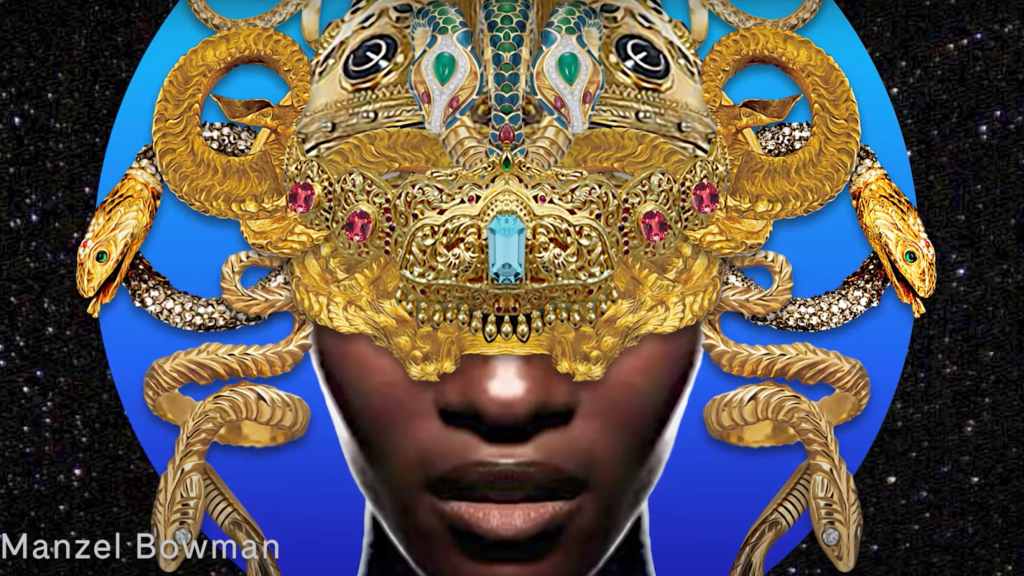
Afrofuturism is represented and presented over several mediums ranging from art, music, literature, film, design, fashion, and more. Most commonly, though, it is recognised in the science fiction novels by Octavia Butler, the jazz music of Sun Ra, and the eclectic and energetic beats of the ArchAndroid that is Janelle Monáe.
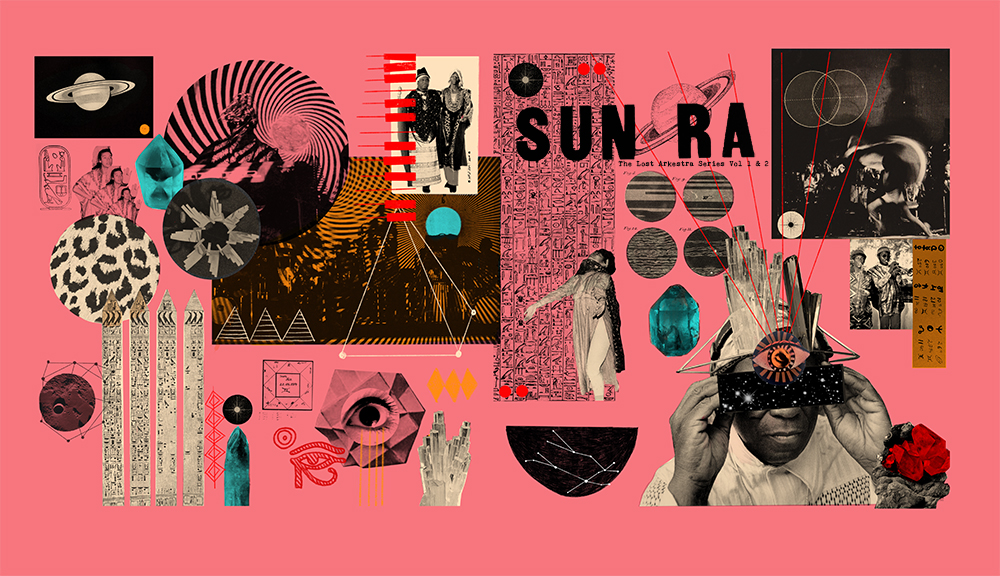
Le Sony’r Ra (born Herman Poole Blount, May 22, 1914 – May 30, 1993), better known as Sun Ra, was an American jazz composer, bandleader, piano and synthesizer player, and poet known for his experimental music, “cosmic” philosophy, prolific output, and theatrical performances.
Recently, Apple commemorated Black History Month in the US with an ‘Afrofuturism’ Apple Watch band. But what exactly is Afrofuturism? How is it defined? How is it understood? What does it mean for imaginations of Black liberation?
For BLAM UK, Afrofuturism is the audacity, tenacity, and strength to reimagine alternative futures; therefore, in some ways, we are all living proof of Afrofuturism in action.
Afrofuturism was coined by Mark Dery in 1993/4, a white American author, lecturer, and cultural critic. This has been highlighted as problematic as the framing and understanding of the concept could favour and centre whiteness even in visions of a Black future. Nevertheless, Afrofuturism conceptually has been around long before Dery put a term to the idea and concept. The idea and ethos of what Afrofuturism is have existed for centuries in the minds of enslaved Africans who hoped, imagined, prayed, and resisted for their freedom from oppressive enslavers and the ideology that one day their children and loved ones would live in a world different from theirs.
Octavia E. Butler & New School Afrofuturism Writers
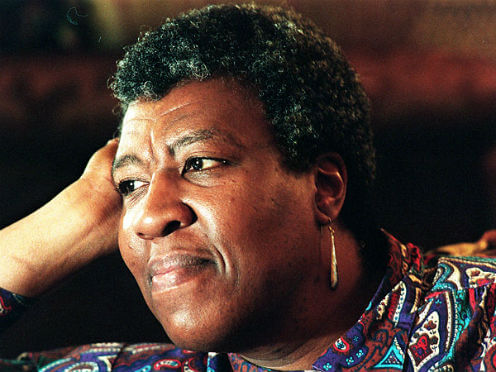
Octavia E. Butler
Afrofuturism has a massive influence on science fiction that celebrates Black lives and Black stories. Afrofuturistic novels often depict fictional worlds set in different galaxies or dystopian societies filled with tales of moons and starry nights. It is interesting to see the way writers expand and use history to create versions of different futuristic events and alternative journeys taken.
Octavia E. Butler was a renowned African American author who received a MacArthur “Genius” Grant and PEN West Lifetime Achievement Award for her body of work. Born in Pasadena in 1947, she was raised by her mother and her grandmother. She was the author of several award-winning novels including Parable Of The Sower (1993), which was a New York Times Notable Book of the Year, and Parable Of The Talents (1995) winner of the Nebula Award for the best science fiction novel published that year. She was acclaimed for her lean prose, strong protagonists, and social observations in stories that range from the distant past to the far future.
Though the MacArthur Grant made life easier in later years, Butler struggled for decades when her dystopian novels exploring themes of Black injustice, global warming, women’s rights, and political disparity were heavily critiqued by a white and male science-fiction mainstream that Butler disrupted and re-shaped to give space to stories that Black individuals and girls could relate and engage with.
During her early years before her talent was more widely recognised Butler, always an early riser, woke at 2 a.m. every day to write, and then went to work as a telemarketer, potato chip inspector, and dishwasher, among other things!
Noughts & Crosses by Black British writer Malorie Blackman is an example of more contemporary young adult fiction of an imagined society, in which the novel’s reality differs from the reality of our own world. You can see the resemblance of modern society with a major twist! It is looking at the world with a different past. Looking at Black suffering through an alternate Blackman allows readers to imagine Blackness devoid of the white gaze. This is done by creating a past where colonisation and the Trans Atlantic Slave Trade never took place thus allowing Africa to grow into a wealthy and prosperous nation –– we begin to understand and see the impacts and legacies of the histories and experiences of our Black history can have. The novel pushes us to understand that what is normalised and mainstream stems not from a place where it is inherent, but from social norms and standards that have been shaped and set down by white supremacy. Blackman uses a love story to highlight the fact that structures and institutions created and upheld by people are the reasons that the impacts of anti-Blackness, capitalism, and empire continue to create and reinforce issues ranging from poverty to over-policing.
Afrofuturism imagines a future without white supremacist thought and structures that aim to violently oppress Black people and our community. Afrofuturism pushes and asks us to imagine (and develop) a liberated future where we are free to be our most authentic selves, celebrate our culture, and be well-versed in the tools and knowledge.
Afro-Fashion of the Future
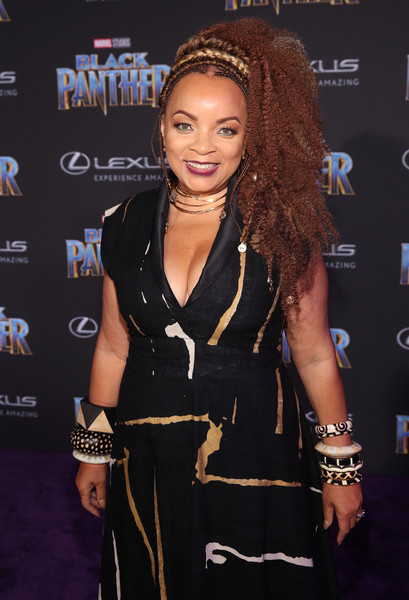
Ruth E. Carter
Hollywood costume design institution, Ruth E. Carter, the first African American woman to receive an Academy Award for best costume design in 2019 uses fashion and costume design to shape and redesign the high quality and standard of design while emphasising the beauty in telling a story through the history and culture of fashion and style.
Carter has been a longstanding costume designer for A-List Hollywood films. She was the designer on Malcolm X, She’s Gotta Have It, and Selma! Carter attributes her success to the process by which she develops her designs. An important part of her design process is to ensure that the costume fits the actor who is wearing it so that the actor wears the costume and the costume does not wear the actor ‘you wear the costume, the costume should not wear you’. With over 40 films to her credit, this Oscar-winning costume designer gives us further insight in the docuseries ‘Abstract, the Art of Design’. In the series, Carter highlights the importance of ensuring that the fashion of Wakanda represented Africa authentically to show a fashion reality that had been unaffected by Western and Eurocentric ideals of beauty and style and proximity to whiteness.
Lisa Folawiyo also represents Afrofuturism in her fashion design work. Her designs have been worn by the Hollywood elite such as actress Lupita Nyongo and music artist Solange Knowles.
Upcoming Afro-futuristic designers are also gaining popularity outside of Africa and bring an energetic and creative zeal to the look. Out of Brazzaville is the Afrofuturstic work of Congolese designer Liputa Swagga. These designs often incorporate modern style with a nod to our global Black history and African past and contemporary African cultures. Dakar Fashion Week is the African continent’s longest-running fashion exhibition. It is the place for African designers to celebrate and showcase their work and talent and is the place to see Afrofuturistic fashion in its full flare and glory.
Africanising the Landscape & Architecture
Afrofuturism can also be seen and represented in the structures of buildings and a reimagining of landscapes.
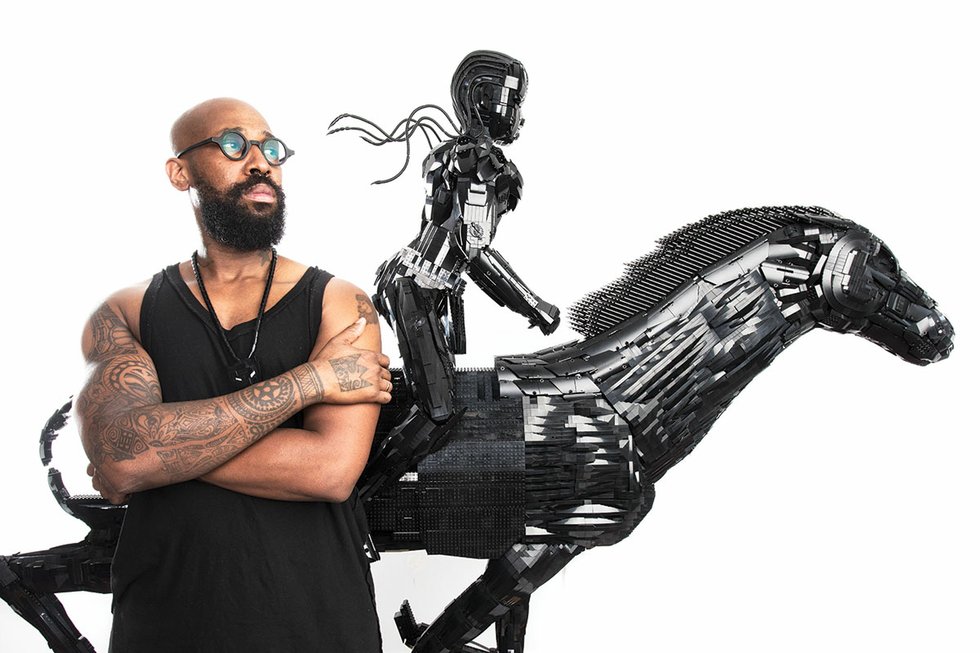
Ekow Nimako uses only black pieces of Lego bricks to develop intricate and elaborate structures and sculptors to celebrate Blackness and futuristic depictions of African histories.
Ghanian Canadian artist and Lego sculptor Ekow Nimako
Hannah Beachler, a production designer, brought the scenes of Wakanda to life from the comic book to the silver screen by visiting and incorporating the culture and architectural history of countries in Africa. Beachler created the ‘Wakanda Bible’ which was a massive text that contained details of the people, the history, and the architecture of Wakanda. In Nigeria, the concept of a floating school was cultivated by Kunlé Adeyemi a protégé of the Office for Metropolitan Architecture (OMA). In 2013 he completed the award-winning Makoko Floating School. The building was constructed to provide teaching facilities for the slum district of Makoko, a former fishing village on Lagos Lagoon where over 100,000 people live in houses on stilts. It was designed as a prototype for African regions that have little or no permanent infrastructure, thanks to unpredictable water levels that cause regular flooding.
Sing a Freedom Song
Afrofuturism is a fluid ideology shaped by generations of artists, musicians, scholars, and activists whose aim is to reconstruct ‘Blackness’ in our cultural dialogue. Afrofuturism is reflected in the life and works of people such as Sojourner Truth and Janelle Monáe. Afrofuturism is a cultural blueprint we can use to guide society and creatively explore our community.
‘Ain’t I A Women’, by Sojourner Truth is a speech, delivered extemporaneously, by Sojourner Truth, who was born into slavery in New York. Sometime after gaining her freedom in 1827, she became a well-known anti-slavery speaker. Sojourner Truth’s ‘Ain’t I A Woman’ speech at the 1851 Women’s Rights Convention in Akron, Ohio, is an example of Afrofuturism in action throughout history. In her speech, Truth is speaking out for the rights of Black American women during and after the American Civil War. Sojourner Truth calls on white women to reinforce a new way of thinking about Black womanhood and change the way they as white women relate to womanhood. Her speech pushes firmly back on the dominant cultural narrative and urges the audience to reimagine a future that confronts the historic devaluing of Black women.
Another historical example of Afrofuturism in music is chants and songs that inspired action against racism and violence and recognised that there was a future where enslaved Africans and African Americans would be liberated and find peace, rest, and tranquillity. Some examples of this are songs by Sam Cooke, ‘The Struggle’ by James Baldwin, ‘The Revolution Will Not Be Televised’ by Gill Scott-Heron, and the bulk of the African American spirituals genre.
The Afrofuturist envisions a society free from oppression in following this thought process many aspects of the Black existence and struggle embody the Afrofuturistic vision.
Radical Black Freedom Fighters
What does Afrofuturism mean for the imagination of Black liberation?
Radical social movements and freedom fighters like Assata Shakur, Fred Hampton, Huey P. Newton, Olive Morris, and Olusola Oyeleye are also Afrofuturists as they had the audacity, tenacity, and strength to reimagine better and more just futures for our community.
Afrofuturism in art has constantly used creativity and imagination to imagine a better future for our community. These images and creative stories offer us insight and solutions for change by offering us a radical basis for change and new ideologies that can spark revolutionary movements. As we go through aspects of Afrofuturism feel free to further explore writers and other artists and designers.
Afrofuturism is represented through the amazing work of artists, designers, and writers. The central figure to contemporary Afrofuturism is Janelle Monáe and you can see this in her music documentary, an ‘Emotion Picture’, titled Dirty Computer which deals with the politics of the state and robo-police pulling over cars filled with Black women. Afrofuturism has existed for centuries and is closely tied to the efforts and aspirations for Black liberation across the globe.
If you are looking to begin your reading of Afrofuturistic work, check out the list below:
The historian of the water-dwelling descendants of pregnant African slaves thrown overboard by slavers keeps all the memories of her people both painful and miraculous until she discovers that their future lies in returning to the past.
Lila Mae, a Black female elevator inspector, must prove that her method of inspection by intuition, as opposed to visual observation, is not at fault when an elevator in a new city building crashes.
An eighteen-year-old African American woman inherits a trait that causes her to feel others’ pain as well as her own, flees northward from her small community and its desperate savages.
Likely, you have never heard of Misa Hylton before, but if I told you to think of the infamous purple jumpsuit Lil’ Kim wore, or Mary J. Blige in her Not Gon‘Cry music video, or even the brown MCM bodysuit Beyoncé wore in the Apes*** video you’d know what I was talking about. The incredibly talented Ms Hylton is the mastermind behind all of those looks and more. So who is Misa Hylton, and why don’t we know her name?
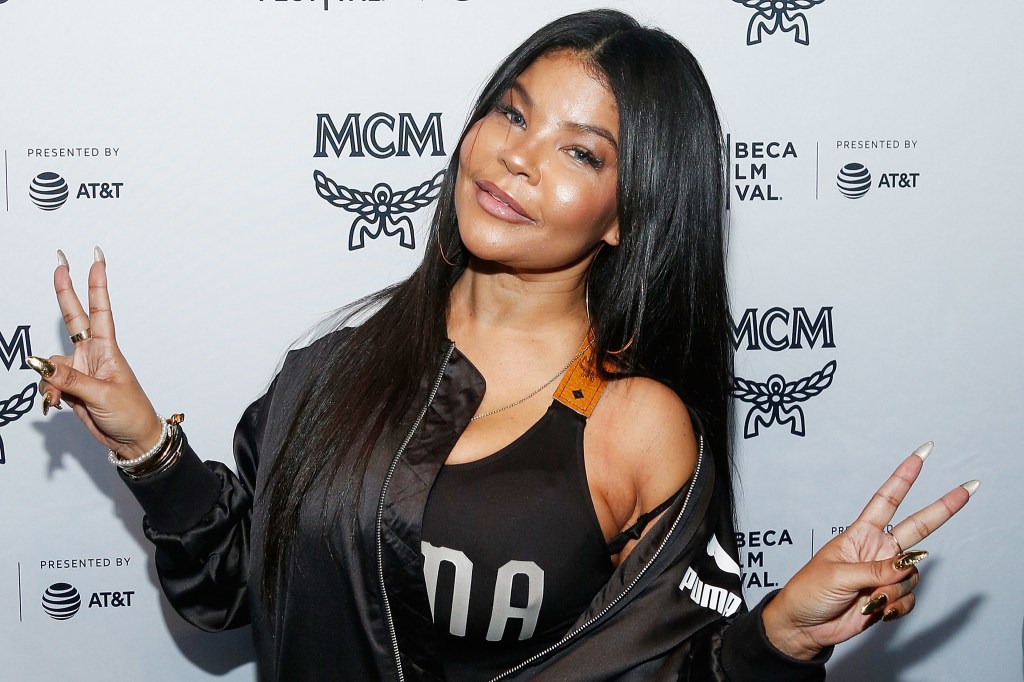
Misa Hylton attends the 2018 Tribeca Studios and MCM Sneak Preview Of Women’s Hip Hop in NYC.
Since the beginning of time, Black people have been the blueprint. We are the trendsetters, innovators, and trailblazers. However, often it seems we are not credited for our ideas and innovations. Our names are left out of mainstream history books; we are overlooked and eventually forgotten.
That seems to be the case for Misa Hylton. Born in New York in the 1970s, Misa always had a passion for fashion. She first pursued her love of clothing and style at the young age of 17. Her friend Sean Combs (aka Puff Daddy/P Diddy) asked for help on a music video for an R&B group he was in charge of at the time – Jodeci. At that time, R&B singers were known for their formal wear in music videos. Suppose you think back to the old 80s and early 90s music videos. In that case, you’ll notice that (male) artists were often in (incredibly baggy) suits and top hats. R&B had an air of sophistication and formality. Misa decided she was tired of that aesthetic. Inspired by her love of hip-hop, she had a vision for the Jodeci video that moved away from the status quo. Misa wanted to put the group in combat boots and hoodies. Now, this may not seem so outlandish to us sitting here in 2022, but in the 90s, this was unheard of. Music executive Andre Harrell initially rejected Misa and Sean’s plans; he thought the pair were out of pocket for even considering it! But they fought for their idea, and eventually, Andre agreed. You can see the fruits of their labour in the Gotta Love music video.
Lil’ Kim at the 1999 VMAs. This iconic look was styled by Misa Hylton who styled many of Lil’ Kim’s most iconic and stylish looks.
Misa’s work on that video created a new aesthetic in the world of R&B fashion. She gained many more clients in the industry. These musicians, producers, and other artists wanted a new, cooler look. But arguably, her most important work is what she achieved with women in the music industry. Being a woman in any industry can be a rough time, but being a Black woman often adds an extra layer of adversity. Misa regularly worked with Mary J. Blige and Lil’ Kim, helping them find their place in a challenging industry. Mary J. Blige had been known for her signature bandana, and baggy tee look. Growing up as a self-proclaimed tomboy, combined with the fact that she was breaking out into a male-dominated industry, these were the clothes she felt most comfortable in. After meeting Misa Hylton, Mary explored her look a little more and made it more feminine whilst still being comfortable. Lil’ Kim was a very talented artist in the heavily male-dominated world of rap. During the 90s, many female rappers opted to wear baggy clothing to try and fit in with their peers, but Lil’ Kim decided to go against the grain and instead use her femininity to her advantage. With the help of Misa, Kim was able to show that women are allowed to be sexy and talented, and that one didn’t hinder the other. Of course, her most iconic look was the purple pasty jumpsuit worn to the 1999 MTV VMAs, but another iconic look was the Crush On You music video, once again styled by Misa. In this video, every scene featured a monochromatic look, where Kim was in the same colour from head to toe, literally. This had never been done before, and I’m sure others on Kim’s team were sceptical at first, but the video ended up being a huge success, and the look has been recreated many times since then.
Lil’ Kim, Mary J. Blige, and Misa Hylton – long time friends in fashion, music, style, hip-hop, and Black womanhood.
These two stories are an essential part of Misa Hylton’s legacy. They show how imperative it is to have Black women in the creative industry, helping other Black women reach their full potential.
Misa Hylton is an integral part of Black cultural history. Her work deserves to be recognised – loudly!
For more information on Misa and her work, we’d recommend The Remix: Hip-Hop x Fashion on Netflix. The documentary shows just how talented this woman truly is and how much she had on both the music and fashion industries.
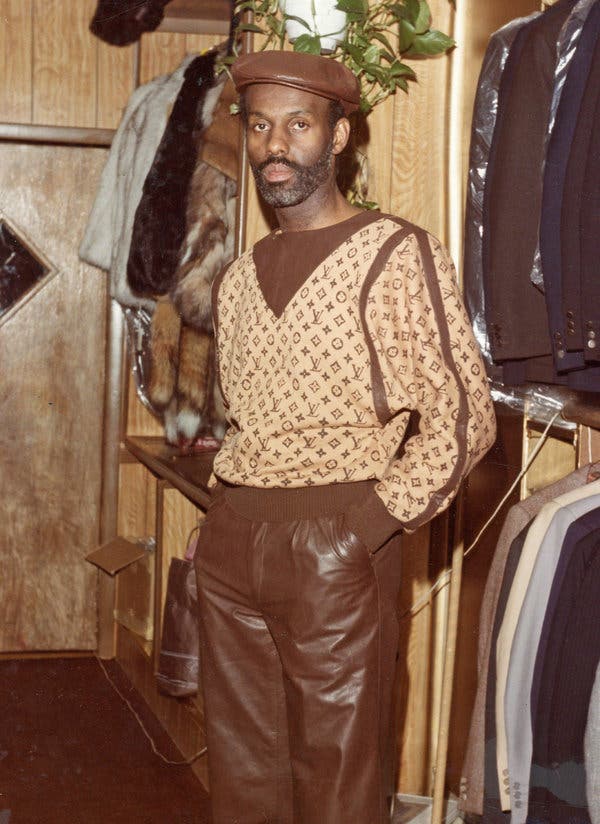
Fashion plays a central part within Black culture and identity. The clothes, outfits, and accessories that we wear tell stories about our heritages and histories, as well as the traditions and skills that are passed down within material construction creative processes. Many items of clothing or accessories have become indicative of a shared cultural experience with a long history behind them. Within these long histories, it is important to look to the Black designers and artistic pioneers who shaped the global fashion history, in order to understand the industry as we know it today. One such pioneer is Daniel Day, now known as Dapper Dan.
Daniel Day was born in 1974, in Harlem. He is a self-taught tailor with a unique style who made a name for himself through the legendary Harlem couturier he opened in 1982, “Dapper Dan’s Boutique”. His life opened to the backdrop of the Great Migration as his parents arrived in New York during a time when millions of African-Americans were fleeing from the South. Growing up very poor with a Garveyite mother, Dapper Dan experienced and heard many stories of the Pan-African movement, as well as the difficulties his parents and their families faced from being Black in America. His paternal grandfather had been born into enslavement and later freed, and his father, who worked three jobs to make ends meet, had come to Harlem alone at the age of 12 – just 35 years after the Emancipation Proclamation.
With a strong determination to improve his situation, Dapper Dan’s teenage hustles moved from shoe-shining to betting games, where he used his book smarts to earn thousands of dollars a day, even outperforming his mentor, the original Dapper Dan who passed the name to him. By his early 20’s, however, Dapper Dan had been arrested for dealing drugs and used prison as an opportunity to get clean. While incarcerated, he began to write essays on Pan-Africanism, and upon his release, he took a tour of Africa as part of an educational programme sponsored by Columbia University and the civil rights organisation the National Urban League. Becoming aware of unique takes on western fashion during his time in Africa, Dapper Dan used this as inspiration in his “Africanisation” of high-end European fashion houses. In his words, “I had been to Africa and knew that I could make the same things that [luxury fashion houses] rejected me for – and to make it better.”
Dapper Dan struggled to source textiles or buy goods from designer stores due to his location and race, and for a while had to sell stolen designer goods from the boot of his car. Dapper Dan’s experiences growing up and working on his business led him to develop a consciousness about “the trials and tribulations associated with being Black”. As such, his custom pieces focused on reworked logo prints from designer fashion houses that had overlooked Black clientele. He understood what wearing a designer logo meant to his customers and how it made them feel.
Working on “bootlegged” fabrics he designed himself, Dapper Dan’s screen-printed monograms of Fendi, Louis Vuitton, MCM, and Gucci made him a pioneer in luxury streetwear that became the symbol of the styles and fashion of early 90s rap culture. He quickly gained a strong client base of hip-hop rap stars, athletes, and those who liked to play the books. Notable examples include retired Olympic runner, Diane Dixon, hip-hop rap trio, Salt-n-Pepa, and heavyweight boxing legend, Mike Tyson. Dapper Dan also went on to invent a new process for screen printing onto leather that would later be used for luxury automobile interiors.
Unpacking the interconnectedness of Black Atlantic languages whilst disrupting linguistic supremacy through a decolonial lens.
As words like Lit, Snitch, Tings, Gwarn, Gyal, Dem, Dey, Nyash and Bae have become words used by Black British English speakers and have effectively been creolised into Black British English. It is important we better understand the particular uniqueness of Language creation and continuity in Black Communities globally. The words mentioned above are from three languages African American Vernacular English AAVE, Pidgin and Patios. It is with this that we must recognise the importance and history of Black language practices so that we as speakers of this language see and speak about our cultural production from a decolonial and Black centred lens.
In this piece, I will be unpacking the histories of three Black languages through AAVE, Patios and Black British English and expanding on the ongoing need to look at and celebrate these languages from a decolonial lens. I use Paul Gilroy’s term Black Atlantic to expand on the interconnectedness of Africa, The Caribbean, African Americans and the UK. Gilroy created this term with his book The Black Atlantic: Modernity and Double Consciousness (1993), it identifies a hybrid [Black] culture that spans the Atlantic, connecting Africa, North and South America, The Caribbean and Europe. For the purposes of discussions on Black languages in the Diaspora, it is key to start at the point that led to the creation of these languages- the forced kidnapping and enslavement of Africans to the new world.
The Black Atlantic and Language Creation
The creation of Black languages and their continued usage serves as a decolonial intervention into white linguistic supremacy. This is because English in and of itself is a colonial and imperial linguistic inheritance. Creole languages are formed in conditions where speakers from various distinct languages are forcefully brought together without a shared first language, often under the domination of speakers from one of the languages and in the context of this piece the transatlantic enslavement trade, white supremacy and European colonialism. A Creole language that demonstrates this is Skepi- a Guyanese Creole; Dahlia & Hubert Devonish explain that it has for an Atlantic Creole, an extraordinary number of lexical items and syntactic markers from a single West African language cluster, Eastern Ijo, and Kalabari in particular. (Smith et al 1987; Robertson 1991; Kouwenberg 1994).
This has led to a unique language creation legacy with Black communities that has allowed us to survive and to communicate in a way in which our oppressors would not understand us but also enabled enslaved Africans to preserve, code and creolise their African linguistic heritage within a new language. Eric Williams further typifies this by noting that Ebonics is the linguistic and para-linguistic consequence of the African slave trade. It developed in West Africa, as well as throughout the former European colonies of North and South America wherever slaves were sold into bondage.
The legacy of Africanised English structures and Black British English following that legacy
The creation of Black British English follows the globalised pattern of African descended communities creating and using language as a form of resistance and cultural retention. Black British English sits at the intersect of the Jamaican Language ( Patios), West African Creole ( Pidgin) and African American Vernacular English alongside new words and phrases created by Black British speakers like Doing up, Moving mad, Bare, Buff, Peak, Peng, Clocked, Pagan, Gassed and the lexicology goes on. Black British people by engaging and speaking in Black British English are preserving and furthering ancestral linguistic practices against the imperialist reach of white mainstreamed English. Black British English speakers are doing what Dr April Baker Bell describes as knowing the world through their cultural ways of being and knowing, their community and their blackness.
Black British speakers by also adapting and incorporating Black global linguistic trends and words are keeping the Black language tradition alive. This can actively be seen with Black British Language speakers using terms like ‘it’s Giving and Pushin P’. ‘Pushin P’ is an AAVE term developed in the Bay Area and popularised by Rapper Gunna B. ‘It’s Giving’ is a term created by Queer AAVE speakers that was further popularised by Black American Women.
Black languages like all languages have adapted and taken from each other. This process is known as Cognates- Cognates are words that are etymologically related or descended from the same language or form. Words like Magnificent taken from the French language and used within Standard English is a cognate. In Black British English, the greeting term ‘Wagwarn’ taken from The Jamaican Language (Patios) is an example of a Cognate.
False cognates are words whose similarity in form or sound may be coincidental or the result of mutual influence, but they are not etymologically related. In Black British English (BBE) an example of this is the use of the word Bare would form a false cognate as its usage in BBE is different from that of white standardised English. Bare in BBE means lots and in Mainstreamed English it means uncovered.
Examples of the creolised Black British English
Language Supremacy and Anti-Black Linguistic Racism
Rusty Barrett, a professor of linguistics states ‘there are a number of linguistic studies that demonstrate that ideas about “correctness” are based on social prejudice rather than linguistic facts.’ It is important that we have this in mind when looking at Black languages under white supremacy. white supremacy permeates all aspects of society and language is not exempt. We see an encoding of white supremacy through the perceived language supremacy of English. The means by which whiteness has globalised the supremacy of the English language is through imperial and colonial domination, all of which produced institutionalised values and hierarchies within societies that served/s white elites.
Linguists identify ‘‘standard’’ languages as political constructs, having little to do with the inherent linguistic structure of any given language, as all languages are in fact created by humans for the purpose of communication, there cannot be an inherent form of language supremacy.
A universal principle that sociolinguistics maintain is that speakers who hold positions of political influence and economic power in this case white elites are then the very individuals who set and maintain linguistic standards in society.
Like other forms of discrimination, the idea that Standardised English is inherently better than other Black languages places an unfair burden on Black Language speakers who must continually accommodate those who hold negative and anti-Black attitudes toward them and/or their languages.
These positions and attitudes also fall within a raciolinguistic ideology- which is the dominant practice of racialising language and framing racialised speakers ( in this case Black Language Speakers) in negative ways, the linguistic practices of racialised populations are systematically stigmatized regardless of the extent to which these practices might seem to correspond to standardized norms”. (Rosa & Flores, 2017, p. 3)
Rusty Barrett reminds us that ‘prejudice against speakers of undervalued varieties often comes with arguments that only the standard variety is able to express nuanced meanings, encode logical thought, or produce good writing. Yet again, none of these beliefs has a valid basis in linguistic facts. All varieties of all languages are capable of expressing nuanced or subtle distinctions in meaning.’ The practice of policing and shunning Black languages is known as Anti-Black Linguistic Racism. Dr April baker Bell coined this term and explains it as the following- Anti-black linguistic racism refers to the linguistic violence, persecution, dehumanization, and marginalization that Black Language (BL) speakers endure when using their language in schools and everyday life. It includes teachers’ silencing, correcting, and policing students when they communicate in BL. It is the belief that there is something inherently wrong with BL; therefore, it should be eradicated. It is denying Black students the right to use their native language as a linguistic resource during their language and literacy learning. It is requiring that Black students reject their language and culture to acquire White Mainstream English(WME), and it is also insisting that Black students code-switch to avoid discrimination.
It is important to understand that even Black language (BL) speakers can also internalise the mainstreamed negative narrative and attitude about Black languages. This is seen when ‘Black students’ language practices are suppressed in classrooms [ and mainstream society]or they begin to absorb messages that imply that BL is deficient, wrong, and unintelligent, this could cause them to internalize anti-blackness and develop negative attitudes about their linguistic, racial, cultural, and intellectual identities and about themselves. As with internalized racism, students who absorb negative ideologies about their native language may develop a sense of linguistic inferiority.’ This is why Black language scholars advocate for the cultivation of Black Linguistic Consciousness. A practice prioritises the reversing of anti-Black Linguistic Racism whilst providing Black people with the tools to make language political choices that call for the intentional employment of Black Language. This they describe as the exercising of liberation. They remind us that it is imperative that Black people learn Black Language through Black Language; that is, they learn the rich roots and rhetorical rules of Black Language.
How we can overcome and push back against Anti-Black Linguistic Racism
Firstly, we must begin to see the ways in which we speak across the Black Atlantic as part of a rich legacy and heritage of a unique language creation practice. It is through doing this we can start to truly appreciate and explore the Bilingualism of Black Language speakers. We need to recognise that Black Language speakers like other Bilingual speakers exhibit advantages in several areas of executive function, including working memory, inhibitory control. Research on Bilingualism also shows bilingual advantages in executive function are not limited to the brain’s language networks. Researchers have used brain imaging techniques like functional magnetic resonance imaging (fMRI) to investigate which brain regions are active when bilingual people perform tasks in which they are forced to alternate between their two languages. For instance, when bilingual people have to switch between naming pictures in Spanish and naming them in English, they show increased activation in the dorsolateral prefrontal cortex (DLPFC), a brain region associated with cognitive skills like attention and inhibition. We must ensure Black communities are equally entitled to be provided with bilingual education in both Black languages and the dominant language they manoeuvre within. There needs to be a push towards a linguistic education that does not penalise and disregard and interiorise Black creativity and language ways. We need an education practice and cultural acceptance of the brilliance of Black languages and the unique skills akin to Black language speakers due to their bilingualism.
This blog was originally written and published on Medium.com, it is available here to read.
In this blog post, I look at famous Black cowboys and the influence they had on ‘cowboy culture’ in the US. I also explore the vital relevance Black cowboys have in our community today: including the sense of self-worth cultivated and developed by contemporary Black cowboy programmes.
Let’s get into it!
History of the Term ‘Cowboy’
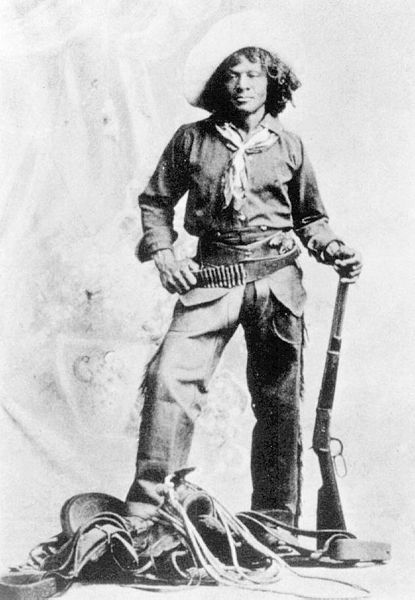
Nat Love – Kansas Historical Society
So, who were Black cowboys? Black cowboys were typically formerly enslaved people in the American south and west. David Goldstein-Shirley’s 1997 paper “Black Cowboys in the American West: An Historiographical Review” unearths the origin of the term “cowboy” as being the derogatory appellation of the Black men working in ranches, whereas their white counterparts were called “cowhands”. According to LeRoi Jones and Philip Durham’s seminal book from 1965 “The Negro Cowboys”, roughly 1 in every 4 cowboys (more than 5000 people) were Black during the height of the West. Yet, we seldom see them represented in cultural depictions of the “Wild West”. The presence and cultural contributions of African-Americans to the West has been downplayed, and until recently – erased.
Nat Love – Most Famous Black Cowboy
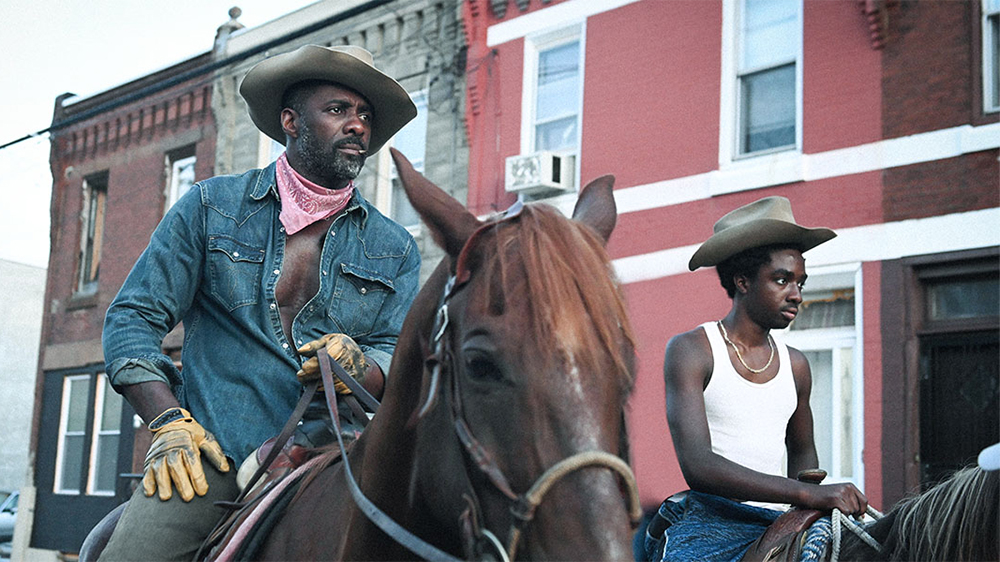
Film still from Concrete Cowboy
The most famous of all Black cowboys was Nat Love. He was also known as ‘Deadwood Dick’. Nat Love was born into enslavement in 1854 in Davidson County Tennessee. Nat Love became a cowboy when he was approached during breakfast by a trail boss who offered him a job. The trail boss gave young Nat Love the responsibility of breaking the wildest horse in the outfit named Good Eye. Nat would later go on to say it was the toughest ride he had ever done. He successfully trained the horse and got a job that paid $30 a month at the Duval Ranch. Today that would be equivalent to $995.72 US dollars per month (roughly £730). Did you also know that Nat Love’s memoir the “Life and Adventures of Nat Love” is one of the only firsthand accounts of an African-American cowhand in the western United States from this period.
Film & Cowboys: History Rewritten
Cowboys in popular old western films in which all-white casts and representations of cowboy culture that centers whiteness, is a gross misrepresentation of the true history of cowboy culture in the US. Unfortunately, this has occurred for a few reasons. The first is that generally in cinema and media there is a visual scarcity of Black faces due to the long and exclusionary history of the media industry. Secondly, American historians for a long time have neglected, omitted, and written out the history of Black cowboys. Lastly, history regularly is re-written to exclude and push forward narratives that uplift whiteness and erase accountability of historical and ongoing white villainy.
Nevertheless, recent films such as Django Unchained, Concrete Cowboy, The Magnificent Seven, and the recently released The Harder They Fall. These films uniquely and creatively capture and show that Black cowboys existed and that cowboy culture was influenced by Black and Indigenous communities. Some of these films also offer a notable cross-over between Afrofuturism and the restoration of representation of Black cowboys in science-fiction films such as Cowboy Bebop which features a Black lead in a dystopian future. Another notable film is the 1999 Wild Wild West featuring Will Smith, which also has a great rap song associated with the film! We of course cannot forget the recent banger and ultimate #YeehawAgenda song Old Town Road by Lil Nas X.
Contemporary Cowboy Community Groups
This is the story of The Compton Cowboys and Keiara Wade, the group’s solo cowgirl. Together on June 7th, 2020, they led a peace ride through their hometown in the name of Black lives. It was a community defining moment and America took notice; the Compton Cowboys were searched on Google more than ever before. To read more about Keiara’s story visit https://g.co/comptoncowboys.
The Broken Arrow Horseback Riding Club and The Compton Cowboys are a few of the last remaining private equestrian clubs trying to reconnect the hidden Black history of horsemanship. These groups aim to redefine contemporary understandings and representations of cowboy culture. The Compton Cowboys aim to develop a new generation of cowboys in America’s ‘urban heartland’. They believe that horseback riding and working with livestock offers an opportunity for strong bonds to be made between young Black people who diligently care for horses. The Compton Cowboys were the inspiration and influence for the movie ‘Concrete Cowboys’. “Concrete Cowboys” is a coming-of-age journey of a young Black teen who endeavors to find positive influences through bonding with and training horses as he is faced with the difficult challenges of his reality.
The relevance this has on today’s community cannot be overstated. Events like the Kentucky Derby or the Royal Ascots which feature prominent white equestrians and attendees are arguably the exception and not the rule when you look at the history of cowboys and horseback riding. For example, in the 1870s Silver Walker was one of the most talented horse racers of his time. In fact, the winning jockey of the first Kentucky Derby was Black. Until the early 1900s, there were many Black jockey winners, such as Ike Murphy, who won the Kentucky Derby three times. Revisiting the history of Black cowboys improves the racial esteem of Black communities and works to subvert the idea that farming, horse training, and other related activities are somehow exclusively white-only activities.
Hopefully, you walk away understanding the key role that Black cowboys have played in shaping that history and challenging white narratives of the Wild West! If you want to learn more about Black cowboys check out our podcast episode about Black cowboys!
Food is a big deal in the US and Black food is an even bigger deal. We have all seen pictures of the elaborate and hearty cookouts, barbecues, seafood boils, Juneteenth celebrations, and the festive holiday meals that Black Americans make. So, what makes their meals different? The answer is Soul.
“Soul food is one of the many ways enslaved Africans were able to keep a link to their original homes and traditions.”
Soul food is one of the many ways enslaved Africans were able to keep a link to their original homes and traditions. It was a way for them to create an identity for themselves in this foreign land of America. The term ‘Soul Food’ itself became popular in the 1960s/70s during the Black Power Movement.
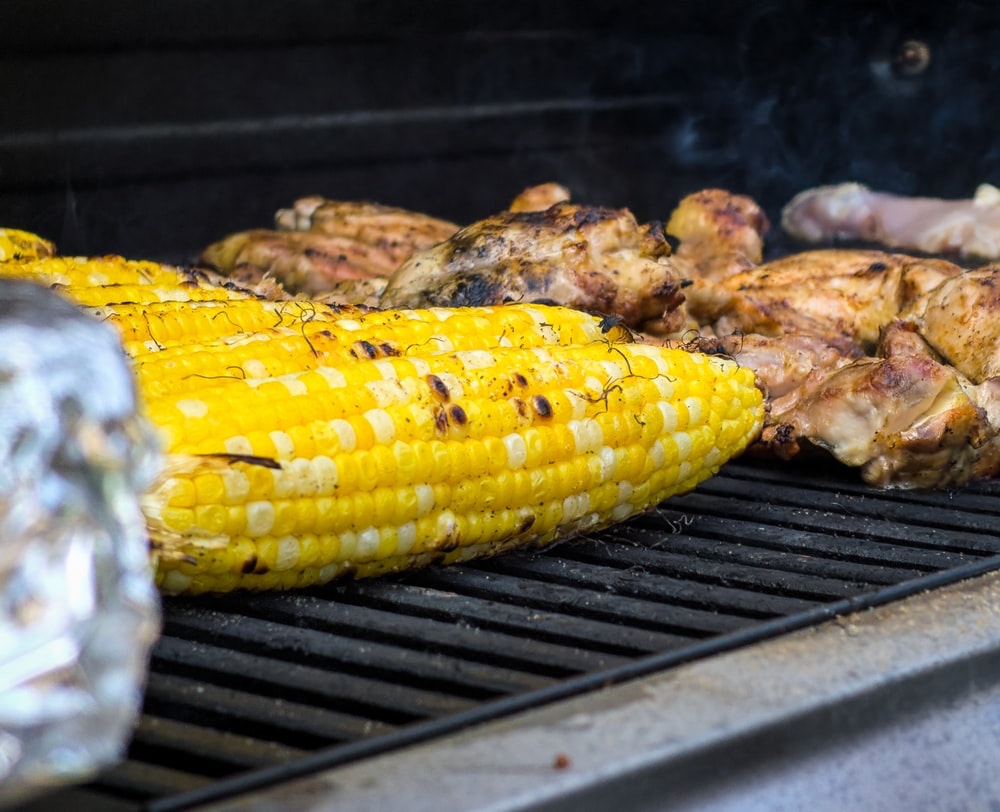
You can see the cultural retention of West and Central Africa food ways on Black American foods, from the ingredients put in dishes. Ingredients like hot peppers, okra, rice, and black-eyed peas to name a few. The methods used to cook food, methods like roasting meat over open fire, frying in palm oil and more were also retained in African-American cooking styles. During the Trans-Atlantic Slave Trade, enslaved Africans in an effort to replenish and retain their cultures took the food provisions that were available to them and impressed their traditional cooking styles and flavours to develop a cuisine and delicacy that was unique to their history and experiences both during and after enslavement. The recipes and meals found in Soul Food tell a rich history of the origins of enslaved Africans, the journey of the Middle Passage, the fight for emancipation, and the resilience and strength that defines the Black American community.
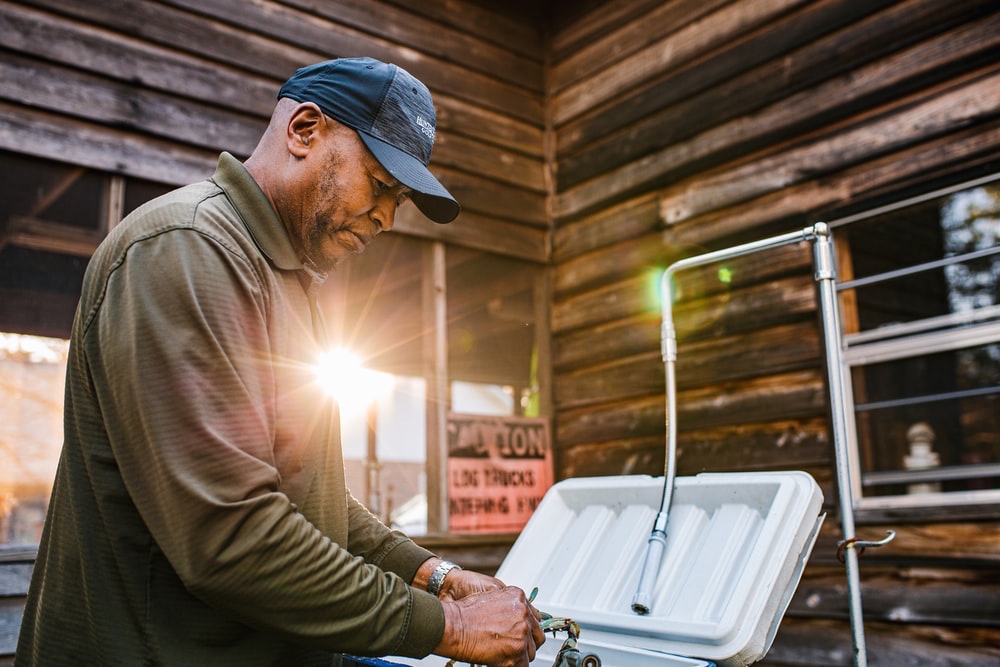
Crab cleaning in South Georgia.
Now for our favourite foods and their history…
Gumbo – Louisiana
If you’ve watched The Princess and the Frog then you’ll be familiar with this dish. Originating from the Louisiana Creole tradition in New Orleans, Gumbo is the official state cuisine of Louisiana, and rightly so. It’s a stew usually made with shrimp, chicken and sausage served with rice.
It combines culinary practices from Africa, France, Spain, and Indigenous Americans. It is a real melting pot of cultures. It also includes the African top three ingredients, which I hope you haven’t forgotten – onions, tomatoes, and hot peppers. Cooked for at least three hours, gumbo is definitely a dish that has a lot of heart and soul in it.
Pepper Pot – Philadelphia
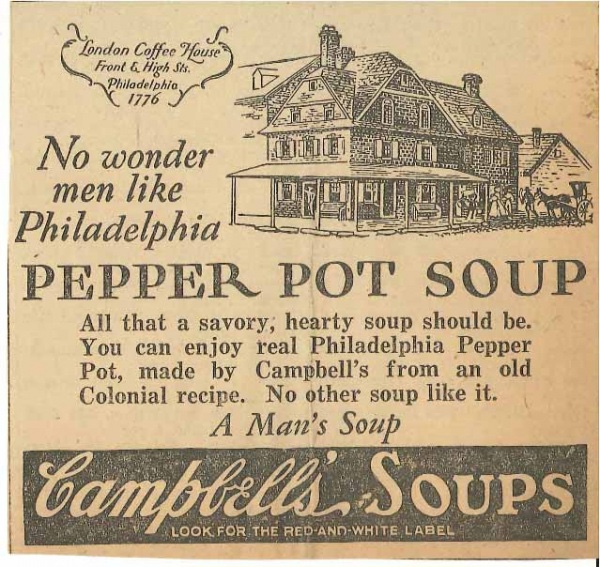
This dish is interesting because when I think of pepper pot, Philadelphia doesn’t come to mind. I automatically think of countries in the Caribbean such as Guyana, Grenada, or Trinidad and Tobago. Philly’s pepper pot can be traced as far back as the 1600s and is said to have been imported by West Indians who ‘moved’ to the area, but became popular in the 19th century when Black women started selling it on the street. It was so popular, that Campbell’s Soup Company started selling it in tins in 1899 and didn’t stop producing it until 2010. The canned soup kept the legacy of pepper pot soup alive for a little longer as the dish had started to become less popular in Philadelphia restaurants in the 1990s.
Newspaper archive clipping of advertisement of Campbell’s ‘pepper pot soup’.
It is impossible to talk about Black food in America without mentioning hot sauce. It’s a staple in their cuisine, the perfect accompaniment to any savoury dish. Not too different from the use of shitto in West African cuisine. Usually made from tabasco or cayenne peppers, hot sauce adds a little heat to any dish.
Collard greens are another Black American staple food. Collards are vegetables that have large green leaves and tough stems. Collard greens are usually cooked with pork (bacon or ham hock). The dish is so popular that in 2011 it became the official dish of South Carolina.
The Food of Juneteenth
Juneteenth was a lesser known holiday to those outside of the US, but to Black Americans it is an extremely important day of celebrating and remembering. On 19th June, Black Americans commemorate the day that the last of the enslaved Africans were notified of their freedom in 1865.
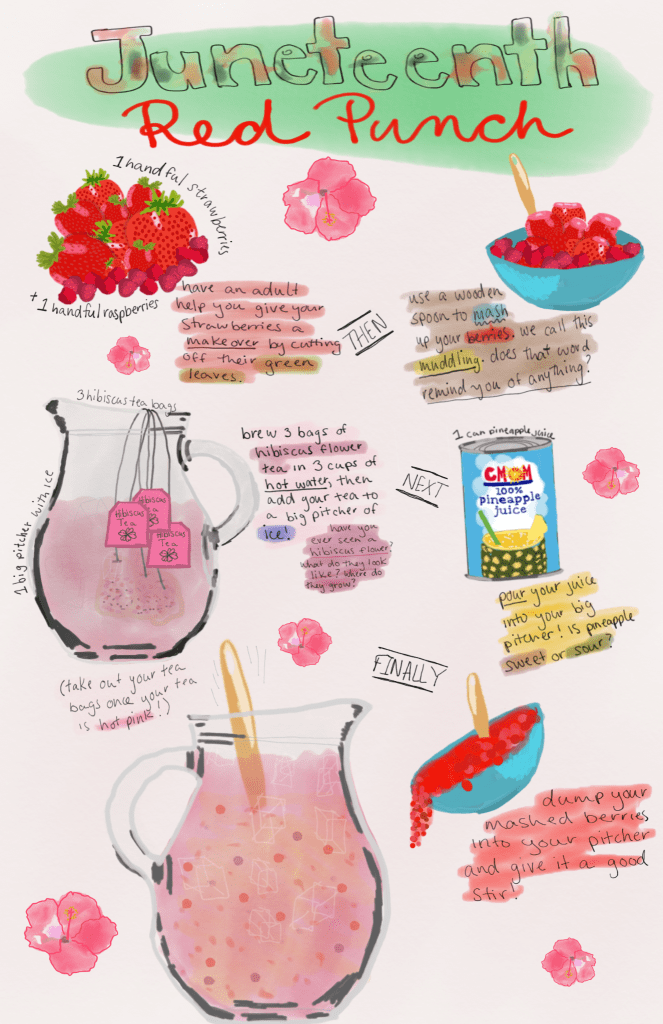
Image courtesy of the Children’s Museum of Manhattan.
The main feature of the Juneteenth feasts are the ‘red foods’, used as a remembrance of the bloodshed of the enslaved. Some of the featured red food dishes are watermelon, tomato salad, red velvet cake, and strawberry pie. The seemingly most important part of a Juneteenth celebration is the famous red drink. Made from the hibiscus flower, it is usually served in Kool-Aid or as a Jamaican Sorrel. The drink comes with a long history that acknowledges the culinary traditions and goods, brought over to America by enslaved Africans.
Black foods are a staple of American culture. Taking influence from other Black countries around the world, Black people living in America were able to establish their own culinary identity, one that is recognised globally.
We’re back for another installment of ‘Black Foods In…’ and today we are looking at foods eaten in South America and the Caribbean.
So how did Black foods (and people) end up in South America and the Caribbean?
I think the answer is simple, the Trans-Atlantic Slave Trade — the forced kidnapping of Africans who were brought to the Americas during the 15th century and on. These Africans brought with them their culinary skills and knowledge and adapted it to the foods native to their new homes. They also brought with them their cooking methods such as; frying, boiling/simmering, roasting, and steaming (usually wrapping foods in large leaves from different fruit trees). These methods are still used throughout South America and the Caribbean (Alexa, play Chi Ching Ching – Roast or Fry).
Our favourite foods in focus
Rice and Peas – Jamaica
In Ghana there’s a dish called Waakye, it is the ancestor of Rice and Peas. The cooking method and ingredients may differ but the similarities are impossible to ignore. Think of it as a long-lost great-uncle.
Cast your mind back to the post about foods in Africa, we spoke about how grains like rice were a staple due to the ease of being able to grow it cheaply. This same principle followed Africans to Jamaica and so the dish of Rice and Peas was born. For bonus points, I hope you also remember the three base ingredients of African cooking. Two parts of the three feature in almost all Caribbean dishes – onions and peppers/spices. No dish worth its salt (see what I did there) can exist without these two ingredients; and though it is a fairly simple dish, Rice and Peas is no exception to this rule.
“Why use beans but call them peas?”
There’s always confusion when non-Black people make this dish and so you often end up seeing white rice with green garden peas, rather than flavoured rice with kidney beans. Why use beans but call them peas? Maybe it’s because you can also use gungo peas (formally known as pigeon peas) and red cow peas to make the dish. In all honesty, it just seems to be a tradition that has been passed down through generations without much explanation.
Ackee – The Caribbean
Often visually mistaken for scrambled eggs, ackee is a soft fluffy fruit found in the Caribbean. As the national fruit of Jamaica it plays a big part in the island’s cuisine, with it most famously being paired with saltfish to make an amazing breakfast dish or side dish to go with your dinner (here’s an easy recipe to try out). However the fruit has a deadly side. If it isn’t picked, deseeded and cleaned properly it can cause serious health issues, which is why many countries including the UK & US, only allow it to be imported already canned.
Mofongo – Puerto Rico
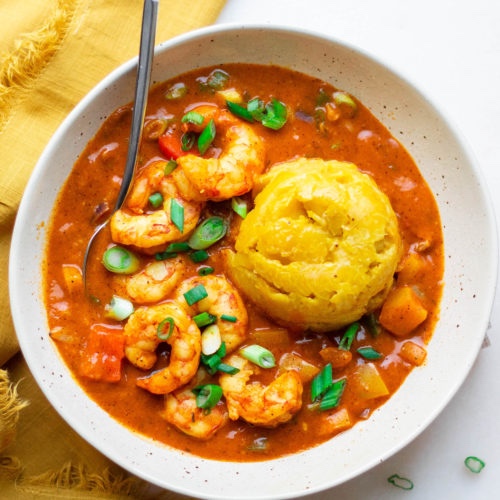
Here’s a picture for this one because I know you said “who??” after reading that word. A dish made from mashed plantain; it hails from the West African Fufu. Although it has a different consistency and flavour, you can see the similarities in the way it is eaten. The Dominican Republic have their own version which is called Mangú and is made from cassava.
Delicious mofongo 😍
Feijoada – Brazil
This is Brazil’s national dish. I know, a Black food is a South American national dish, crazy right?
The stew’s main ingredient is soaked black beans, with seasonings and various meats added along the way. When money and resources were scarce for enslaved Africans, they would have to make the best of whatever they could find. In this dish you’re likely to find a variety of cuts of meat. The dish has links back to several African countries such as Angola, Mozambique, and Cape Verde
Acarajé – Brazil
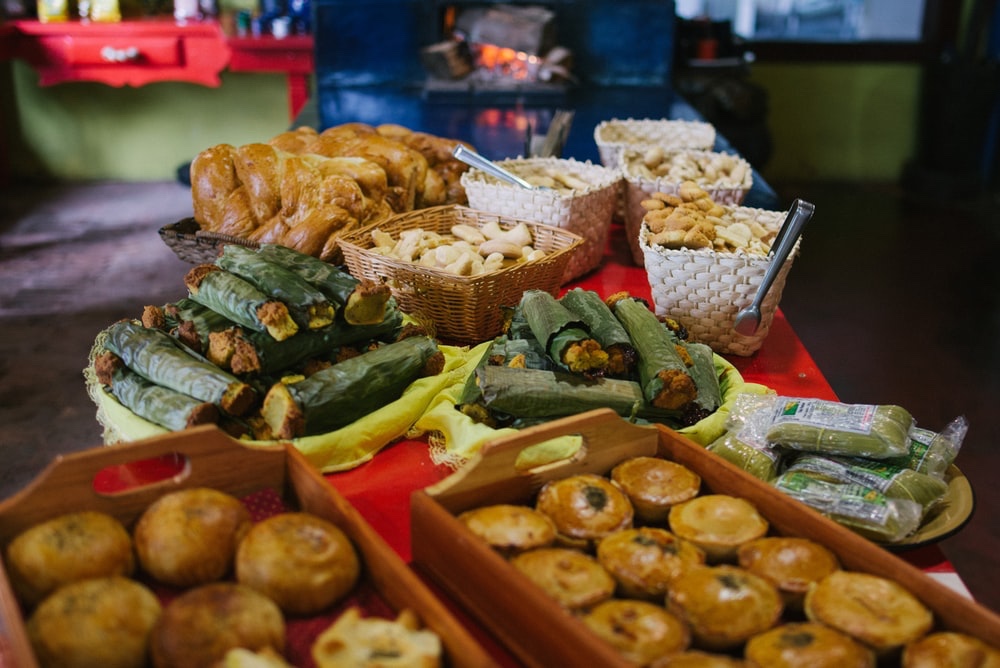
Also known as; Akara (Yoruba), Kosai (Hausa) and Kose (Ghana), these little balls of peeled beans deep fried in oil are the perfect snack. It travelled to the streets of Brazil with the enslaved West Africans and has become a staple in Brazilian cuisine. But the little balls of joy are more than just a tasty snack, they have important cultural and historical significance. The bean cake is reported to have made its way to Bahia in the 19th century and was sold as street food. Earnings from its sale was used to sometimes buy the freedom of enslaved family members until the abolition of slavery in Brazil in 1888 while serving as a source of family income.
Acarajé is also used as a religious offering in the Afro-Brazilian religion Candomblé. It is a food of many talents!
The most inspiring part of this is how heavily influenced South American food is by Black African cuisine. Really showing that they are a part of the rich historical tapestry that makes up many South American communities. Black foods in South America and The Caribbean have become staple foods and we love that for us.
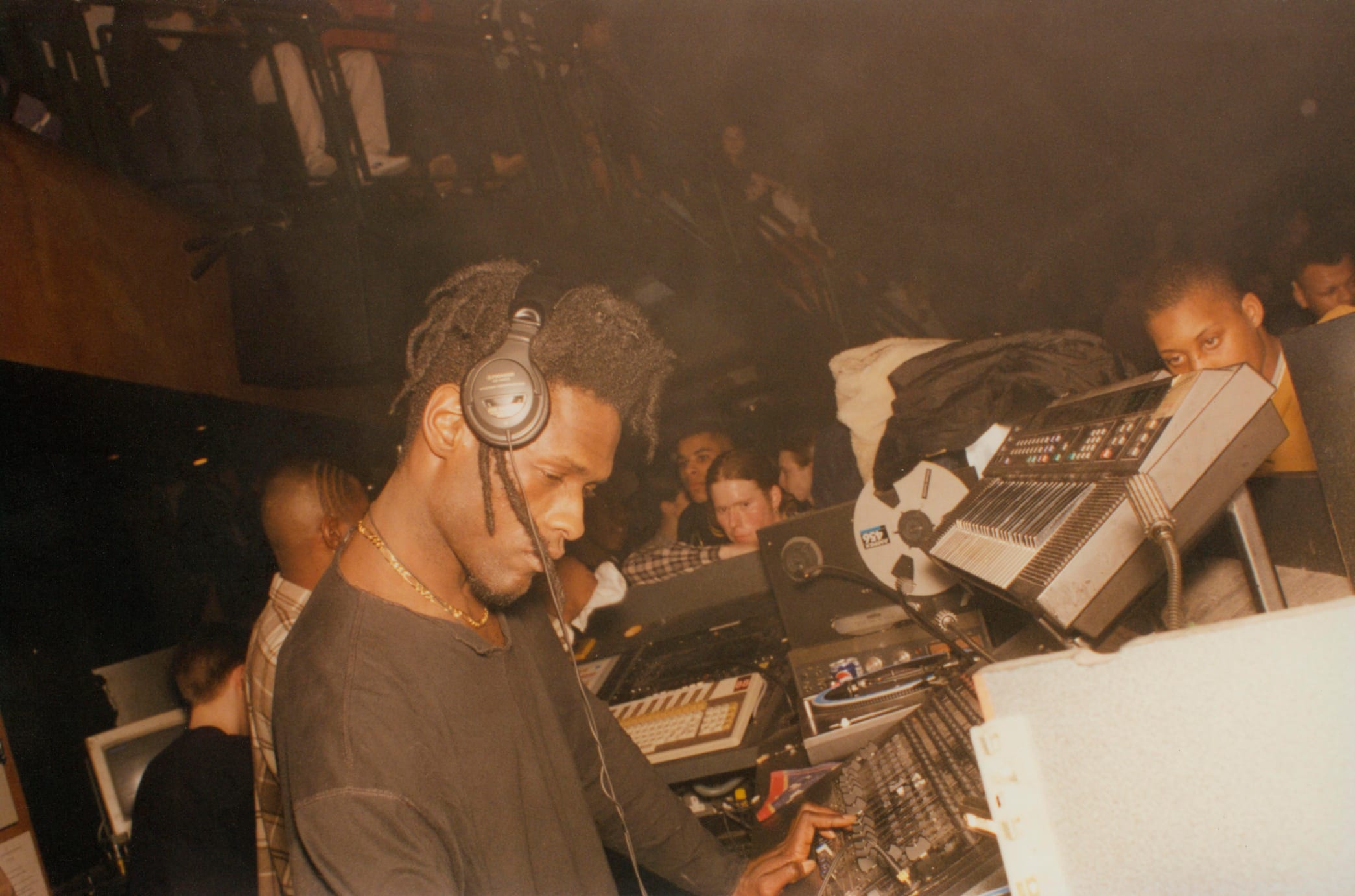
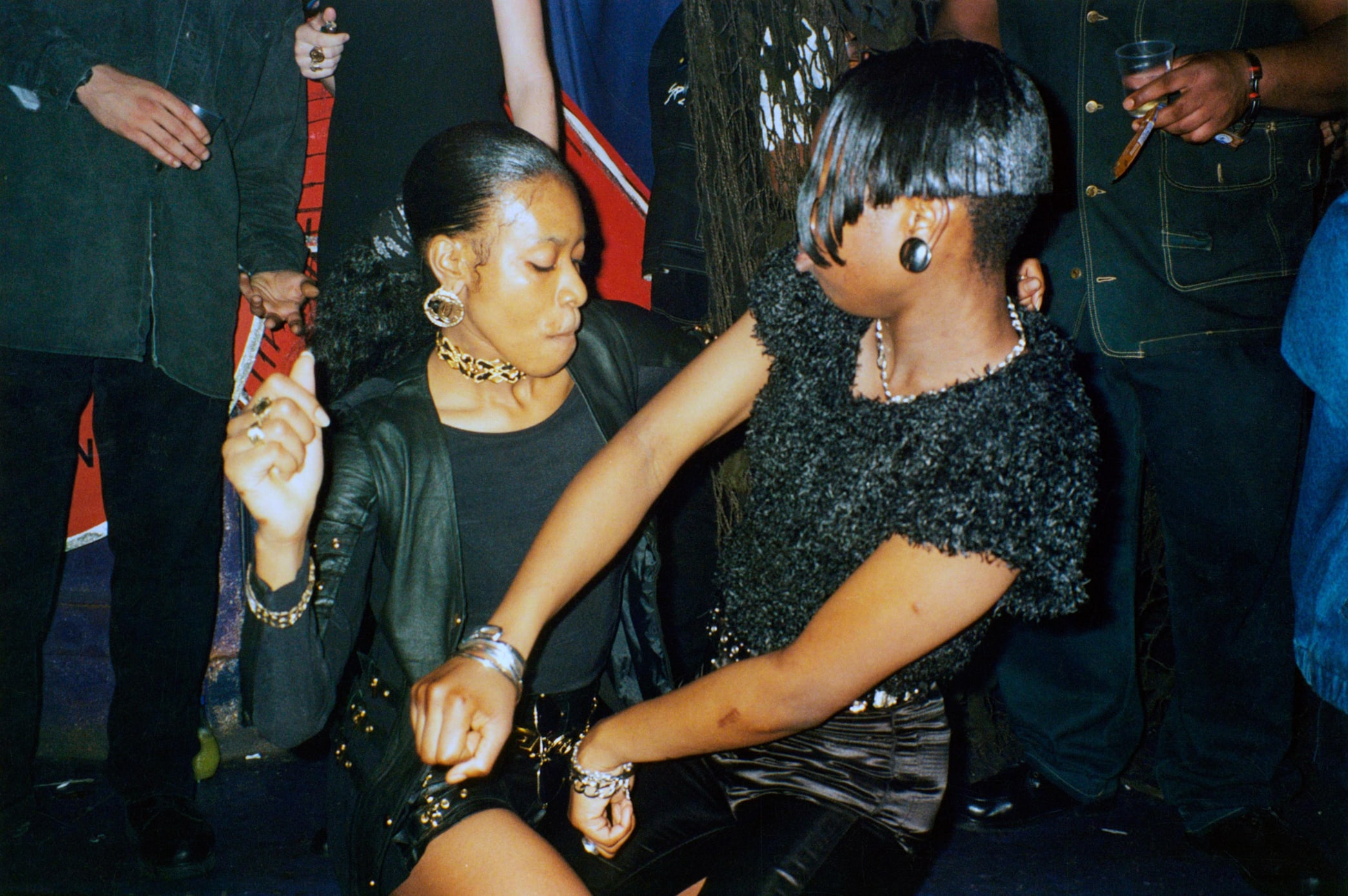
The emergence of jungle music in the early 1990s deserves a special spot on the timeline of Black British music. The unique blend of reggae, reggaeton, dancehall, hip-hop, soul and funk sounds was built on a foundation of Black British artists, yet enjoyed commercially by the masses. Jungle music and the surrounding community marked a safe space for young Black people to partake in their own ‘rave-style’ events.
“If jungle was for the [B]lack, working-class youths, then acid house was for white, working-class youths.”
The roots of jungle music are widely acknowledged as stemming from Black creators, inspired by the generational sounds of the Windrush generation. Black Jungle artists were viewed as pioneering creators: Goldie, Rebel MC (noted for popularising the label ‘jungle’), Shy Fx, LTJ Bukem, and DJ Ron were household names for anyone in the Jungle music sphere. Writing in the late 1990s, David Hesmondhalgh noted this public appreciation for the Black origins of Jungle music, stating:
“Just as house music gained credibility from its origins in a [B]lack, underground scene, jungle gained much of its significance for white audiences from its roots in ‘hidden’ [B]lack British institutions: pirate radio stations, and dance clubs attended by predominantly [B]lack crowds.”
The rapid rise and fall in jungle music’s popularity might seem, on the surface, to represent the fast-paced nature of modern trends. Unfortunately, the truth lies uncomfortably on a bed of anti-Black racism. Jungle music as a Black art form naturally drew audiences of young, Black people, looking to, for a moment, escape the pressures that accompanied being a young Black person in a post-Thatcherite society. And those who simply wanted to enjoy a party space created with their creolised history and identity in mind. Gatherings that attract significant numbers of Black people have always been police targets. Marc Mac, interviewed by Kwame Safo for Mixmag, spoke on this:
“I do think it’s got to do with a lot of the outside institutional pressures, from policing, from government and putting pressure on the clubs because they could see jungle being a very Black entity, so then you’re going to get this backlash.”
The solution? Jungle was rebranded and colonised into the much more palatable drum and bass: a genre that can be seen as the whitewashing and gentrification of jungle. Drum and bass was a repackaged version of jungle music, headed by white DJs and musicians such as Sub Focus, Netsky, and Chase and Status. The erasure of Black creators and listeners was noticeable and unsavoury, but unfortunately not unfamiliar.
“So I think those people making the policies were putting pressure on the clubs at the time, and the promoters could see that “ok if we call this a different night and we eliminate the jungle side of it, which is becoming very associated with the Black side of it, then we can get through and not have the hassle from the police and get out late licences and so on”. It’s almost like the hand was forced a bit to eliminate the Black side of it.”
The erasure of Black jungle artists paralleled the invisibility of Black women in the arena. Julia Toppin, a jungle historian, noted “[t]here were loads of women in the scene, but those contributions have not been appropriately documented. The women that were working in the background, the agents, the managers – all those things have been missing,”. It is important to acknowledge that even if the efforts of Black, male, jungle artists were re-written to conform to the white gaze, the efforts of the Black women involved were never even recognised.
Whilst jungle has attempted some mainstream re-emergence, its peak in popularity remains firmly grounded in the past. It is clear to see how racism and anti-Blackness played a vital role in its demise.
We all love food, right? Eating it, cooking it, even watching other people cook it. But have you ever thought about the history of the food you love to eat?
Today we are going to look at Black foods in Africa, mainly focusing on West Africa but we will take a quick trip around the rest of the continent too. When you think of (West) African food, what comes to mind? Jollof rice? Stew? Plantain? Pounded yam?Moi Moi? Egusi soup? Waakye? Cassava? Or Cassava Leaf stew? Let’s think about where these foods came from and why they are so important to the continent.
“African cooking is a part of
the universal human experience.”
James C. McCann
As James C. McCann notes, ‘African cooking is a part of the universal human experience. Sauces, oils, herbs, and spices add flavour and texture to primary ingredients and remove food “from the state of nature and smother it in art.”A cuisine is thus a collection of dishes and meals that mark a distinct culture much in the way that styles of dress, music, or dance do. Cuisines behave like language families in that they are bodies of knowledge and practice “mutually intelligible” between several societies, locations, and ethnic identities.’
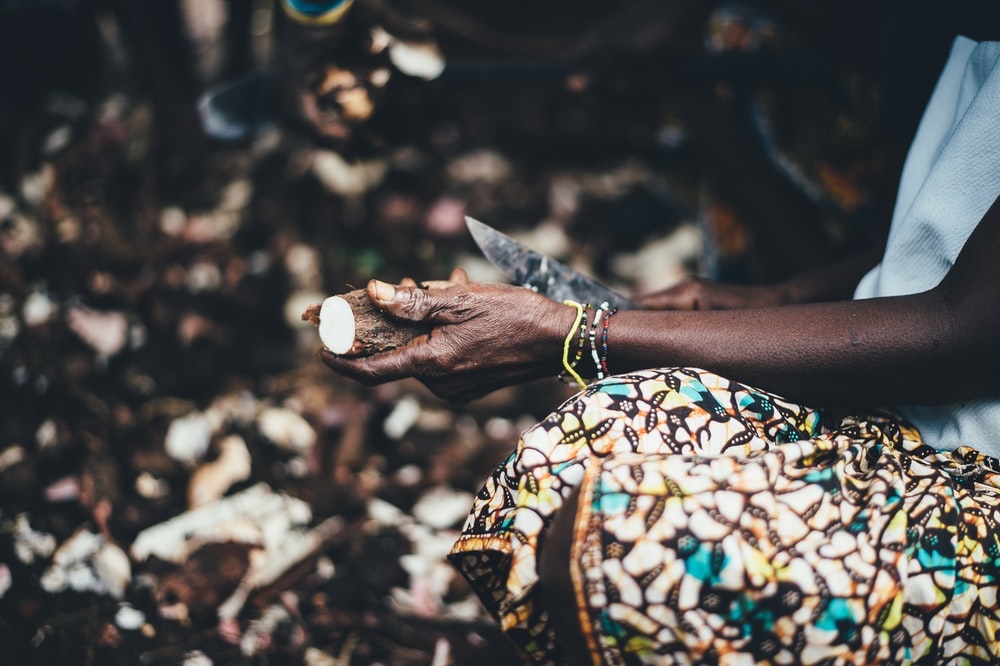
To fully explore African foods and cuisines, we first have to establish our geographical context. The first thing we know is that Africa has a warm and tropical hot climate. This of course has an effect on what can be grown and produced. Farmers have to base their harvests on the rainfall patterns and so they have to work smart and hard. Root vegetables and grains such as rice, yams, and cassava are staples in African dishes as they are easy and low-cost to grow. Peanuts are also a big part of West African cooking, often used to make soups and stews. Peanut oil is also used often as an alternative to palm and coconut oils. The grasslands found in these countries allow farmers to rear animals – cattle, goats and chicken, which is why these proteins are often in your favourite soups and stews.
The basis of almost all dishes are tomatoes, onions, and hot peppers. If you have not started your cooking prep with these three things, you are almost definitely not doing it right! We don’t make the rules, we are just here to enforce them. 😉
OUR FAVOURITE FOODS IN FOCUS
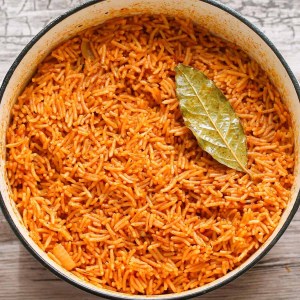
Jollof Rice
Photo courtesy of @simshomekitchen
The great debate, who’s jollof rice is better? Ghana or Nigeria? It’s a debate as old as time but did you know the dish does not even originate from either of these countries? Jollof rice can be traced back to the 14th century Wolof Empire, which was made of what is now Senegal & Gambia. It is believed that the dish then spread to other countries thanks to the far reaching Mali Empire.
Remember I told you about the three most important base ingredients of African cooking? No matter what country you’re from, your jollof must start with those three ingredients. Recipes start to differ after this; different countries use different rice grains (long grain versus basmati), and some countries add extra vegetables such as carrots and green peas. Regardless of how the dish is prepared, everyone can agree it tastes amazing!
Feel like trying out Senegambian jollof? Here’s a recipe you can use, make sure to let us know how it goes!
“West Africans have always had to be resourceful with their cuisine. Innovative and easy is the main theme throughout West African dishes but that does not mean that flavour has to be limited.”
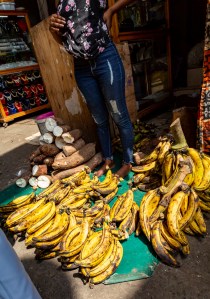
These are some of the various names for fried plantain across Africa. Served as a snack, starter, or side dish; plantain is a staple in African food. There’s an art to plantain, different cuts for different dish types, Ghanaians add spices to make Kelewele, Nigerians pair it with gizzard to create Gizdodo.
It’s a simple but tasty food which is easy to prepare and is the first stove top dish that many West African children learn to cook alone.
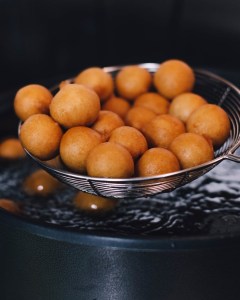
Puff-puff
Photo courtesy of @puffpuffministry
Also known as Bofroat (Ghana), Mikate (Congo), Akara (Sierra Leone), and Mandazi (Uganda).
It is made of flour, yeast, sugar, butter, salt, and water. These little balls of dough bring joy with every bite. They can be eaten as a breakfast food or as a snack or sometimes even as a side dish. However you choose to eat them just know that one certainly will not be enough.
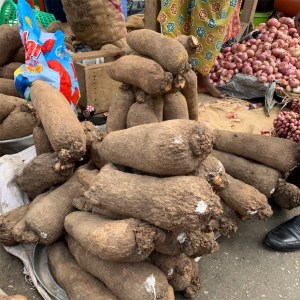
Yam
Photo courtesy of Specialty Produce
Fondly known as the ‘King of Crops’, yams are known for their large size, distinctive taste and ability to feature in everyday dishes. The food is so revered that the Igbo people and other West Africans hold annual celebrations called The Yam Festival. During the festivities, which take place between August and September, farmers give thanks for a bountiful harvest and discard old crops, making space for new ones to be grown. Many rely on farming as their sole source of income and so this ritual is an integral part of life. In some cultures yam is also seen as a sign of fertility and is used as part of wedding ceremonies.
I could go on forever about Black foods in Africa but the main point is this. West Africans have always had to be resourceful with their cuisine. Innovative and easy is the main theme throughout West African dishes but that does not mean that flavour has to be limited. It’s also interesting to realise that many dishes are the same around the continent with just the slightest of alterations. And finally, if you take nothing else from this blog post, always remember – onions, tomatoes, and peppers are a must!!