The History of Black British Climate Activism

By: Michelle Aboagye

Britain has had a long history of environmental consciousness, evident by its anti-pollution legislation. Interestingly, the world’s oldest anti-pollution legislation is a British decree from 1273 which made the burning of sea coal forbidden. Where there is environmental legislation, there is environmental consciousness. And where there is environmental consciousness there are environmental activists lobbying governments. These activists in Britain formed environmental organisations which were focused on issues such as protecting wildlife and increasing access to the countryside.

In addition to this, some of the earliest environmentalists were white elites, and the environmentalist movement has historically been driven by white non-working-class people. Today, climate activism, like other environmental activism, is perceived to be a white middle-class concern, with people who are not white being alienated from both movements – despite the fact that they are disproportionately affected by climate change, environmental racism, and more. Environmental concerns did not begin to take into consideration the needs of non-white communities in Britain, until a few years ago.

Black communities are more likely to live in areas harmed by climate change, with countries in Africa and island states of the Caribbean being overwhelmingly located in parts of the world vulnerable to climate hazards such as hurricanes and floods. These countries suffer the most from extreme weather driven by climate change, namely stronger hurricanes and longer dry seasons that affect the livelihoods of their inhabitants. Black communities are also more likely to experience environmental racism. Environmental racism refers to when neighbourhoods densely populated by non-white communities have a disproportionate number of environmental hazards and sources of pollution that lower the quality of life. 

Black British climate activists recognise that Black people and communities are overwhelmingly negatively affected by climate change and its impacts, and campaign for this to be recognised. Although in the past they have been erased, excluded, and spoken over, today, many Black British climate activists are making ripples in climate and environmental spaces. They bring attention and awareness to the importance of racial justice when discussing climate change as there is a strong lack of awareness on how the two are connected. In fact, one of the first times the climate crisis and race were associated together in the British press was in 2016, when nine Black Lives Matter UK activists protested at London City Airport. 

Today, many Black British climate activists campaign for the climate crisis to recognise racial justice as central to the climate movement. We will now shine a spotlight on three Black British climate activists.

Black British Climate Activists to Look Out For

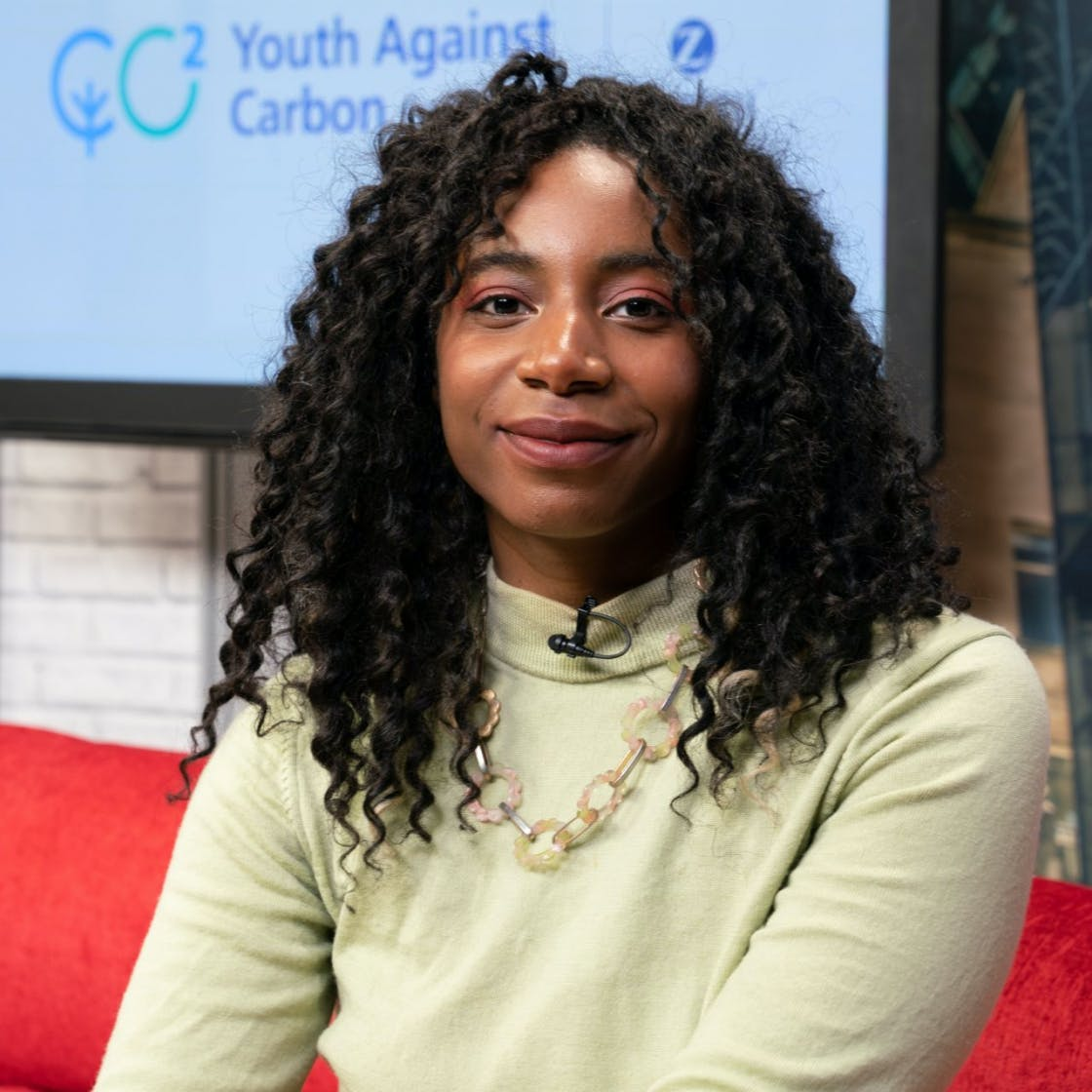
Dominique Palmer

Dominique Palmer is a climate activist who recognises that climate change issues have social intersections of their own, such as gender equality and discrimination against minority ethnic groups. She is a part of the UK Student Climate Network and Extinction Rebellion Youth. Dominique has spoken on environmental justice at environmental events such as COP25.

Fatima-Zahra Ibrahim

Fatima-Zahra Ibrahim is the co-founder and co-director of the Green New Deal UK, which lobbies the British government to put the climate crisis at the centre of its politics. She is a social justice campaigner, and has worked with international movements.

Destiny Boka-Batesa

Destiny is one of four co-founders of Choked Up, a campaign which aims to raise awareness of racial injustice within the climate crisis movement and also for the government to take Black and brown people into consideration when creating clean air laws. 


BLAM UK recognises that environmental racism and air pollution greatly impact Black communities, with areas such as Lambeth and Southwark having the highest levels of air pollution in London. In our work with the Live + Breathe campaign we explored the impacts of environmental racism and air pollution with students. Black communities are also less likely to have access to green spaces, such as parks and if they do have access to them, they are of lower quality. Public reporting on air quality, preparation of air quality action plans, and more solutions must be implemented in order to increase the quality of air Black communities are exposed to and limit the negative effects of exposure to toxic air.

Environmental racism greatly affects Black communities, and this in turn affects their abilities to cope and respond to the climate crisis. In addition to being disproportionately affected by the climate crisis, Black voices are also ignored and erased in conversations of climate change. Black British activists continue to campaign and raise awareness on these issues, as well demand positive environmental aspects such as clean air, and green space.

Are you concerned about the impact climate change may have on you as a Black person? Let us know in the comments!

The History of Saturday Schools

By Michelle Aboagye

Black Saturday schools have been in existence for as long as there has been a significant Black presence in the UK.

Saturday schools, also referred to as supplementary schools, have had a long history in the UK. They were first associated with Irish migrants in the late 19th century, but since the 1940s post-war period migrants from around the world have established these community-led Saturday schools. This was the case for newly arrived African and Caribbean immigrants of this period who established their own Saturday schools. In fact, Black Saturday schools have been in existence for as long as there has been a significant Black presence in the UK. But what prompted the emergence of these schools?

In 1960s Britain, many children of West Indian immigrants were deemed to be “educationally subnormal” (ESN) by their teachers. As a result of this, they were expected to fail, had no prospects of taking the then O-Level exams, and were placed in classes with other children who fit this criteria. It is worth noting that there were disproportionate numbers of West Indian children who were placed in these classes. In addition to this, West Indian children also experienced rampant racism in schools from their peers and their teachers.

West Indian parents, determined to create safe learning spaces for their children, banded together to take matters into their own hands. Within their communities, they endeavoured to create their own learning spaces for their children to correct the gaps that their children experienced in mainstream schooling, and the Supplementary School Movement was born. Black Saturday schools began to emerge across England.

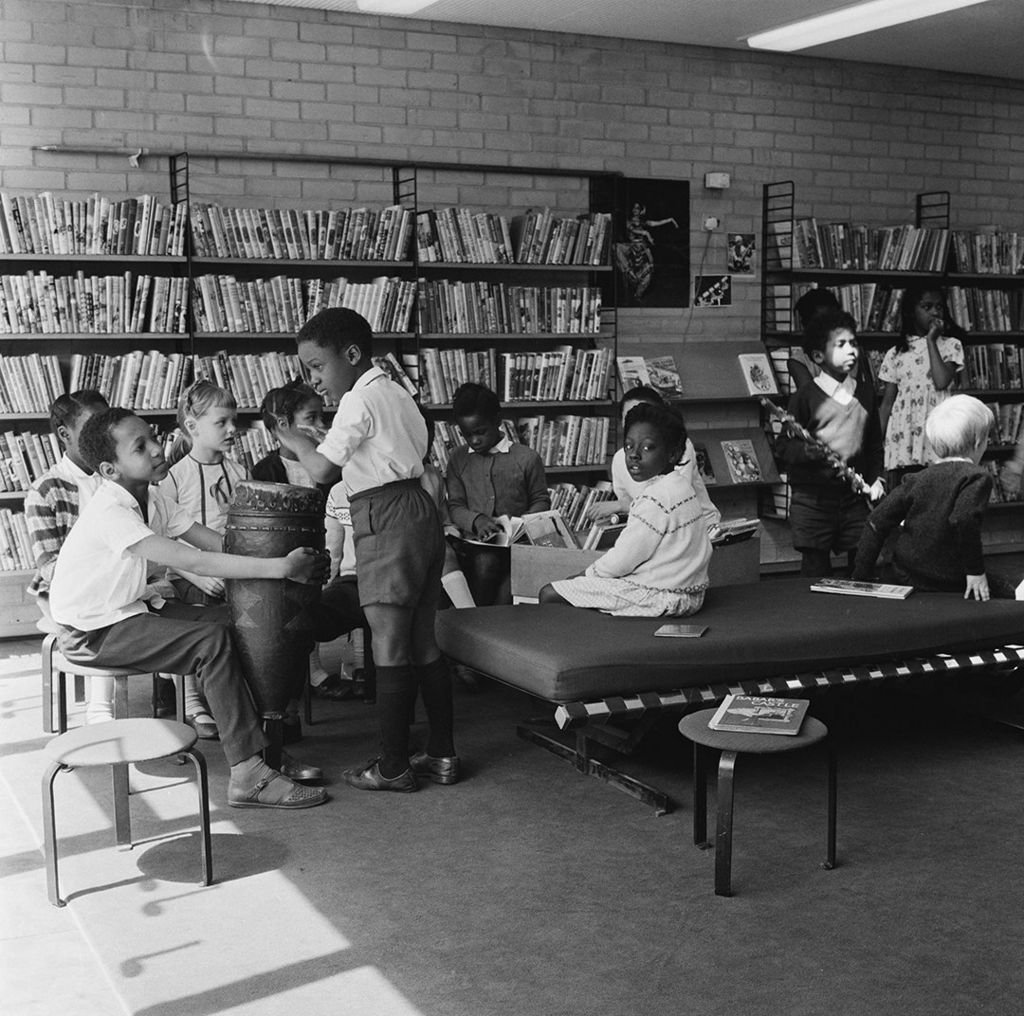
Children in a mainstream primary school in Brixton, London. Source: BBC.

These schools were not only a testament to the power of community action, but they were also a response to racism in the educational system. Black parents were determined to not let their children slip through the educational cracks as a result of racism and discrimination. They felt as though mainstream schools did not have attainment targets for their Black students due to them being classed as ESN. Black Saturday schools challenged the inherent racism of the mainstream schooling system and rejected the presumed inevitable underachievement of Black children that mainstream schools imposed on them. 

A community effort, Black Saturday schools were staffed by volunteers and took place in community spaces such as churches and community centres, they even took place in people’s front rooms. For the most part, they relied on parental contributions and community donations to operate, and were present in London boroughs where there was a high African and Caribbean population, such as Lambeth, Hackney, Lewisham, and more. These schools operated outside of normal school hours, such as in the evenings or during weekends (particularly on Saturdays), and although they taught National Curriculum subjects such as maths, English, and science, they also helped to teach pupils cultural values and uphold the heritage and traditions of their countries of origin.

Black Saturdays schools created nurturing and supportive environments for their students. Pupils who attended Black Saturday schools spoke of understanding topics better, helping them when they returned to their mainstream classes. These schools also helped students to develop positive attitudes towards education – attitudes which would have been greatly impacted as a result of their experiences at mainstream schools. Pupils were reported to be more focused, more attentive, and more confident to ask and answer questions as a result of their engagement with Saturday schools.

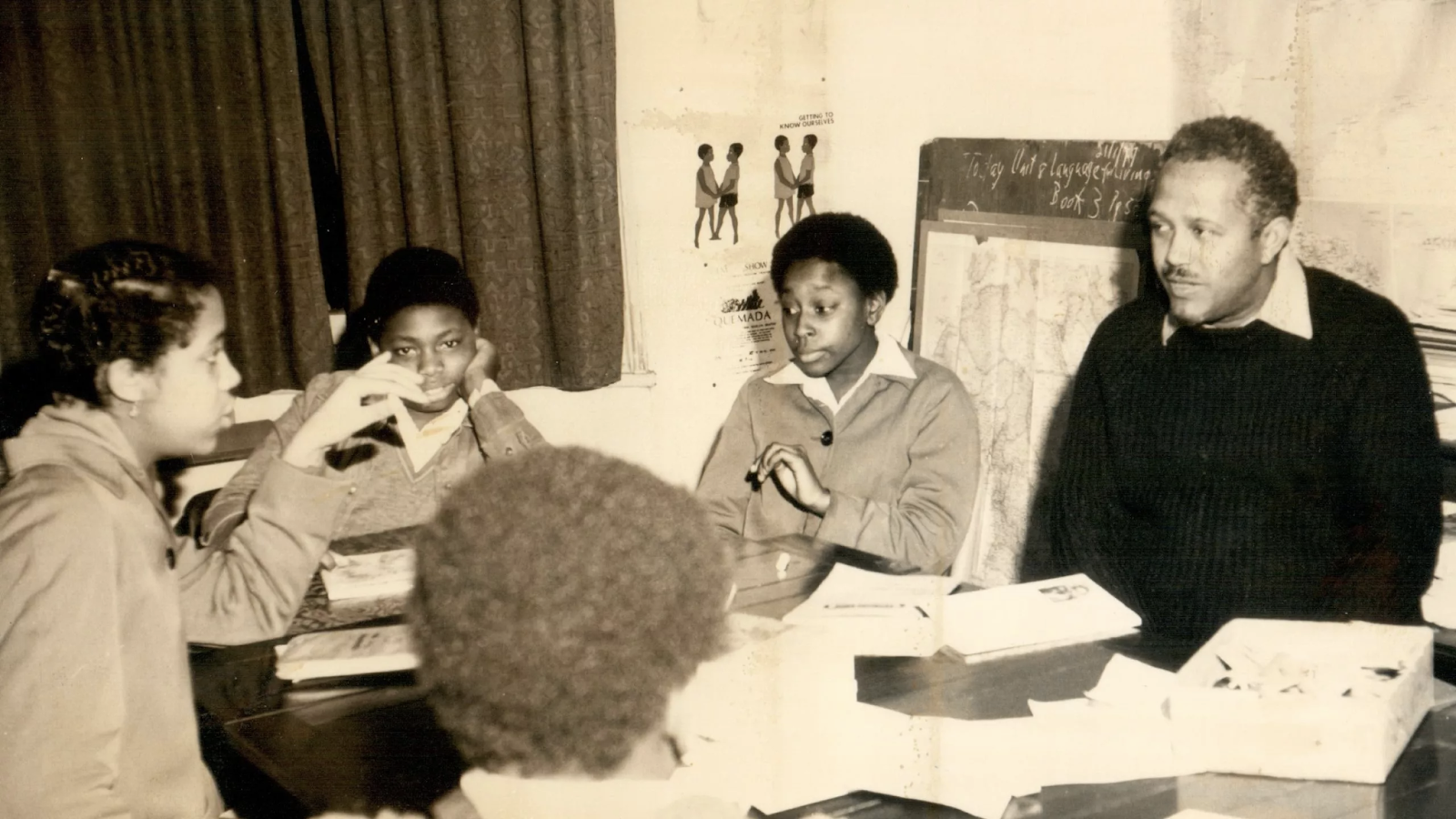
John La Rose with schoolchildren at a supplementary school. Source: George Padmore Institute

In addition to this, staff believed that their schools were effective in helping pupils to be more engaged and capable, especially pupils who had been excluded from mainstream education, or were on the verge of exclusion. Black supplementary schools provided a nurturing approach to education as they fostered environments of ambition, confidence and curiosity. In these spaces, Black students were encouraged to be ambitious, pushed to achieve their full potential, and had their abilities validated – these were interactions they did not experience in mainstream education. In Saturday schools, they were encouraged to aspire, improve their self-esteem and also feel a sense of belonging. In contrast, in mainstream schools Black children often felt marginalised and their cultures and backgrounds were ignored and not taken into consideration. 

Certainly, it is clear to see why they were regarded as lifelines for many African and Caribbean families. Saturday schools were essentially organisations for Black students staffed by Black teachers, which allowed students to relate to staff and vice-versa. Teachers understood the societal inequalities and obstacles that Black children were likely to face – particularly when they had no academic qualifications. 

Today, Black Saturday schools place a large focus on Black history and Black Studies alongside core subjects such as maths, science and English. They can be found across England, from London to the Midlands, and even Scotland! There is also a National Association of Black Supplementary Schools (NABSS) in the UK, which provides a directory of Black Saturday schools.

The Supplementary School Movement and the emergence of Black Saturday schools were a clear example of the power of community action, particularly as a response to racism and discrimination. As a result of this, Black students were able to have their identities affirmed, build their confidence, and focus on their development in a nurturing and positive environment. They are an important part of Black British history and culture, and should never be allowed to die out!

Black women and false nails

By the Grounded Project Team

Acrylic nails were invented in 1954, by a dentist called Fred Slack. After breaking his fingernail at work, he used dental products to create a replacement, later going on to create an acrylic nail company with his brother called Patti Nails. Although Fred Slack was a white man and acrylic nails as we know them today are not a Black invention, Black women have popularised creative and self- expressive nails since the 1980’s. Unfortunately, the shadows of cultural appropriation have cast shade and erased Black women from the picture.

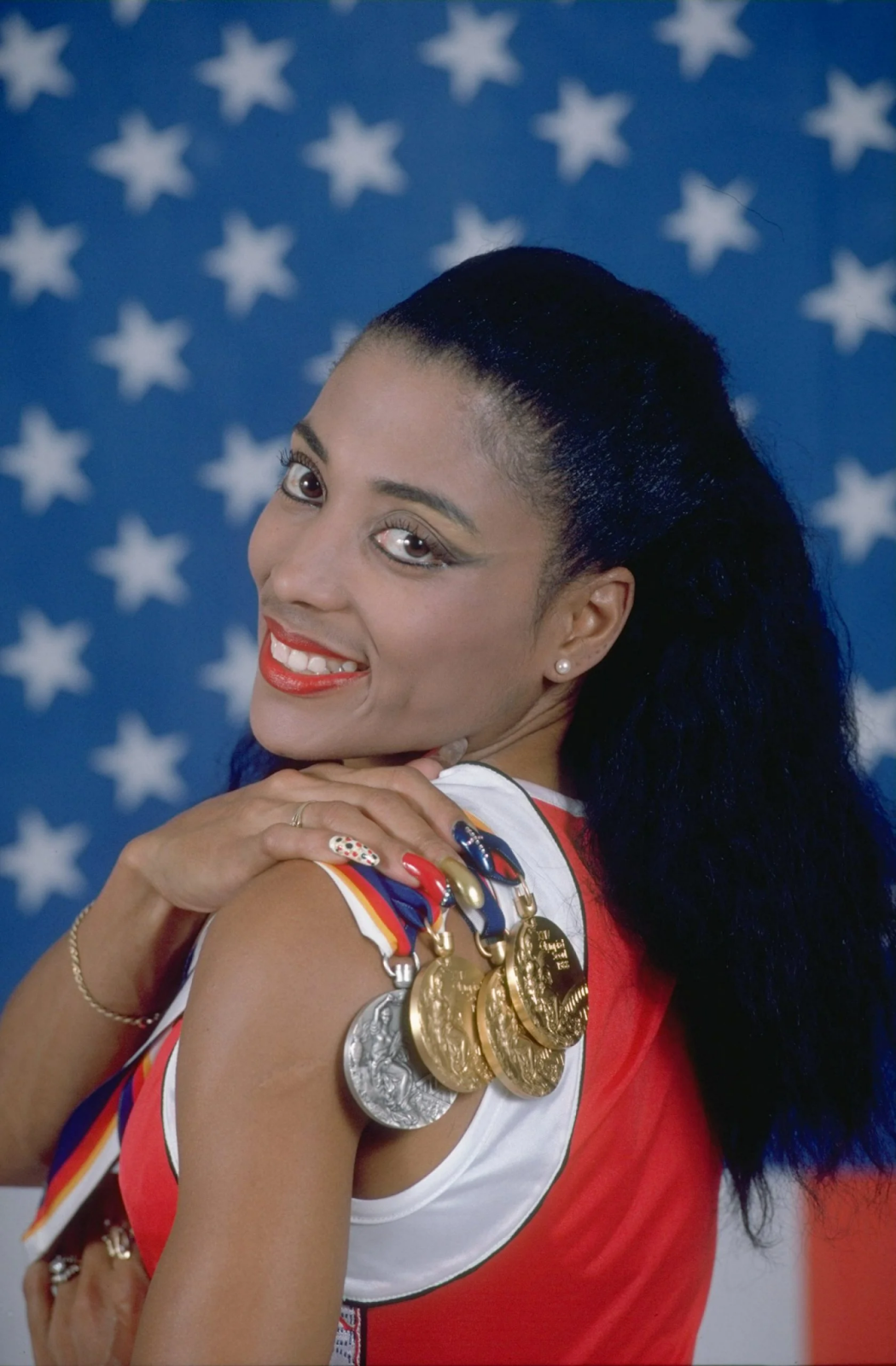
In 1988, Florence Griffith- Joiner (commonly known as Flo Jo) broke the record for the fastest woman at the Olympics- a record that still holds value till this day. However there seemed to be more focus on her colourful and well adorned nails that she decided to rock on the track. She had previously been a nail technician before becoming a runner – her nails were a form of homage to the hustle that had gotten her to where she was. News reports made it clear that her fingernails were of more importance and deserving of more attention than the medals she earned. She was completely othered because of her aesthetic choices, with Lynchburg College Sport Management Professor Lindsay Pieper observing that ‘Because she preferred long, colourful nails, the runner was depicted as abnormal, deviant, and different’’. Generally, she was also over sexualised (a practice imposed on Black women far too often) and depicted as an attention seeker as if her running skills were not enough to gain the spotlight.

This is nothing new and still carries on presently. As long as respectability politics are thrust on Black women, alongside the intense scrutiny if we deviate from this, the policing of our appearance will always take priority over our achievements. Not only this, but styles we created the blueprint for are rarely recognised as ours. Kim Kardashian made headlines four years ago for sporting pierced nails, and the article insinuated it was innovative by claiming that she had ‘taken the game to the next level’’.

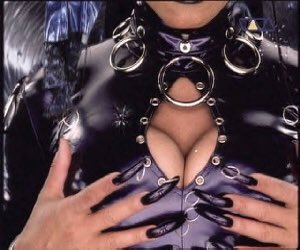
However, Janet Jackson set this trend for Black women in the 80’s, when she wore a ring in each acrylic nail on set for her video ‘’What’s It Gonna Be’’.
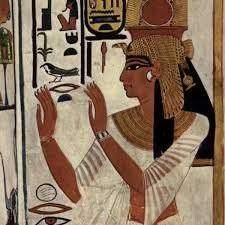
Racism, misogynoir and classism all contribute to the idea that stand – out styles of nails are ‘ghetto’ on Black women, yet edgy when white women wear them. There is a glaringly obvious double standard, and a stereotypical notion that Black women who wear long acrylic nails have a low income status. Not only is this claim unsubstantiated, but it is ironic considering that long nails were seen as symbolic of belonging to a high class in Ancient Egypt, with women in this period wearing extensions made out of ivory and bone, painting them red to reiterate their elevated position in society. 

Cultural appropriation is the adoption of customs, practices or ideas of one group of society from another. This adoption is usually practiced by dominant members of society and it is always done without acknowledgement or understanding of how these customs, practices or ideas originated. We see it time after time, with styles such as laying edges, cornrows and box braids being snatched from Black culture and thrust into the mainstream, leaving those who not only created those styles, but were criticised for them, in the dust. A definitive and honest conversation about how deeply embedded white supremacy is into the beauty industry needs to be had if any changes are to be made, and for Black women to be given the flowers they deserve that are well overdue.

“..if it seems the culture you’re appreciating doesn’t appreciate your appreciation, it’s probably time to think things through again.”

-Maria Beech, anti- racist educator

A Brief History of African Dance

Definitions:
Aesthetics: principles relating to what is beautiful, pleasing, and appreciated.
Polycentric: the idea that movement can initiate from any part of the body


Dance in African and African Diasporan cultures crosses many boundaries. It is part of celebrations, religion, war, and theatre. It comes in many forms, from masquerade to ritual spirit dance to theatre. Some of these dance forms are intertwined, and a masquerade dance can be done as part of a celebration or a ritual dance ceremony mourning the death of a community member. African dance develops and creates spaces through which ideas about person, self, gender, and morality are made and contested. Because Africa is a big continent with many different ethnic groups with different customs, traditions, and dances, there is not one single ‘African dance’, instead it is a phrase that should encompass the range of dances from across the continent.

In her book titled ‘Dancing Wisdom,’ Yvonne Daniel considers and explores African cultural continuity, performances, and behaviour amongst the diaspora through dance. Daniel looks at Haitaian Vodou, Cuban Yoruba (commonly called Santería), and Bahian Candomblé. In writing this book, Daniel aims to introduce African history and sacred customs to the broader public. Daniels pushes against the white gaze and lens of incorrect beliefs that African religious traditions and their associated dances are ‘cursed’ and to be viewed through a lens of superstition. We find a site for rich cultural and aesthetic knowledge in understanding and looking at African diaspora religious systems. We find commonalities within related ritual communities that link African spirituality to the experiences of the Diaspora. This serves as a form of cultural resistance in which the enslaved ensured that histories and cultures of dance were preserved and passed on. These dances throughout the diaspora are an example of cultural retention, a way for enslaved Africans to hold on to a piece of ‘home’. It was also a form of resistance, showing their captors that despite their current situation, their spirits and culture could not be oppressed. 

Additionally, African dance and music traditions are a way to bring ancestral and spiritual wisdom to the present. In doing so, African dance becomes a site of healing and health, bonding and goodwill, and deepening our connections to nature and our spiritual universe.

African dance is polycentric, which sets it apart from most other dance traditions in the world. As explained by the National Museum of African Art, this means that the dancer’s body is sectioned into separate areas of movement, with each area moving to different rhythms within the music. This is known as ‘isolations’ in choreographic terms.

Most African communities had a ‘dance master’ who taught the members of the group from a very young age how to perform the various dances. These dances needed to be performed precisely as taught, with no room for improvisation or ornamentation until complete mastery of the form was achieved. 

While almost all of the dances are polycentric in some way, different areas of Africa have very different dances. For example, the Masai are known for leaping high in the air, while the Kalabari emphasises hip motions. The movements are exact in all cases, and the same dances you see today have most likely been danced the same way for centuries.

The aesthetic values of a society expressed through dance represent beauty and the best it has to offer. Therefore, African dance aesthetics represent beauty, commonalities, and the best of West, East, Central, North, and South African communities.

If you are curious and want to learn more about African dance, see here.

Dance cultures of the Caribbean

By Rianna Wilson


We all love a good boogie. The Electric Slide at the end of a family party (that’s the Candy Dance for those who are not familiar with the official title), a Zanku in the middle of an Afrobeats set or maybe just a simple two step at a work party. Once the music hits, our bodies just naturally start to move on their own accord. If I said name a dance from the Caribbean would you be able to? It’s highly likely that you’d say ‘whining’ which is understandable, anyone who’s been to a rave would know that one at least. For those of you who have no idea what that is, let me help you out. But there’s more to dancing in the Caribbean than just that, and so today we’re going to look at some that may be new to you. 

Many dances throughout the Caribbean have roots in both African and European cultures. These Creole dance creations have become synonymous with island identity; the dances have come to light first as popular community dances and often thereafter as endeared folk or ballroom forms that have permeated the region and sometimes the world. So let’s get into it!

Kompa

Creole – konpa

The sweet sound of Haiti. Kompa the music genre was first created in the 1950s by Haitian legend Nemours Jean-Baptiste and his band Conjunto Internacional. The group put a new spin on traditional Haitian music. There are two main characteristics of kompa; a large brass section – saxophones, trumpets, the lot! And upbeat lyrics and melodies, it’s dance music so people need to be put in a good mood, you can’t do that if your lyrics are sad and slow. The beauty of kompa is its ability to make people want to dance instantly. 

If you’ve never listened to the genre before here are two recommendations for you – 

Old school classic by Nemours Jean-Baptiste – Ti Carole

New school favourite by Koneksyon – Si ou vle (Remix) (feat. DJ Rage)

As you’ve heard in both those songs, the sound is smooth and sensual, and so the dance must match. If you’re an avid TikTok user then it’s highly likely that you may have seen videos of people dancing kompa already. It is a two step dance called carré (which means square) and is always danced in pairs. The couples hold each other tightly and sway romantically with a lot of hip movement. Although it looks fairly simple, the dance is in actuality very intricate when done properly. 

Here’s a video of people dancing kompa, beautiful isn’t it?

Dancehall

Again both a music genre and dance type but this time we’re in the beautiful land of Jamaica. In the 2000s, dance steps became a huge part of dancehall culture, they became just as popular as the songs themselves. Artists such as Elephant Man and Ding Dong were known for having choreography to match their songs. A lot of the time the lyrics of the song will instruct you on the choreography, making it very simple to follow. 

It is impossible to talk about dancehall without mentioning Gerald Levy, also known as Mr Wacky. Dubbed as the greatest [Jamaican] dancer of all time, Mr Wacky was the mastermind behind many famous dancehall dances. Dances including the bogle, wacky dip, Sesame Street, willie bounce, and countless others. 

Tambú

Have you ever heard of Curaçao? It’s okay if you haven’t, that’s what our blog is here for. To educate the masses!

Curaçao is a small Dutch Caribbean island in the Lesser Antilles which is a small collection of islands found in the Caribbean. It makes up part of what is known as the ‘ABC Islands’ 

On the beautiful island of Curaçao there is a traditional dance named Tambú. It was first created by the enslaved Africans living on the island. Music is created using the tambú drum and other iron instruments, and dancers isolate their body parts with elaborate hip movements. 

Despite being danced in pairs, the most important feature of tambú is the fact that partners never actually physically touch. This adds to the sensuality of the dance. The dance is so sensual in fact, that the Catholic Church on the island banned it, it was illegal from the 1600s right up until 1956 – dramatic much? 

Tambú music is also known as the ‘Curaçao Blues’ as it was a way for the enslaved peoples to express their sorrows and sadness around their situation. 

Dance is a huge part of Caribbean culture, both on the islands and throughout the diaspora. They represent history, freedom, and expression. There’s many more that we could talk about because the Caribbean is just that diverse! Unfortunately though, finding dance classes that teach these styles in the UK is quite difficult (minus dancehall). This is a shame as preserving traditional dances within the diaspora is super important! Hopefully that’ll change soon. But also, if you are a person of Caribbean descent who teaches these styles – drop us a line and we’ll plug you on socials.

Now that we have looked at three different dances from around the Caribbean, are there any you think you’d like to try? Or any you KNOW you’d kill without even having to try? Let us know!

Blam UK condemns the recent anti-Black language racism from UK white-owned media outlets

Blam UK condemns the recent articles by a range of white-owned media companies that further entrench language discrimination and the erasure of Black British English speakers in British society. The British media has a long history in shaping racist, discriminatory and anti-Black racial discourse. The highlighted articles make repeated, unfounded statements about Black British English by referring to the language as, ‘talking like a ‘roadman’’ and claiming ‘grime music has helped cement the dialect’. These untrue statements misrepresent Black-British experiences and are not based on research to understand the history of Black British English and the people that speak it. Furthermore, this anti-Black and racist discourse is reminiscent of Historian David Starkey’s commentary on the London uprisings in 2011 against the killing of Mark Duggan by the Met Police, Starkey argued that the uprisings highlighted a ‘profound cultural change’ in that, the ‘whites had become black’ meaning that white people adopting Jamaican patois and BBE had made them partake in the uprisings. Here, the use of Jamaican patois and BBE as the cause of the London uprisings in 2011 and the changing English dialect today, are both examples of anti-Black rhetoric and illustrates the way Black culture and language continue to be criminalised in British society.

The articles follow the historical colonial practice of policing and inferiorising Black cultures and languages while centring White mainstreamed English as the norm. Black creole languages in and of themselves have been cultivated in response to imperialist dominance and racism. The articles ignore the fact that currently many Black people in the UK have been fluent in this language (BBE) and are currently being forced to code-switch due to standardised English being a requirement to thrive in many UK institutions. Furthermore, the articles also wrongly attributed Black linguistic creation to multi-culturalism as opposed to the continuing of linguistic heritages passed down from Black parents, which have now been further creolised to show a distinct identity of Black-Britishness. One of the articles mentions Black musicians and genres as the pioneers of this language being mainstreamed as opposed to recognising that this is a language spoken within our communities first and was used by Black musicians. 

The anti-Black Linguistic racism shown in those articles :

The use of the term ‘roadman’ through the lens of whiteness is always loaded, problematic and inherently anti-Black. At some point, we must ask ourselves why? Terms like ‘roadman’ and ‘urban’ are often used as code words for Black, which then changes the tone of the article. The term ‘roadman’ usually alludes to criminality in BBE. Our founder, Ife Thompson, notes that calling a language created by Black-British people ‘roadman talk’ is an attempt at further pushing anti-Black linguistic racism. A rich language created and used by a range of Black people including roadmen is only being referred to as a language that belongs to them. This type of criminalisation of BBE allows for institutions like schools or courtrooms (via racist prosecutions )  to be a space where we are further punished for our expression in this language, as the language is policed as something that is inherently criminal in nature.  When termings like these are used to confine BBE, it has an adverse effect on Black people, especially Black children. When the language they speak is demonised/ criminalised by mainstream media it leaves them susceptible to unfair policing and punishment. We have seen this take place at Ark All Saints Academy,  where policies put in place banning Black British English and articles such as these give these anti-Black policies their credence.    

How the term Multicultural London English erases Black British English :

The misidentification of Black British English as MLE minimises the cultural value and influence of Black heritage in modern-day Britain. BBE was formed exclusively and independently through the Black British experience. By stating words like “wagwarn” have multicultural roots, this discredits its Jamaican origins. The mere usage of words from other languages like Kettle- a Cockney word for watches, that has been further used and popularised by BBE Speakers does not justify the naming of BBE as multicultural London English or slang. Instead, this shows that BBE mirrors the established linguistic norms of borrowing terminology from other languages known as cognates, which be seen within White Mainstream English in words such as ‘café which is originally the French word. 

Why We Campaign towards Language Justice for Black English Speakers

At Blam UK we push for a language education that is decolonial and celebrates Black cultural production. As this in turn allows Black British children who speak BBE further avenues to heighten their racial identity through a positive lens. The current deficit approach to socio-linguistic and racio-linguistics within UK schools and society as a whole, means we see anti-Black linguistic racism upheld in all facets of the UK. We believe Black-British English speakers must be recognised for their unique approach to language creation and their bilingualism honoured and protected. Support our ongoing campaigns to create a Black future that are linguistically justice for BBE Speakers. 

African Contemporary Art

When you think of African art, you probably think of traditional art like this:

And you’re technically not wrong. However, there has been a shift in African art. Artists are moving away from the traditional pieces and materials and methods of art-making and have developed modern art pieces that mesh the old with the new.

So what is African contemporary art?

The contemporary art scene of Africa is characterised by a dynamic list of creators, who interpret and capture socio-economic realities, political challenges, rich traditions and diverse beauty.

It is art created by artists from both the African continent and the African diaspora in the post-independence era. As countries throughout the continent declared independence, their art changed. We will look into these changes in a little more detail later on.It is important to note that the biggest change that was consistent throughout Africa is the type of art being created. We have seen a move from ‘tribal’ art from collective ethnic groups (as seen above) to more individualistic styles. Although art mediums and styles within countries may be similar, you are still able to see artist’s individual stylistic approaches. 

Let’s take a trip around Africa!

Senegal

In June 1960, Senegal declared independence from France. Their first president was the pro-African poet, politician, and African socialism advocate Léopold Sédar Senghor. When he came into power he invested 25 per cent of the state budget into developing the arts and culture industry. Art and creativity is an integral part of Senegalese life, Dakar is even known as the art capital of West Africa. They even host the largest and most well-known fashion show on the African continent, so you can see that creativity and art is integral to Senegalese life.

Senegalese Artist in Focus

Name: Omar Victor Diop

Artform: Photography (fine art and fashion)

About: Much of Omar’s fine art work focuses on important figures and moments in Black history

BLAM’s favourites: We LOVE his diaspora series, in which he tells the stories of lesser known Africans throughout the African diaspora. All the photos in the series are self-portraits which have been styled and photographed by Omar himself.


Museum of Black Civilisations

In 2018, Senegal opened the doors of the Museum of Black Civilisations. Another brain child of the late, great President Senghor, the museum’s aim is to promote histories and contemporaries of Black civilisations from around the world and take back those Black artefacts we see in Western museums and art galleries. 

We can’t wait to take a trip there!

South Africa

I am sure we are all aware of South Africa’s past (and present). In 1948-1994 South Africans lived under the apartheid system, this was where Black and other non-white people living in the country faced institutionalised racial segregation. During this time the art scene in South Africa flourished, however, Black artists still struggled to reap the benefits of this success. 

Then, and still to this day, Black artists in South Africa based their art on the inequalities they face and the realities of their lives.

South African Artist in Focus

Name: Nicholas Hlobo

Artform: Sculptures and performance art

About: Nicholas makes his art out of materials which can be easily sourced, such as ribbon, leather, wood, and rubber. 

BLAM’s favourites: We love Nicholas’ bold use of different materials in his artwork. They definitely make a statement!

​​

Ethiopia

Ethiopia has a very very long and rich history, it is most famously known for having the oldest African church system. This rich religious history is a major influence on the country’s traditional art form known as coptic art. This art form is still used often in the present day by many artists

However, in more recent times, there has been a shift in Ethiopian art. Despite resources being difficult to come by and artists having to rely on resources from abroad, paint, sculpture, and photography are the main forms of art created in Ethiopia. Many artists use their work to make political and social statements.

Ethiopian Artist in Focus

Name: Dawit Abebe

Artform: Paint

About: Dawit is known for painting his subjects from behind. His work is said to explore themes such as privacy and alienation.

BLAM’s favourites: We’re only choosing one painting from Dawit, that’s how much we love it!. The colours, the power, the simplicity. We could definitely see this painting on the walls of our office

That’s all for our trip around contemporary art in Africa, but it’s not the end of this post. 

We have also collated a list of contemporary art galleries around Africa for you guys.

We know, the BLAM UK blog is the gift that keeps on giving, and you’re welcome! Whether you are enjoying another ‘Detty December’, visiting family and friends, or doing a heritage and homecoming trip – exploring these museums and learning about the popular art of the country will offer visitors a unique insight into the social and political contexts on-ground.

Ethiopia

  • Alle School of Fine Art & Design
  • Guramane Art Center

Senegal

  • Galerie Atiss
  • Galerie Cécile Fakhoury

Ghana

  • Gallery 1957
  • Artists Alliance Gallery

South Africa

  • Zeitz Museum of Contemporary Art
  • Norval Foundation

Nigeria

  • Lagos Center for Contemporary Art
  • Arthouse Contemporary

Uganda

  • Afriart Gallery

Zimbabwe

  • First Floor Gallery

Kenya

  • Banana Hill Art Gallery
If you ever visit any of them, let us know!

BLAM UK do not own the copyright to any images used above. All images have been used under fair usage. All images have been used as an educational tool and not for commercial gain

The mental health impact of the policing of Black British English

By Christina Idowu

Black British English (BBE) is a distinct language that directly connects us to our ancestors, who created and used their own language as a form of cultural resistance. Using elements of African and Caribbean languages, such as Pidgin and Patois, and Black-British vernacular to those who speak it and those who feel its cultural impact—Black English matters. Our language shapes how we see the world and ourselves. The words we choose and our meanings to them influence our decisions, beliefs, and well-being. 

For Black British English to be continuously dismissed and devalued as being linguistically broken, can be incredibly harmful to the identity of Black people globally who use this language to communicate in their daily lives. Being told repeatedly that Black British English is not considered standard, mainstream, or prestigious language can negatively impact our mental health. Language differences can lead to feelings of stigmatisation, discrimination, and ostracisation as many people, without thinking, harbour damaging assumptions about the different ways other people speak.

For Black students, in addition to the pressures of modern life intensified by the online world and social media, the policing of Black British English means striping and shrinking of your identity and being forced to adapt to the white mainstreamed surrounding culture. Labelling Black British English as the ‘wrong’ way to speak can quickly get embedded in everyday teaching practices and sustains anti-black racist practices and ideology in our schools. This leads to the internalisation of negative perceptions about how they speak which may lead to feels of unintelligence and inadequacy when using BBE in white spaces. 

Studies have shown the pervasive effects of internalised racism on Black children at a very early age. Banning how they communicate using Black British English can cause them to question their sense of belonging and foster self-doubt that must be worked through to regain a strong voice — a process that can take years. Similar to the concept of microaggressions, being silenced and being forced to change the way you speak can trigger stress, depression, anxiety, and even racial trauma. During a crucial time in Black students’ lives when their racial identity is developing, being unable to speak Black British English in schools can lead to Black children feeling misunderstood, unsafe, and unprotected by their teachers.  

The stigma around mental health, the absence of specialised Culturally safe services, and the institutionalised racism within MHA services mean that Black children and families are less likely to seek out or receive the mental health services they need. As a result, young Black people are scared, worried, overwhelmed, and concerned about their place and space in the world. Without proper platforms, in the community and outside of the NHS to unpack the stress and traumas they have endured, we will ultimately see more young people experience a mental health crisis and stressors. Children who have experienced trauma may be triggered in a school setting and exhibit emotional responses that are seen as erratic, unpredictable, and, at times, explosive. 

Discounting the Black student experience through policing Black British English can perpetuate feelings of hopelessness and cause a breeding ground for a psychology of victimhood, learned helplessness, and anger as a coping mechanism for continuous mental distress. The only way to prevent this is to start protecting Black students by challenging the deficit thinking and negative stereotypes about Black British English that permeates our classrooms and communities. Schools, teachers, and communities must recognise that multiple languages can co-exist and work toward dismantling anti-Black linguistic racism and strengthening the mental health of Black children.

Within our schools, where Black children spend most of their time, the use of Black British English must be encouraged to develop a positive racial identity alongside encouraging their bilingualism. It is important that Black students unlearn the harmful dialogue associated with using Black British English (e.g., home language, informal English, improper speech, etc.) that disrespects the existence and essence of Black Languages. It is the responsibility of teachers, educators, and schools to acknowledge and celebrate Black students’ use of Black British English as a valid system of language, with its own consistent grammar, structureand form. It is imperative that we focus efforts on supporting Black children’s mental health and this takes unified, meaningful efforts from parents, educators, and community leaders in order to provide a safe, secure, and welcoming environment for Black students.


References: 

Breaking the Cycle of Silence Around Black Mental Health. (n.d.). Edutopia. Retrieved April 12, 2022, from https://www.edutopia.org/article/breaking-cycle-silence-around-black-mental-health

Demand 4. (n.d.). BLACK LINGUISTIC JUSTICE. Retrieved April 12, 2022, from http://www.blacklanguagesyllabus.com/demand-4.html

Feagin, J. R., & Sikes, M. P. (1995). How Black Students Cope with Racism on White Campuses. The Journal of Blacks in Higher Education, 8, 91. https://doi.org/10.2307/2963064

Heidelburg, K., Phelps, C., & Collins, T. A. (2022). Reconceptualizing school safety for Black students. School Psychology International, 014303432210747. https://doi.org/10.1177/01430343221074708

Language Matters in Mental Health | Hogg Foundation for Mental Health. (n.d.). Retrieved April 12, 2022, from http://hogg.utexas.edu/news-resources/language-matters-in-mental-health

Luu, C. (2020, February 12). Black English Matters. JSTOR Daily. https://daily.jstor.org/black-english-matters/

Masko, A. (2014). Racism and Mental Health: Are Schools Hostile Learning Environments for Students of Color? Language Arts Journal of Michigan, 30(1). https://doi.org/10.9707/2168-149X.2045

Racism, Education, and Black Children’s Mental Health | Psychology Today United Kingdom. (n.d.). Retrieved April 12, 2022, from https://www.psychologytoday.com/gb/blog/collective-healing/202203/racism-education-and-black-childrens-mental-health

Shainah M Andrews. (2017). British Black English. https://doi.org/10.13140/RG.2.2.20800.15361

The UK’s Very Own Refreshing and Upbeat Genre…GRIME

By Christivie Manga

Grime tracks tell a story of Black urban youth experiences growing up in London

Origins of Grime

Grime is a genre of uniquely Black and British electronic rap/hip-hop music that emerged in East London in the early 2000s. Grime is known to be rapid, syncopated breakbeats, generally around 140 beats per minute, and often features an upbeat or jagged electronic sound. Grime explores the Black-British experiences of estate living and growing up in the UK as a Black person. It allows Black artists to express themselves in a unique manner. Grime tracks tell a story of Black urban youth experiences growing up in London, with many artists rapping about relationships, hood life, and real personal issues. 

Grime has been described as the “most significant musical development within the UK for decades.” The most fundamental part of grime was that it defined UK rap as being separate from US rap. Grime was refreshing for many because it was uniquely British. 

So let’s dive into three key components of this catchy genre:

  • Grime music was influenced by an eclectic collection of music, fusing hip hop with a number of UK musical sub-genres that were popular in the 1990s, including UK garage music, techno, and jungle music—which is a kind of rave music influenced by a heavy backbeat.
  • Grime music typically plays around 140 bpm, giving it a very fast breakbeat and driving bass-line.
  • Grime originated in London and was made to express the lived experiences of grime musicians. Rappers on the grime scene typically have British accents, which distinguishes this kind of music from American hip-hop.

The grime music scene is made up of grime crews; collectives of musicians that produce music together and perform at nightlife venues. Grime crews came with a sense of unity, artists had a support group amongst themselves, it made them more creative and thriving.

The work crews such as Roll Deep, Nasty Crew, and Ruff Sqwad did in their early years was historical. If anyone who followed their careers at the time looks back, it’s clear that they created the foundations for what we have now. 

Channel U was a massive part of grime culture back in the day! Channel U  was launched on British satellite television in 2003, which was dedicated to playing grime and UK hip-hop. It was home to early music videos by future stars such as Tinchy Stryder, Wretch 32, and many more.

Police Criminalising Grime

Although grime was becoming popular, the UK music industry has a way of repressing  Black talent and conveying the expressions of Black grime musicians as negative. The police created the 696 Form which blocked grime and hip-hop events. In 2006, the police put forward the ‘Promotion Events Risk Assessment Form 696’ to target “violence at live events”. However, this negatively affected the scene by blocking many grime and hip-hop events.

Despite the 696 Form, grime has been an unstoppable genre which artists and fans have  kept going, producing, and supporting. As a result, the genre has received international recognition! 

Can you believe Skepta and Diddy collaborating on a grime track? Well it happened, the two collaborated on a grime remix of Skepta’s  single ‘Hello, Good Morning’.

Wretch 32 also went on to win a BET Award in 2012 for ‘Best International Act’, proving that grime was beginning to make its mark on the global stage.

Thankfully, due to campaigns by Sadiq Khan and many people in the music industry, the 696 Form has been scrapped.

Today, grime is everywhere. The music genre has surpassed its pirate radio days and has now found its way into charts across the world, attracting critical acclaim for its stark social commentary on living in inner-city London, opening listeners’ eyes to the stark realities of growing up on a London estate and the intimacies of relationships, friends, and family life. Today we have the likes of AJ Tracey, Dave, and Central Cee all contributing to the legendary music genre globally. 

From the origins of the scene to today, we need to give the grime originators their well deserved accolades!

Here is an interesting list of 7 Famous Grime Music Artists and facts about how they influenced the genre!

Diving Into the History of the Legendary Jamaican Sound System

by Christivie Manga

Fun fact: Did you know sound systems were invented in Jamaica? Sound systems are one of the most overlooked aspects of Black-British music despite being a commercial success story of immense proportions!

Sound System: Defined

A sound system is the combination of microphones, signal processors, amplifiers, and loudspeakers in enclosures all controlled by a mixing console that make live or pre-recorded sounds louder and may also distribute those sounds to a larger or more distant audience.

The Creation of a System

The invention of sound systems first came about in Kingston, Jamaica in the late 1940’s. Sound systems were created to bring financially deprived  Jamaican communities together. A hardware store worker who goes by the name of Tom Wong, was known to be the first owner of a sound system. Today we have the luxury of music streaming apps such as Spotify, Soundcloud and YouTube, and much like today not everyone in Kingston had the means to afford a radio (the streaming service of the day). Therefore, they could not always enjoy music through that medium. 

Whilst the more bourgeois Jamaican community enjoyed live orchestras, sound systems brought neighbourhoods of financially deprived Jamaican’s together. The term ‘ghetto’ was surprisingly used to refer to this community during that time. Sound systems would blast music in the streets of Kingston and allow Jamaicans to escape the reality of their poverty and celebrate and enjoy with their community. Research shows that sound systems played a role in giving the less privileged power! Imagine being systematically excluded from positions of power… Sound systems allowed those from economically deprived backgrounds  an opportunity  to experience leadership in their own way.  

In a book titled Wake the Town and Tell the People by Norman C. Stolzoff states that the usual positions of power in this era was the media, the government and religious establishments –– sound system culture served its role in “communication, social interaction, education, moral leadership, political action, and economic activity, especially for [B]lack people  from poor backgrounds.”

Sound clashing began on the streets of Kingston in the 1950s. Because very few people had the money to buy records, the main way that people were introduced to new music was either in dancehalls or at street parties. Therefore, whoever owned and operated the portable sound systems was in a position of influence when it came to setting musical trends.

Starting out as an informal rivalry, sound clashes developed as the result of a natural instinct to compete with another sound system set up in close proximity to your own. Sound systems were led by people such as Tom Wong, Duke Reid, and Sir Coxsone and began with stacks of speakers set up, playing US R&B records. The competition involved two or more sound systems battling to produce the best selections and performance to be crowned victorious by the watching crowd.

Across Di’ Atlantic: Sound Systems in England

Now you have knowledge on the origin and purpose of sound systems, how did it become a BIG thing in Britain? Originally, sound systems were not very popular. Shortly after the beginning of the Windrush Era, the UK became populated with nearly half a million people from the Caribbean who were removed and displaced  from their roots. Jamaican communities experienced racial violence which meant that Black music and Jamaican music were not respected or well-regarded outside of the community. 

Radio stations and radio play were a huge factor in music, but no radio stations would play Black records. At the time, there were no local Black-led radio stations and so music and radio only ever catered to white music. This meant that the only way you could hear reggae music, according to Dennis Bovell, was by attending a party that had a sound system.

Black people had to enjoy their music in secrecy. The only place sound systems were seen was in their homes, underground make-shift dancehalls, or secret parties. Sound system culture was somewhere Black people could unite and enjoy as one with the freedom of being themselves. It was the main form of social life for Black people in Britain. Sound system culture gave Black people in Britain their own unique Black and British identity.

Here is a short documentary about the importance of  sound system culture to a generation of newly migrated Caribbean British people. .

If police became aware of  these events, they would quickly shutdown and arrest attendees. DJs and MCs faced even more racism and discrimination and were falsely accused of crimes and wrongly arrested. UK sound system pioneer Duke Vin was constantly targeted and threatened by the police, police even went as far as destroying his sound system equipment! 

Sound Systems in Britain Today

When we think of Notting Hill Carnival, we are reminded of the beautiful mas trucks, delicious food, and poppin’ music. Notting Hill Carnival put sound system culture on the map across the UK! As the biggest street event in Europe and the 2nd largest carnival in the world, Notting Hill Carnival has provided static sound systems with a huge platform.

Sound systems have been an integral part of  the atmosphere at Carnival since the 70’s. Sound systems became hard to ignore, the loud amplifying music, and the intense sound clashes. The culture of sound clashes was adapted from the culture of sound system. 

Sound clashes were another aspect of Jamaican sound system culture impacted British music. Sound clashes continued to grow in popularity into the ‘90s with the arrival of a new format called ‘World Clash’. This system saw countries from around the world competing in a clash at one location. 

The first World Clash is believed to be the one held in London in 1993 between Bodyguard (Jamaica), Saxon (UK), Coxsone (UK), and Afrique (USA), ending with a controversial win by Bodyguard. We now have a range of huge sound clash battles including the popular Red Bull Culture Clash. 

The next time you hear the sounds of contemporary grime artists giving us some rap battle fire in the booth, remember that sound clashes influenced them!

Explore these sound systems which cater to numerous musical tastes and exist today! (That’s right, sound systems are not a historic relic of the past!)